What Makes a Drug Counterfeit?
A counterfeit drug isn’t just a cheap knockoff-it’s a dangerous lie. It might look like the real thing, but it could have no active ingredient, too much of it, or worse-poisonous stuff like rat poison, floor cleaner, or industrial chemicals mixed in. These fake medicines are made in secret labs, often overseas, and sold through shady websites, street vendors, or even fake pharmacies. The World Health Organization says up to 30% of medicines in some countries are fake. Even in places like the U.S. and UK, where regulations are tighter, counterfeit drugs are rising fast-especially online.
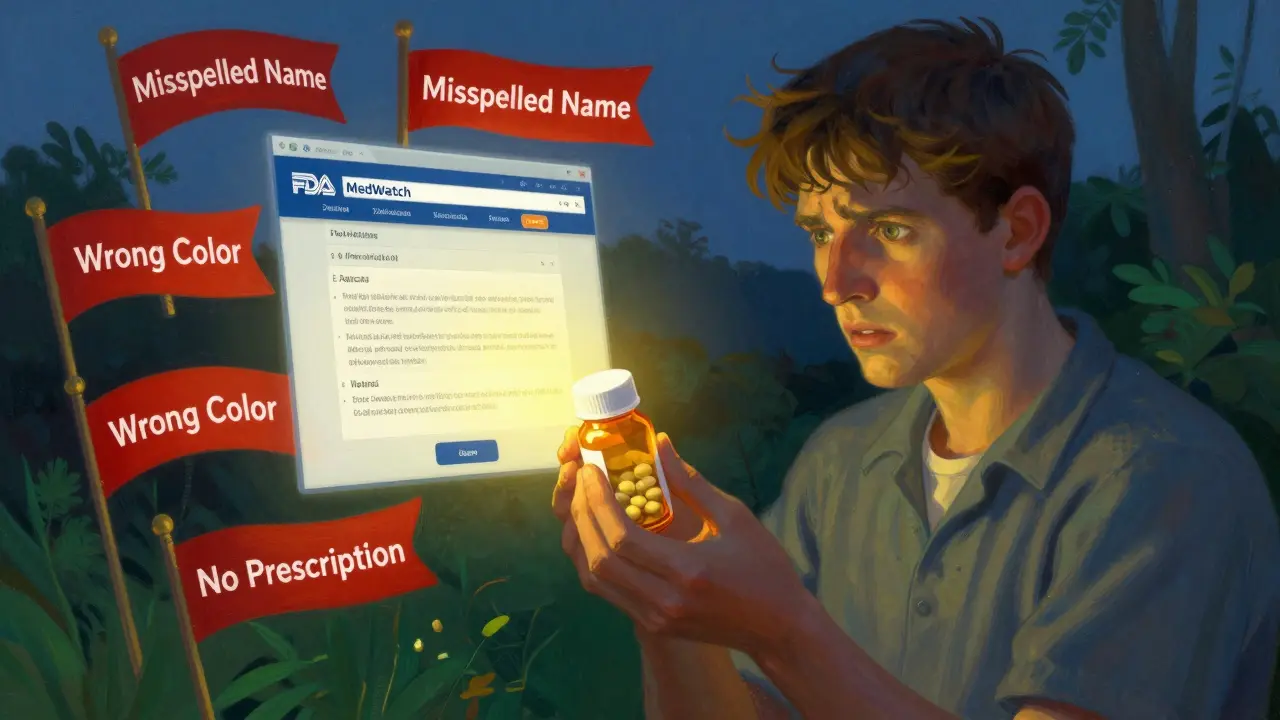
Look for red flags: misspelled brand names, blurry labels, pills that are the wrong color or shape, or packaging that feels flimsy. If you bought a drug from a website that doesn’t ask for a prescription, or from a social media ad, you’re already at risk. The FDA says 96% of online pharmacies operating outside the U.S. break the law. And if you’ve taken a drug that made you feel worse instead of better-don’t ignore it. That could be your body reacting to something toxic.
Why Reporting Matters
One person reporting a fake drug can stop a whole batch from reaching others. In 2022, the FDA’s Office of Criminal Investigations opened over 1,800 cases just from reports like yours. Those investigations led to arrests, seizures of over a million fake pills, and the shutdown of dozens of illegal websites. When you report, you’re not just protecting yourself-you’re helping law enforcement track down criminal networks that are selling poison as medicine.
Manufacturers like Pfizer and Roche also rely on these reports. If they know a fake version of their drug is out there, they can warn doctors, pull batches, and alert regulators. Without your report, those fake pills keep moving through the system. A pharmacist in Alabama once saved lives just by holding onto the original bottle of fake insulin and reporting it. That one bottle helped trace the entire supply chain. Your action can do the same.
How to Report in the U.S.
If you’re in the U.S., the first step is to report to the FDA through MedWatch. This is the official system for reporting bad drugs, side effects, and counterfeit products. You don’t need to be a doctor or pharmacist-anyone can file a report.
Here’s how to do it:
- Keep the drug and packaging. Don’t throw it away. Don’t take more of it. Don’t wash or clean it. The FDA needs to examine the actual product.
- Write down everything. What’s the drug name? Strength? Lot number? Where did you buy it? When? Did you feel sick after taking it? Take photos of the packaging, the pills, and any weird labels.
- Go to www.fda.gov/medwatch. Click on the “Volunteer Report” form. Fill out as much as you can. You’ll need the National Drug Code (NDC)-it’s the long number on the box or bottle. If you don’t have it, describe the product in detail.
- Submit online. Online reports get acknowledged within 72 hours. Paper forms can take two weeks. Use the online form.
- Call if you’re in danger. If you or someone else had a serious reaction-chest pain, trouble breathing, seizures-call 1-800-FDA-1088 immediately. This line is staffed 24/7.
For suspected criminal activity-like a website selling fake opioids or fake Viagra-you can also report directly to the FDA’s Office of Criminal Investigations at www.fda.gov/oci. This is for cases where you think someone is running a fake pharmacy or shipping drugs illegally. They respond faster to high-priority cases, especially if you have photos, receipts, or email records.
What to Do If You’re Outside the U.S.
If you’re in the UK, Canada, Australia, or the EU, your national health agency handles counterfeit drug reports. In the UK, contact the Medicines and Healthcare products Regulatory Agency (MHRA) through their Yellow Card system at www.mhra.gov.uk/yellowcard. You can report online or by phone. In Canada, use Health Canada’s Adverse Reaction Reporting portal. In the EU, each country has its own system, but you can also report to the European Medicines Agency (EMA) if the drug was sold across borders.
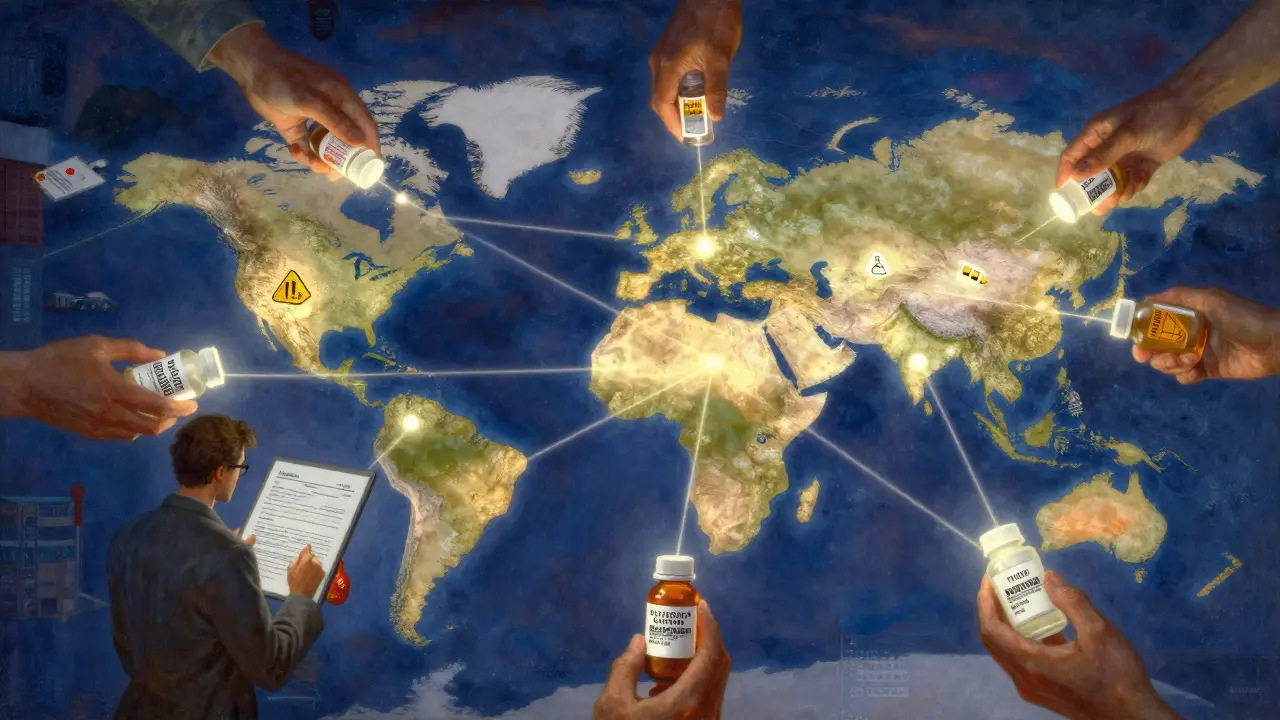
For global cases-especially if you bought the drug from a website based in another country-use the Pharmaceutical Security Institute (PSI). They work with law enforcement in over 140 countries. You can email them at [email protected]. They support 27 languages and have a live chat from 8 a.m. to 8 p.m. GMT. Their AI system can verify if a drug is fake within hours, but they need clear photos and product details.
The World Health Organization also has a global reporting system. While it’s slower-responses take up to two weeks-it helps track trends and issue international warnings. If you’re in a country with weak regulation, your report might be the first one they’ve ever received.
What Happens After You Report?
After you submit your report, the FDA or your local agency will review it. If they believe it’s credible, they’ll assign it a case number. You won’t always get a follow-up call, but you can check the status if you saved your submission ID. The FDA says 87% of complete reports get an initial response within 72 hours.
If your report includes photos, lot numbers, and a clear description of where you bought the drug, it’s far more likely to trigger an investigation. One report with a photo of a fake Adderall bottle led to the seizure of 230,000 pills in a warehouse in Texas. That case came from a college student who noticed the pills looked different.
But don’t expect instant results. Some reports take weeks or months to lead to action. That’s because tracing fake drugs through global supply chains is complex. But every report adds to the data. The more reports they get, the better they can predict where the next batch will show up.
Common Mistakes People Make
Many people try to report but mess up the process. Here’s what not to do:
- Don’t throw away the packaging. The lot number is your most important clue. Without it, investigators can’t trace the drug’s origin.
- Don’t report to the wrong agency. If you’re in the U.S., don’t call the DEA unless it’s a controlled substance like opioids or Adderall. For everything else, go to the FDA.
- Don’t wait. If you feel sick after taking a drug, call your doctor first. Then report. Delaying could put others at risk.
- Don’t assume someone else already reported it. Most fake drugs are reported by only one person. You might be the only one who noticed.
Also, don’t try to return the drug to the seller. That’s how scammers keep operating. Just keep it, document it, and report it.
What You Can Do to Prevent Fake Drugs
Reporting is important-but prevention is better. Here’s how to avoid fake drugs in the first place:
- Only buy prescription drugs from licensed pharmacies. Check the pharmacy’s license on your state’s board of pharmacy website.
- Avoid websites that sell drugs without a prescription. If it looks too good to be true-like $5 pills for Viagra-it is.
- Use the FDA’s BeSafeRx tool to verify online pharmacies: www.fda.gov/be-saferx.
- Ask your pharmacist to check the packaging if something looks off. Pharmacists are trained to spot fakes.
- Look for safety features. In the UK and EU, prescription drugs must have a unique identifier and tamper-proof seal. If it’s missing, don’t take it.
Frequently Asked Questions
What should I do if I already took a counterfeit drug?
Stop taking the drug immediately. Contact your doctor or go to the emergency room if you’re feeling unwell. Even if you feel fine, tell your doctor what you took and when. They may need to run tests. Then report it to the FDA or your local health agency. Don’t wait-even if you think it’s ‘not a big deal.’ Fake drugs can cause long-term damage you don’t notice right away.
Can I report a fake drug if I bought it outside the U.S.?
Yes. If you’re in the U.S. and bought it abroad, report it to the FDA. If you’re outside the U.S., report to your country’s health regulator. You can also report to the Pharmaceutical Security Institute (PSI) at [email protected]. They coordinate globally and can forward your report to the right agency. The more reports they get from different countries, the better they can track international smuggling routes.
Do I need proof to report a counterfeit drug?
You don’t need hard proof-just good information. Photos of the packaging, the lot number, where you bought it, and any symptoms you had are enough. Investigators don’t expect you to be an expert. They just need details. If you can’t find the lot number, describe the drug: color, shape, markings, smell, taste. Even that helps. The FDA says reports with photos are processed 89% faster.
Will I get in trouble if I bought a fake drug online?
No. Reporting counterfeit drugs is protected. Authorities don’t punish consumers for buying fake medicine-they go after the sellers. Your report is confidential. You don’t have to give your name if you don’t want to. But if you do, it helps them follow up if they need more info. Your safety matters more than how you got the drug.
How long does it take for a report to lead to action?
It varies. Simple reports with good details can trigger a warning to a pharmacy within days. Criminal investigations take longer-weeks or months-because they involve tracing shipments across borders. But every report adds to the data. The FDA says reports with full product details increase the chance of a successful investigation by 63%. So even if you don’t see immediate results, your report matters.
Next Steps
If you suspect a drug is fake, act now. Don’t wait. Don’t hope it was a one-off. Fake drugs are a growing threat-and they’re not just overseas. They’re in your mailbox, your local online store, even in some pharmacies that don’t check their suppliers. Your report could be the one that stops the next batch from reaching a child, an elderly person, or someone with a chronic illness.
Take five minutes today. Find that bottle. Take a photo. Write down the details. Submit your report. You don’t need to be a hero. You just need to be the one who noticed-and spoke up.
owori patrick
January 29, 2026 AT 16:07Just wanted to say thanks for laying this out so clearly. I’m from Nigeria, and we’ve got a huge problem with fake meds here-people die because they don’t know how to spot them. I’m sharing this with my community group tomorrow. We’re setting up a little info booth at the market. Small steps, right?
Also, if anyone needs help translating parts into Pidgin or Yoruba, I’m happy to help. Knowledge shouldn’t be locked behind English.
Claire Wiltshire
January 31, 2026 AT 08:36This is an incredibly well-researched and vital guide. Thank you for taking the time to compile this with such precision. I work in pharmacy compliance and can confirm every point you’ve made is accurate-and underreported.
One addition: if you’re reporting via MedWatch and don’t have the NDC, you can still submit. Just include the manufacturer’s name, the product’s appearance, and the pharmacy’s name (if known). The FDA’s database cross-references by those details too. Your effort matters.
Darren Gormley
February 2, 2026 AT 07:17LMAO 😂 so we’re supposed to trust the FDA? The same agency that let OxyContin slide for a decade? 🤡
And don’t get me started on ‘licensed pharmacies’-half of them are owned by private equity firms that outsource to India and then slap a ‘Made in USA’ sticker on it. This whole system is a joke. Report? Sure. Then watch it vanish into a bureaucratic black hole. 🤷♂️
Mike Rose
February 3, 2026 AT 23:14bro why is this so long?? i just wanted to know how to report fake pills. like i got some adderall that tasted weird and i’m scared now. just tell me what to do. 🥲
Sheila Garfield
February 5, 2026 AT 17:29Mike, I feel you. I read this whole thing and thought the same thing. But honestly? It’s worth the read. I used to think fake meds were just a ‘third world problem’ until my aunt got sick from a fake diabetes med she bought off Instagram. She’s fine now, but… yeah.
Just save the bottle, take a pic, go to medwatch.gov. Done. No need to overthink it. You’re not a detective. You’re just the person who saw something wrong. That’s enough.
Shawn Peck
February 6, 2026 AT 01:35STOP WASTING TIME WITH FORMS. If you think a pill is fake, GO TO THE POLICE. NOT THE FDA. The FDA doesn’t arrest people. The DEA does. And if you’re not reporting to the DEA, you’re letting criminals walk.
I’ve seen this before. Guy reports to FDA. Nothing happens. Meanwhile, the guy who sold him the fake Viagra is still online, selling to 12-year-olds. You think that’s okay? NO. CALL THE FBI. CALL THE DEA. DO SOMETHING.
Niamh Trihy
February 6, 2026 AT 02:22As someone who works in global health supply chains, I can confirm the PSI is one of the most underrated resources out there. I’ve sent them photos of fake insulin vials from Kenya and fake blood pressure meds from Brazil. They responded within 4 hours with a verification code and forwarded everything to Interpol.
Don’t underestimate how much global coordination matters. Even if you’re in the U.S., if the drug came from overseas, PSI is your best bet. They’re quiet, but they move mountains.
Jason Xin
February 6, 2026 AT 06:04Wow. I read this whole thing. And honestly? I didn’t think I’d care. But then I remembered my dad’s heart meds. He’s 78. He buys them from a ‘discount pharmacy’ he found on Facebook. I didn’t say anything before. Now I’m going to take him to his pharmacist tomorrow and ask them to check the bottles.
Thanks for the nudge. This isn’t about being paranoid. It’s about being someone’s kid who didn’t want to lose them.
KATHRYN JOHNSON
February 8, 2026 AT 00:05This is why America is falling apart. We let foreign criminals flood our streets with poison because we’re too soft to shut down the websites. The FDA? A toothless bureaucracy. We need drones over those dark web warehouses. We need military-grade cyber raids. Not ‘please report.’ We need WAR.
kate jones
February 9, 2026 AT 09:37From a pharmaceutical regulatory specialist: the NDC isn’t just a number-it’s a DNA strand for the drug. Every batch, every lot, every expiration is encoded in it. If you’re reporting and don’t have it, you’re essentially giving them a fingerprint without the thumbprint.
But don’t panic. Even without it, your description of the pill’s markings (e.g., ‘blue oval with ‘M 15’ on one side’) is often enough. Pharmacists can cross-reference that in their databases. Just be as specific as you can. Precision > perfection.
Kelly Weinhold
February 9, 2026 AT 17:02I just want to say YOU ARE AMAZING for writing this. I’m a single mom and I was terrified to report the fake Zoloft I bought online because I felt ashamed. But reading this? I realized I didn’t do anything wrong. The scammer did.
I submitted my report today. Took 8 minutes. I cried. Not because I was sad-but because I finally did something right. Thank you for making me feel like I’m not alone in this.
Kimberly Reker
February 10, 2026 AT 21:56Just wanted to add: if you’re not sure if something’s fake, take it to your local pharmacy. They’ll check it for free. Most pharmacists love this stuff-they’ve seen way too many fakes. I asked mine about a weird-looking ibuprofen last week. She pulled out a reference book, compared it under a magnifier, and said, ‘Definitely fake. Lot number’s been recycled since 2019.’
Don’t overcomplicate it. Talk to the person behind the counter. They’re your secret weapon.
Eliana Botelho
February 11, 2026 AT 14:36Okay but can we talk about how this whole thing is just capitalism being evil? We’re supposed to trust ‘licensed pharmacies’ when 80% of them are owned by the same 3 corporations that outsource everything to China? And the FDA is underfunded? And the DEA is busy chasing weed smokers?
This isn’t about reporting. This is about systemic collapse. We need to stop buying drugs online. We need to demand universal healthcare so people don’t have to choose between rent and meds. This post is a bandaid on a gunshot wound.
Also, I just bought a bottle of ‘generic Adderall’ off a TikTok ad. It’s purple. I’m not taking it. But I’m sending the pic to PSI. Just saying.