
Adolescent Medication Risk Tracker
How to Use This Tool
This tool helps monitor for early warning signs of suicidal ideation in teens taking psychiatric medications. Based on FDA guidelines and clinical best practices, enter symptoms observed during the first 4 weeks of treatment. Click "Calculate Risk" to see your assessment.
Common Warning Signs
Check any symptoms observed in the past 24 hours:
Critical Considerations
⚠️ Important Note: A sudden improvement in mood after starting medication can be a red flag. This may indicate the teen has the energy to act on suicidal thoughts.
Urgent Action Required
If you see any red flags (especially thoughts of ending your life), contact emergency services immediately:
- 988 Suicide & Crisis Lifeline (Call or text)
- Local emergency services
- Your prescriber's after-hours line
When a teenager starts taking psychiatric medication, the goal is to help them feel better. But sometimes, especially in the first few weeks, something unexpected happens: suicidal ideation can appear or worsen. This isn’t common, but it’s real enough that every clinician, parent, and school counselor must know how to watch for it - and what to do next.
The U.S. Food and Drug Administration (FDA) put a black box warning on all antidepressants in 2004, later expanded in 2007, because data showed kids and teens under 24 had a higher risk of suicidal thoughts when starting these medications. That warning wasn’t just a footnote. It changed how medicine is done. Today, if a 16-year-old is prescribed an SSRI for depression, the first question isn’t just, “Will this help?” It’s, “How will we know if it’s making things worse?”
Why Adolescents Are Different
Teens aren’t small adults. Their brains are still wiring themselves. The prefrontal cortex - the part that controls impulses, weighs consequences, and manages emotions - isn’t fully developed until around age 25. That means even a small change in brain chemistry from medication can have unpredictable effects. A drug that calms an adult’s anxiety might make a teenager feel more agitated, hopeless, or disconnected.
Studies show that the highest risk period is the first 1 to 4 weeks after starting a medication, or after a dose change. It’s not about the medication being “bad.” It’s about the brain adjusting. For some teens, this adjustment triggers a surge in energy before mood improves. That energy, without emotional stability, can turn into action. That’s why monitoring isn’t optional - it’s lifesaving.
What Clinicians Must Do
Good prescribing starts with a plan. Before giving any psychiatric medication - not just antidepressants, but also stimulants, antipsychotics, or mood stabilizers - the provider must document:
- Why this medication is being chosen over others
- How often the teen will be seen after starting it
- Who will be responsible for tracking symptoms
- What warning signs to look for
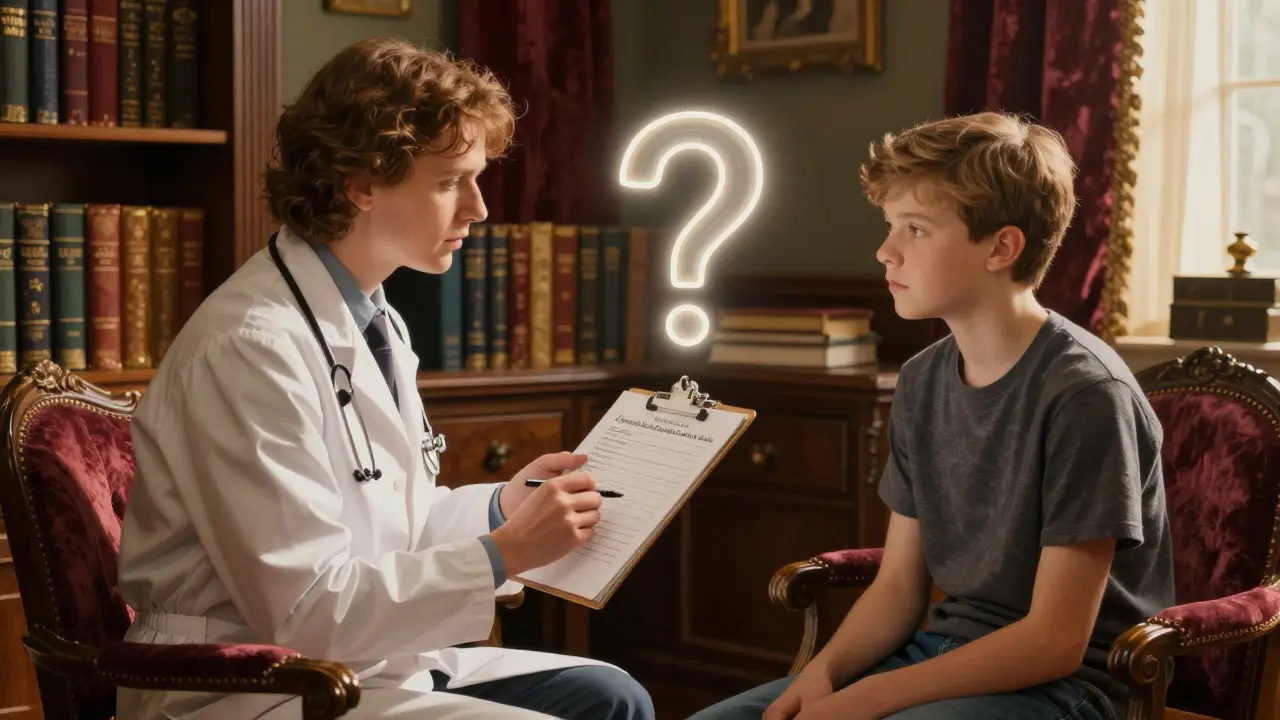
California’s 2022 guidelines say it plainly: clinicians must ask, “Does the teen believe the medication is helping?” and “Are they feeling more hopeless than before?” These aren’t casual questions. They’re clinical assessments. If a teen says, “I don’t see the point anymore,” or “I wish I could just disappear,” that’s not just sadness - it’s a red flag.
Regular check-ins aren’t just about asking how they feel. They need structured tools. Some clinics use the Columbia-Suicide Severity Rating Scale (C-SSRS) at every visit. Others use brief written check-ins before the appointment. The key is consistency. A 15-minute visit every two weeks for the first month is better than a 45-minute visit every six weeks.
Monitoring Isn’t Just for Antidepressants
Many people think the FDA warning only applies to SSRIs like fluoxetine or sertraline. It doesn’t. While antidepressants carry the strongest warning, other medications - including ADHD stimulants like methylphenidate or antipsychotics like risperidone - can also trigger suicidal thinking in vulnerable teens.
A 2020 study in the Journal of the American Academy of Child and Adolescent Psychiatry found that 31% of teens who developed suicidal ideation after starting medication were on drugs other than antidepressants. One case involved a 14-year-old on methylphenidate for ADHD who became withdrawn and expressed self-loathing after a dose increase. The medication wasn’t meant to treat depression, but it affected his sleep, appetite, and emotional regulation - and the result was a downward spiral.
That’s why experts like Dr. Mohab Hanna and the DBHIDS guidelines say: all psychiatric medications require suicidal ideation monitoring. It’s not about the class of drug. It’s about the person.
The Role of Parents and Schools
Parents aren’t just observers - they’re essential partners. But many don’t know what to look for. They might think, “If they’re sleeping better and doing homework, they’re fine.” But suicidal ideation doesn’t always show up as crying or talking about death. Sometimes it’s silence. Withdrawal. A sudden drop in grades. Giving away prized possessions. A change in social media posts.
Schools are another critical layer. A 2022 survey found that 68% of school counselors reported not being informed when a student’s medication changed. That’s dangerous. A teen might be fine at home but struggle in class. A teacher might notice a student zoning out, writing dark poems, or refusing to participate - but if they don’t know the student is on a new medication, they might assume it’s laziness or rebellion.
Coordination matters. A simple signed release form letting the school counselor know about the medication and the monitoring plan can make all the difference. It doesn’t violate privacy. It saves lives.
What Happens When Risk Is Found
If suicidal ideation appears, stopping the medication isn’t always the answer. Abruptly quitting can cause withdrawal symptoms that worsen mood - including increased suicidal thoughts. The goal isn’t to stop the drug. It’s to adjust it.
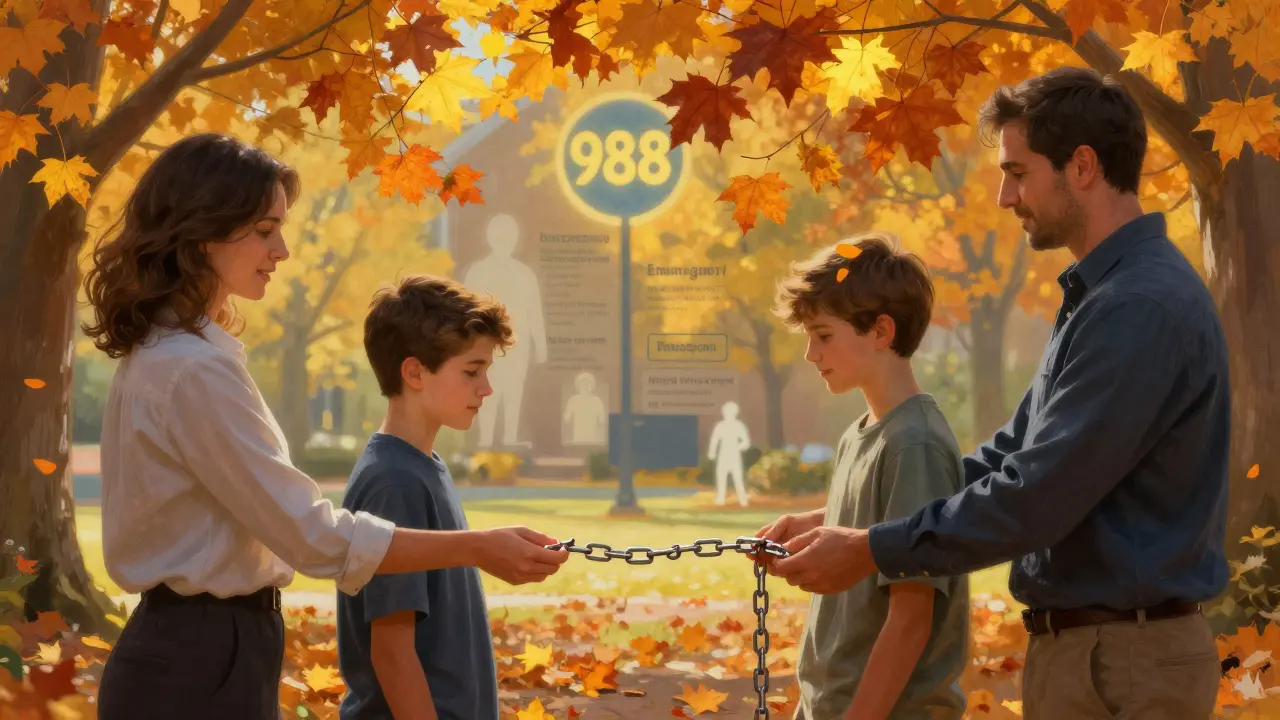
Guidelines from Oklahoma and New York City say: if suicidal ideation emerges, increase monitoring frequency. Move from biweekly visits to weekly. Or even twice a week. Bring the teen in for a same-day appointment if they express intent to harm themselves. Have a safety plan ready: who to call, where to go, how to reach the prescriber after hours.
Some teens need a dose reduction. Others need a switch to a different medication. In rare cases, non-drug therapies like cognitive behavioral therapy (CBT) or family therapy become the main treatment. The decision isn’t made in one visit. It’s built over time, with input from the teen, their family, and the care team.
The Training Gap
Here’s the uncomfortable truth: many providers aren’t trained well enough to do this right. A 2021 survey by the National Council for Mental Wellbeing found that only 34% of child psychiatry residents received 8 or more hours of training specifically on monitoring for medication-induced suicidal ideation. That’s not enough. You can’t learn to spot subtle shifts in mood from a 20-minute lecture.
And consent? Many parents sign forms without understanding the risks. A 2021 AACAP survey showed that 42% of child psychiatry fellows felt they hadn’t properly explained suicide risk to families. That’s not negligence - it’s a system failure. Talking about suicide isn’t scary because it’s taboo. It’s scary because we’re not taught how to do it well.
What’s Changing
Things are improving. California’s 2022 guidelines are now a model for other states. New York City updated its rules in January 2023 to require more frequent check-ins for high-risk teens. The American Academy of Child and Adolescent Psychiatry is finalizing new guidelines expected in late 2023 that will require monitoring for suicidal ideation across all psychiatric drugs - not just antidepressants.
Technology is helping, too. About 38% of child psychiatry practices now use digital tools to track mood and risk. But only 19% of those tools are designed specifically to monitor medication-related suicidal thoughts. That’s a gap. We need apps and forms that ask the right questions at the right time - not just “How are you feeling?” but “Have you had thoughts of ending your life since your last visit?”
The National Institute of Mental Health is funding $28.7 million in research to find biological markers that predict who’s at risk. In the future, we might have blood tests or brain scans to help. But for now, the best tool we have is human attention.
What Families Should Know
If your teen is starting a psychiatric medication:
- Ask for a written monitoring plan - not just a verbal explanation.
- Know the warning signs: withdrawal, sleep changes, sudden mood shifts, talking about death, giving away things.
- Check in daily - not to interrogate, but to connect. “How was your day?” is better than “Are you still feeling suicidal?”
- Don’t assume improvement means safety. The first sign of improvement can be increased energy - which can increase risk.
- Keep emergency numbers handy: the 988 Suicide & Crisis Lifeline, your prescriber’s after-hours line, and a trusted family member.
Medication isn’t a cure. It’s a tool. And like any tool, it can be helpful - or harmful - depending on how it’s used. The difference between healing and harm often comes down to one thing: consistent, thoughtful, and fearless monitoring.
Can psychiatric medication cause suicidal thoughts in teens?
Yes, in some cases. The FDA requires a black box warning on antidepressants for patients under 24 because studies show a small but real increase in suicidal thinking during the first few weeks of treatment. This risk also exists with other psychiatric medications, including stimulants and antipsychotics, especially if the teen is already vulnerable. It doesn’t mean the medication is dangerous - it means it needs careful monitoring.
How often should a teen be monitored after starting psychiatric medication?
For the first month, weekly check-ins are standard. After that, biweekly visits are common unless there are warning signs. If suicidal ideation appears, visits should increase to twice a week or more. Some guidelines, like those in California and New York City, recommend daily contact via phone or text for high-risk teens during the initial phase. Monitoring should continue for at least 3 months after any dose change.
What should parents look for at home?
Watch for sudden changes: withdrawal from family or friends, loss of interest in hobbies, sleep disturbances, talking about death or feeling like a burden, giving away prized possessions, or writing dark messages. A sudden improvement in mood after starting medication can also be a red flag - it may mean the teen now has the energy to act on suicidal thoughts.
Should medication be stopped if suicidal thoughts appear?
Not necessarily. Stopping suddenly can cause withdrawal symptoms that worsen mood. The better approach is to increase monitoring, lower the dose, or switch medications under professional supervision. Always consult the prescribing clinician before making any changes. A safety plan - including emergency contacts and a crisis response - should be in place before any adjustment.
Are schools required to monitor teens on psychiatric medication?
No, schools aren’t legally required to monitor medication. But they should be informed if the teen’s mental health plan includes school-based support. With proper consent, clinicians can share general monitoring goals (like checking in on mood or behavior) with school counselors. This helps catch warning signs early, especially since teens often show distress in school before home.
Next Steps
If you’re a parent, ask for a written monitoring plan before your teen starts medication. If you’re a clinician, use structured tools like the C-SSRS and document every conversation about suicidal thoughts. If you’re a teacher or counselor, don’t hesitate to reach out to the family or provider if you notice changes. The system isn’t perfect - but every check-in, every question, every moment of attention adds up.
There’s no magic bullet. But there is a simple truth: when we pay attention, we can prevent tragedy. And in adolescent mental health, that’s the most powerful medicine of all.
Khaya Street
February 24, 2026 AT 03:19Let’s be real - we’re treating teens like lab rats with these meds. The FDA warning’s been around for 20 years, yet clinics still treat monitoring like a checkbox. I’ve seen kids on SSRIs get worse, get dropped from care, and no one bats an eye. It’s not about the drug. It’s about the system being lazy. If you’re not seeing a kid weekly for the first month, you’re not doing your job. Period.
Christina VanOsdol
February 24, 2026 AT 10:42Okay but like 🤯 I just read this and I’m crying?? I’m a therapist and I’ve had teens say ‘I wish I could just disappear’ and I didn’t know if it was a cry for help or just teen drama 😭💔. This article? Game changer. We need scripts. We need forms. We need to stop winging it. #mentalhealthmatters
Brooke Exley
February 25, 2026 AT 07:14YES. This. I’ve been saying this for years - monitoring isn’t optional, it’s oxygen. I work with teens who go from ‘I hate life’ to ‘I’m fine’ in two weeks… and suddenly they’re texting their exes at 3 a.m. and deleting their Instagram. That’s not improvement - that’s energy without emotional brakes. Parents, don’t celebrate sleep improvements until you’ve asked: ‘Have you had thoughts of not waking up?’ Don’t wait for them to say it. Ask. Like, every single day.
Alfred Noble
February 25, 2026 AT 14:24cool article thanks for writing this. i work in a school and we dont get notified when meds change. one kid went from chill to totally zoned out and we thought he was just slacking. turns out he got a new stimulant. if we had known, we could’ve caught the withdrawal signs. maybe we need a simple form schools can sign? just a heads up? no details, just ‘meds changed, watch for mood shifts’? 🙏
Matthew Brooker
February 25, 2026 AT 16:39People treat psychiatric meds like they’re vitamins. They’re not. They’re powerful tools that can flip a brain’s wiring. The real issue? We’re not training providers to see the subtle signs - the quiet ones. The kid who stops laughing. The one who starts writing poetry about shadows. The one who says ‘I’m okay’ but their eyes look like they’re already gone. That’s the warning sign. Not the screaming. Not the threats. The silence. We need to teach people to listen to silence.
Emily Wolff
February 27, 2026 AT 03:13This is why I refuse to prescribe antidepressants to minors. The data is clear. The risk is real. And yet, every clinic pushes them like they’re candy. We’ve turned mental health into a pharmaceutical industry. Sadness isn’t a disorder. It’s a human response. Let them feel it. Don’t drug it away.
Joseph Cantu
February 28, 2026 AT 17:14Let me guess - this was written by Big Pharma shills. You think we’re just ‘monitoring’? No. We’re being watched. Every mood swing. Every text. Every school report. This isn’t about safety. It’s about control. They want your kid’s data. They want to track them. They want to know when they’re ‘at risk’ so they can sell you more meds. The black box warning? A marketing tool. The real danger isn’t the drug - it’s the surveillance.
Jacob Carthy
March 2, 2026 AT 03:16Why are we even talking about this? In my day we just told kids to suck it up. You feel bad? Go play ball. Cry? Go get a job. Now we’re giving 15-year-olds mood trackers and weekly checkups? This is why America’s falling apart. Stop coddling them. Teach resilience. Not more pills.
Lisandra Lautert
March 3, 2026 AT 03:11‘I wish I could just disappear.’ That line? Chilling. I’ve heard it. From a 13-year-old. She was on Adderall. Her mom thought she was ‘just being dramatic.’ Three weeks later, she tried to overdose. We missed it because no one asked the right question. The system failed her. Not her. Not her family. The system.
Cory L
March 4, 2026 AT 02:06Man, I wish I’d read this before my cousin started on sertraline. We thought he was getting better because he started texting again. Turns out he was gathering the courage to end it. We didn’t know about the energy-before-mood thing. Now we have a safety plan. We check in every night. We keep the hotline on speed dial. It’s not about being paranoid. It’s about being present. And honestly? That’s the most powerful thing we can do.
Bhaskar Anand
March 5, 2026 AT 16:23This is why India has better mental health outcomes - we don’t over-medicate. We have family. We have community. We have temples. We have elders who sit with pain. In the West, you think a pill fixes everything. You give a kid a script, then vanish. No wonder they feel alone. Medication is not a solution. Presence is. Love is. Not another checklist.