
Ever stood in the pharmacy aisle staring at a wall of colorful boxes, feeling like you need a medical degree just to pick a cough syrup? You aren't alone. Many of us grab a bottle based on the big brand name on the front, but the real secrets-and the real dangers-are hidden in the small print on the back. Misreading a label isn't just a minor mistake; it can lead to accidental overdoses or dangerous drug interactions.
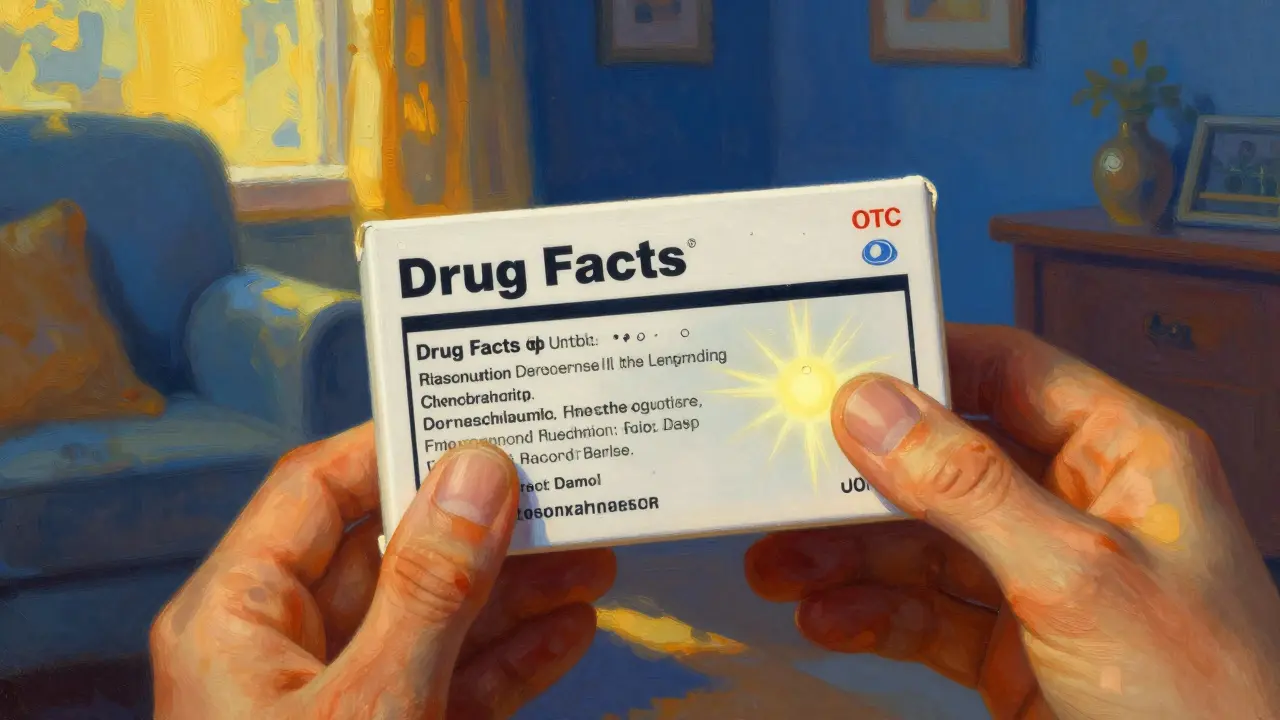
The good news is that the OTC Drug Facts Label is a standardized information panel mandated by the U.S. Food and Drug Administration (FDA) to ensure every nonprescription medicine provides consistent safety data. Whether you're buying a generic store brand or a name-brand product, the layout is the same. If you know where to look, you can take total control of your health in under a minute.
The Big Picture: Why Labels Matter
Most people treat the back of the box as a "fine print" section to be ignored, but that's where the critical data lives. A huge problem today is "therapeutic duplication." This happens when you take two different medicines-say, a headache pill and a multi-symptom cold liquid-not realizing both contain the same active ingredient. This can lead to severe toxicity, especially with liver-affecting drugs.
According to FDA data, correctly identifying the active ingredient helps about 67% of people avoid these dangerous duplications. In fact, the standardization of these labels has helped slash pediatric acetaminophen overdoses by 43% since 2017. The goal isn't just to follow rules; it's to stop you from accidentally harming yourself while trying to feel better.
Breaking Down the 7 Key Sections
To read a label confidently, you need to know what each section is actually telling you. Here is the breakdown of what to look for:
- Active Ingredients: This is the most important part. It lists the chemical name of the drug and the exact amount per dose. For instance, Acetaminophen is the active ingredient in Tylenol. If you see it listed in two different products, do not take both at once.
- Purpose: This tells you what the drug does (e.g., "pain reliever" or "nasal decongestant"). It's a quick way to verify the drug matches your goal.
- Uses: This section lists the specific symptoms the drug is approved to treat. If your symptom isn't on this list, the drug might not be the right choice for you.
- Warnings: This is the "red flag" zone. It includes contraindications (reasons you should NOT take the drug) and interactions with other medications, like blood thinners.
- Directions: Here you'll find the exact dose, how often to take it, and the maximum limit for 24 hours. Pay close attention to age restrictions here.
- Other Information: This usually covers storage (like keeping the bottle in a cool, dry place) and specific additives like sodium levels.
- Inactive Ingredients: These are the fillers, dyes, and binders. If you have a severe allergy to a specific dye or corn starch, this is where you'll find it.
| Section | What to Look For | The Risk if Ignored |
|---|---|---|
| Active Ingredients | Generic chemical name (e.g., Ibuprofen) | Accidental double-dosing / Overdose |
| Warnings | "Do not use if..." statements | Severe allergic reactions or organ damage |
| Directions | Maximum daily dose and age limits | Toxicity or ineffective treatment |
| Inactive Ingredients | Dyes, preservatives, fillers | Allergic reactions |
The "5-Point Check" Method for Total Safety
You don't need to spend ten minutes analyzing a bottle. Pharmacists suggest a rapid "5-Point Check" that takes about 50 seconds in total. This method is designed to catch the most common errors before they happen:
- Check Active Ingredients (12 sec): Do I know what this chemical is? Am I already taking something else with this same ingredient?
- Verify Uses (7 sec): Does this actually treat the symptom I have right now?
- Read All Warnings (19 sec): Is there a reason I shouldn't take this (e.g., high blood pressure, pregnancy, or liver issues)?
- Confirm Directions (8 sec): Is this dose right for my age and weight? When is the earliest I can take the next dose?
- Review Inactive Ingredients (6 sec): Is there anything in here I'm allergic to?
Following this systematic approach has been shown to reduce medication errors by as much as 68%. It turns a casual glance into a safety protocol.
Common Pitfalls and How to Avoid Them
Even with a standardized label, there are a few "traps" that trip people up. One of the biggest is the confusion between brand names and generic names. You might see "Tylenol" on one box and "Acetaminophen" on another and think they are different drugs. They aren't. Always look for the generic name in the Active Ingredients section to be sure.
Another common mistake involves liquid measurements. Many people confuse the "concentration" with the "total volume." For example, if a label says "160 mg per 5 mL," that 5 mL is your dose, not the amount in the whole bottle. Always use the measuring device that comes with the medicine-never a kitchen spoon, as they vary wildly in size.
Finally, be careful with "Extra Strength" labels. This usually means a 50% to 100% higher concentration of the drug. If you switch from regular to extra strength without adjusting your dose, you could accidentally take double the required amount.
Modern Tools for Easier Reading
If the font is too small or the language feels confusing, you have options. Many major brands, including Bayer and Johnson & Johnson, have started adding QR codes to their packaging. Scanning these often leads to a video explanation of the label, which is a lifesaver for those who struggle with traditional text.
There is also the FDA's "Drug Label Decoder" app, which helps users translate complex labeling into simpler terms. But the most reliable tool is still your pharmacist. They are trained to spot potential interactions that a label might not explicitly list for your specific health history.
What should I do if I can't find the "Drug Facts" panel?
If the product is an FDA-approved OTC drug in the U.S., it must have a Drug Facts label. If it's missing or replaced by a "Supplement Facts" panel, you are likely looking at a dietary supplement, not a drug. Supplements are regulated differently and may not have the same rigorous safety warnings or efficacy data.
How do I know if a medication is safe to take with my current prescriptions?
Check the "Warnings" section for mentions of drug interactions. However, labels cannot list every possible interaction. The safest move is to call your pharmacist and list all your current medications to ensure there are no dangerous overlaps.
Does "PM" on a label always mean it will make me sleepy?
Almost always. Most "PM" formulations include a sedative like diphenhydramine. Check the Active Ingredients section to see exactly which sleep aid is being used, as some people react differently to different sedatives.
What does "do not exceed 6 doses in 24 hours" actually mean?
It means you cannot have more than 6 dosing events in a full day. If one "dose" consists of two pills, you can take 12 pills total, but only in 6 separate time blocks. Never confuse the number of pills with the number of doses.
Can I use a kitchen spoon for liquid medicine if I lost the dosing cup?
No. Kitchen spoons are not standardized and can lead to significant under-dosing or over-dosing. Buy a proper oral syringe or dosing cup from a pharmacy to ensure you are getting the exact 5 mL or 2.5 mL required.
Next Steps for a Safer Medicine Cabinet
If you're cleaning out your medicine cabinet today, start by tossing anything that is expired or has a peeling, unreadable label. For the items you keep, try the 5-Point Check on each one. If you find multiple products with the same active ingredient, group them together so you remember not to take them simultaneously.
For those managing chronic conditions or taking multiple prescription drugs, create a simple list of your "Active Ingredients" and share it with your doctor. This prevents the pharmacy from accidentally giving you an OTC recommendation that clashes with your prescription treatment.