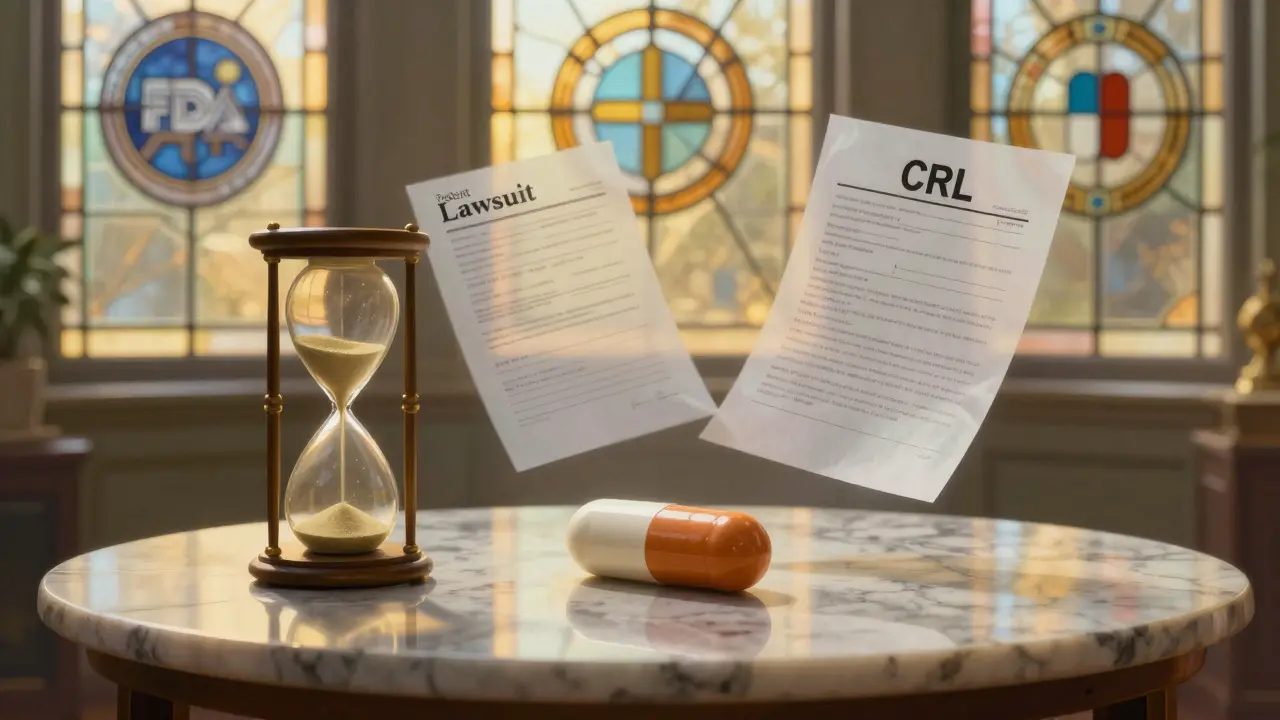
When a generic drug gets tentative approval from the FDA, it doesn’t mean it’s ready to hit pharmacy shelves. It means the agency has reviewed the application and found it scientifically sound-but something is still blocking its release. This happens to hundreds of generic drugs every year. And while the system was designed to speed up access to affordable medications, delays are the norm, not the exception.
What Tentative Approval Really Means
Tentative approval isn’t a half-step. It’s a full scientific green light. The FDA has confirmed the generic drug is chemically identical to the brand-name version, works the same way in the body, and is made under strict quality controls. The only thing missing? Legal permission to sell it. This status exists because of patent laws. If the original drug is still under patent protection or has regulatory exclusivity, the FDA can’t give final approval-even if the generic is perfect. The idea behind tentative approval is simple: let manufacturers get everything ready ahead of time. Once the patent expires, they can start selling immediately. But in practice, that doesn’t happen. Between tentative approval and actual market launch, there’s often a gap of over a year-and sometimes much longer.Review Cycles: The Slow Dance of Paperwork
One of the biggest reasons for delays? Too many rounds of back-and-forth with the FDA. Before 2012, generic drug applications took an average of four full review cycles before approval. Even after the Generic Drug User Fee Amendments (GDUFA) were introduced to speed things up, the number only dropped to 3.2 cycles by 2022. That’s still a lot. Each review cycle means the FDA finds a problem and sends a letter back to the company. The company has to fix it, resubmit, and wait again. Common issues include:- Incomplete chemistry and manufacturing data (35% of all deficiencies)-missing details on how the drug is made, tested, or stabilized.
- Weak bioequivalence studies (28%)-proof the generic performs like the brand drug in real patients.
- Poor analytical method validation (22%)-the tests used to check quality aren’t reliable enough.
Patents: The Legal Roadblock
Even if the FDA says “yes,” a lawsuit can still stop a generic drug cold. When a generic company files for approval, it must say whether it believes the brand drug’s patents are invalid or won’t be infringed. This is called a Paragraph IV certification. If the brand-name company sues, the FDA is legally forced to pause approval for up to 30 months. This is called the “30-month stay.” Between 2010 and 2016, 68% of tentatively approved generics were held up by these lawsuits. Some companies file lawsuits just to delay competition-even when the patent claim is weak. There’s also the “citizen petition” trick. Brand companies file petitions asking the FDA to change its standards-claiming, for example, that the generic’s testing method isn’t good enough. Between 2013 and 2015, 67 such petitions were filed. The FDA approved only three. Yet each one added months, sometimes years, to the timeline. And then there’s “product hopping.” A brand company makes a tiny change to the drug-maybe switching from a pill to a liquid-and gets a new patent. This pushes back generic entry by years. The FTC found this happened in 17% of top-selling drugs. Even worse? “Pay-for-delay” deals. Brand companies pay generic makers to stay out of the market. Between 2009 and 2014, 987 generic launches were blocked this way.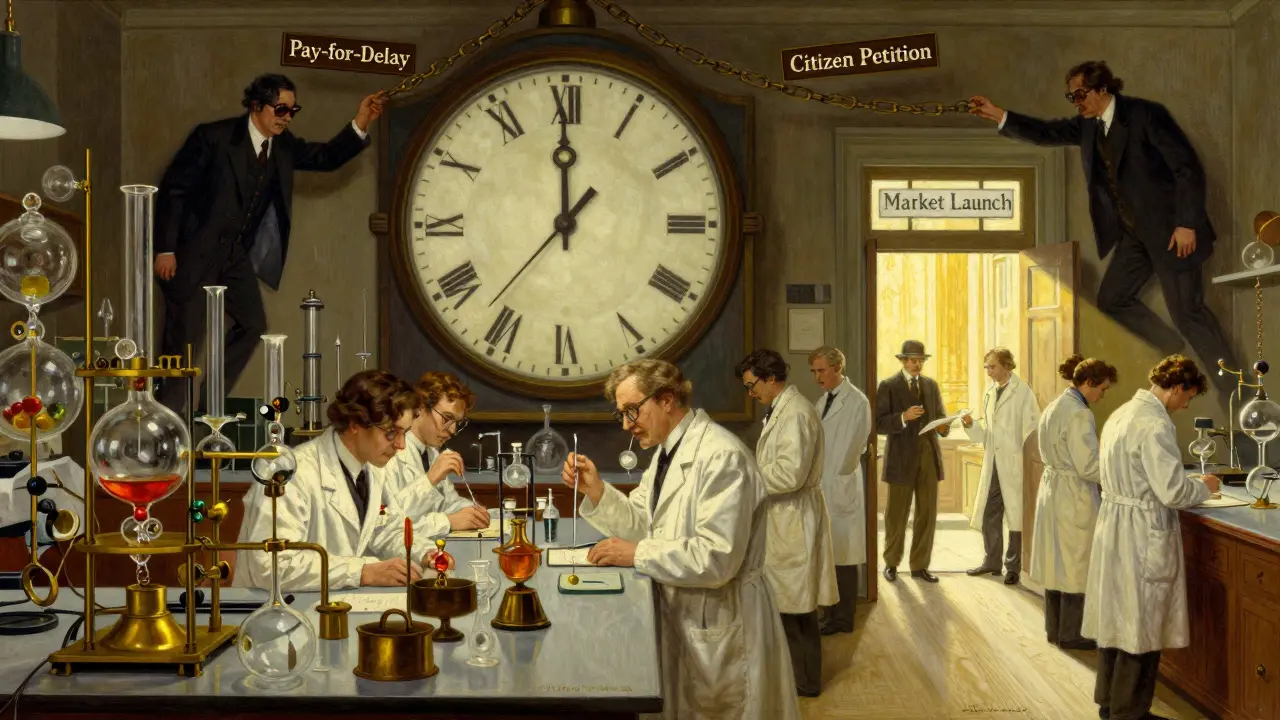
Manufacturing and Market Realities
Getting approval doesn’t mean you can make the drug at scale. Complex formulations-like inhalers, topical creams, or extended-release pills-take longer to produce. In 2022, these types of drugs had 2.3 times more review cycles than simple pills. And even after approval, scaling up production can take 12 to 18 months. Then there’s economics. If a drug only makes $50 million a year in sales, manufacturers often decide it’s not worth the cost to launch. A 2022 analysis found that 30% of tentatively approved drugs never made it to market. For low-sales drugs, that number jumps to 47%. Even when generics do launch, prices don’t always drop fast. If only one generic enters the market, the brand drug can still charge 80% of its original price for two years. That discourages other companies from entering, keeping prices high.Who’s to Blame? The System
It’s not one thing. It’s a chain of problems. The number of generic applications has doubled since 2005. The FDA is stretched thin. In 2022, it took an average of 9.2 months for companies to respond to a deficiency letter-even though the FDA recommends 6 months. Delays pile up. And complexity is growing. Topical products, for example, take an average of 3.7 review cycles-14 months longer than oral pills. The FDA’s own data shows that even with reforms, the median time from tentative approval to market launch was still 16.5 months in 2022.
What’s Being Done?
The FDA has tried to fix this. The Competitive Generic Therapy (CGT) program gives priority review to drugs with little or no competition. These get tentative approval in 8 months, instead of 18. The 2023 GDUFA III agreement sets bold goals: raise first-cycle approval rates from 28% to 70% by 2027. Reduce review times for priority drugs to 8 months. But experts warn progress is slow. Patent litigation, manufacturing bottlenecks, and economic disincentives won’t disappear overnight. New laws like the CREATES Act aim to stop brand companies from blocking access to drug samples needed for testing. The Affordable Drug Manufacturing Act tries to boost U.S.-based production. But until the patent system is reformed, tentative approval will remain a promise-not a path to cheaper drugs.Bottom Line
Tentative approval sounds like a step toward affordable medicine. But it’s really a holding pattern. The system works-if you ignore patents, lawsuits, manufacturing delays, and profit motives. For patients waiting for a cheaper version of their medication, that’s not good enough. The FDA can approve the science. But it can’t force companies to launch. Or stop lawsuits. Or change market economics. Until those pieces fall into place, tentative approval will keep meaning “almost,” not “now.”What is the difference between tentative approval and final approval for generics?
Tentative approval means the FDA has confirmed the generic drug meets all scientific and quality standards for safety and effectiveness. But final approval is only granted when legal barriers-like patents or regulatory exclusivity-expire. A tentatively approved drug cannot be sold until those barriers are gone.
Why do some tentatively approved generics never reach the market?
Many never launch because they aren’t profitable. If a drug has low sales (under $50 million annually), manufacturers often decide the cost of scaling production and competing on price isn’t worth it. Others get stuck in patent litigation or face delays from manufacturing challenges, especially with complex formulations like inhalers or creams.
How long does it typically take from tentative approval to market launch?
On average, it takes 16.5 months from tentative approval to market launch, according to FDA data from 2022. For complex drugs like topical creams or extended-release pills, delays can stretch beyond 24 months. In 22% of cases, the drug never launches at all.
Can the FDA approve a generic drug before the brand patent expires?
No. Even if a generic is tentatively approved, the FDA is legally barred from granting final approval until all patents and exclusivity periods expire. This is enforced by the 30-month stay triggered by patent lawsuits. The FDA can’t override this, even if the drug is ready.
What is a citizen petition, and how does it delay generic drugs?
A citizen petition is a formal request to the FDA to change its policies or delay approval. Brand-name companies often file these to argue that a generic’s testing method is flawed or that the drug isn’t truly equivalent. Between 2013 and 2015, 67 petitions were filed-only three were approved. But each one added an average of 7.2 months to the approval timeline.
Shourya Tanay
March 10, 2026 AT 20:58Alexander Erb
March 12, 2026 AT 15:39Kenneth Zieden-Weber
March 14, 2026 AT 08:45Miranda Varn-Harper
March 15, 2026 AT 06:20Adam Kleinberg
March 15, 2026 AT 14:10Chris Bird
March 16, 2026 AT 06:56Denise Jordan
March 17, 2026 AT 07:50LiV Beau
March 18, 2026 AT 03:56Gene Forte
March 19, 2026 AT 04:23Tom Bolt
March 19, 2026 AT 08:27