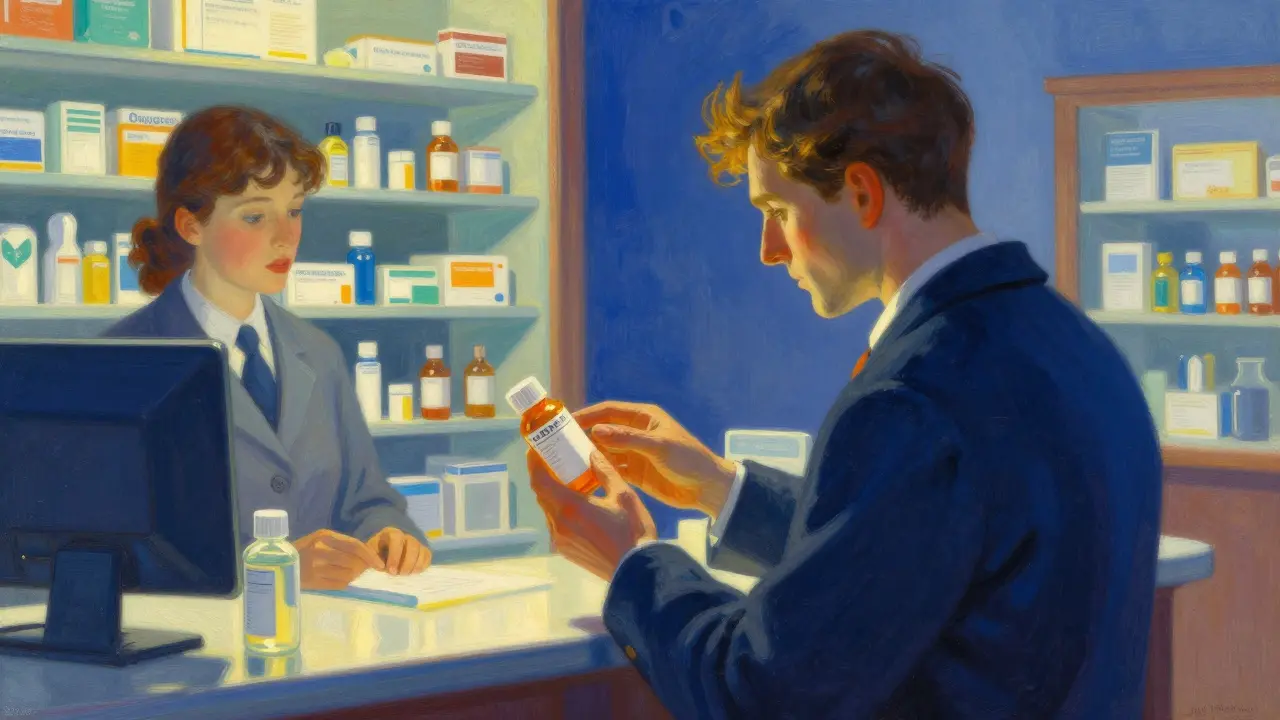
You've just picked up your medication, and the pharmacist hands you a bottle with a sticker wrapped around it. For most of us, we just glance at the name and head for the door. But that small piece of paper is actually a critical safety tool. In the US alone, about 1.3 million medication errors happen every year, and nearly a quarter of those come from simply misunderstanding the label. Whether it's a tiny font you can't read or a confusing abbreviation, a small mistake in how you take your medicine can lead to a serious health crisis. The good news? Just spending two or three minutes at the counter asking the right questions can cut your risk of an adverse drug event by almost half.
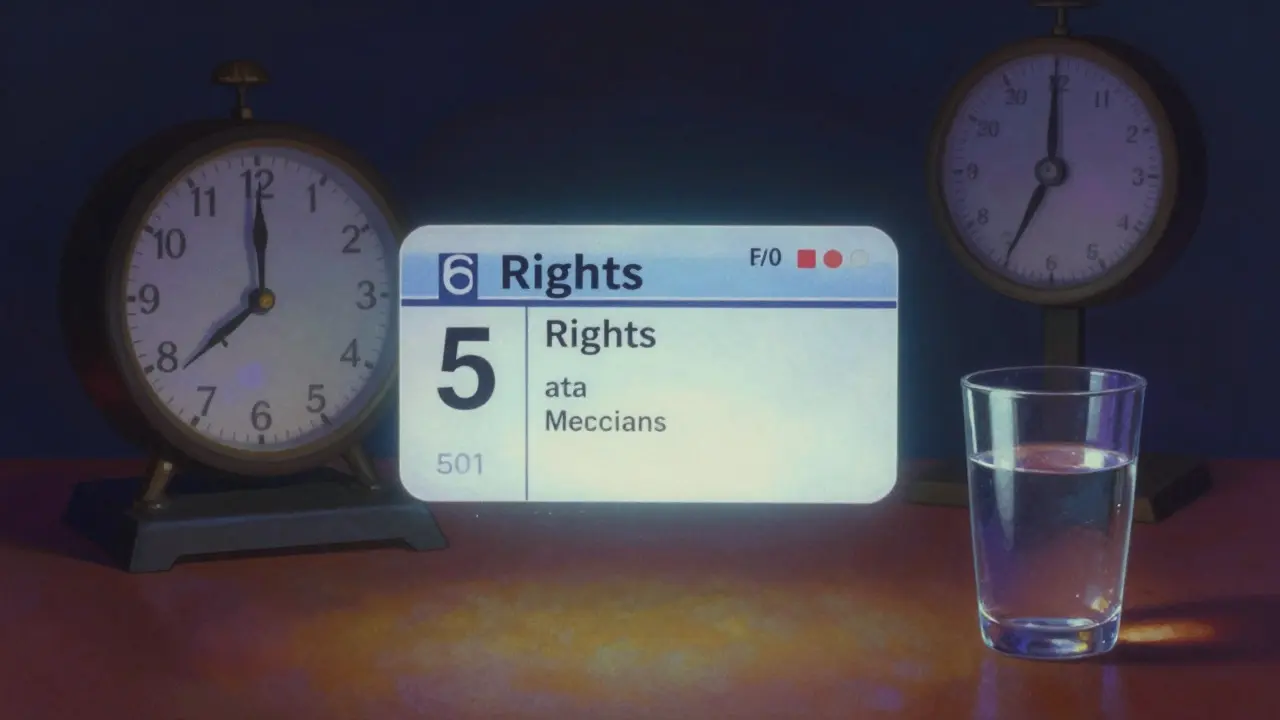
The "5 Rights" Checklist
Before you leave the pharmacy, you should perform a quick mental audit. Safety experts use a gold standard called the "5 Rights" verification system. It's a simple way to make sure the human element of pharmacy work didn't result in a mix-up. When you look at your prescription labels, verify these five things immediately:
- Right Patient: Is your name spelled correctly? It sounds simple, but in a busy pharmacy, labels can get swapped.
- Right Medicine: Is the drug name what your doctor told you to expect? Check both the brand and generic names.
- Right Amount: Does the strength (like 81 mg or 500 mg) match your prescription?
- Right Way: Is the route clear? (e.g., "by mouth", "topical", or "injection").
- Right Time: Is the frequency clear? "Once daily" is different from "every eight hours."
Essential Questions About Dosage and Timing
The directions for use are where most confusion happens. Many labels use abbreviations that aren't common knowledge. If you see something like "q.d." or "b.i.d.", don't guess-ask. Here are the specific questions you should pose to your pharmacist to avoid a dosing error:
"Exactly how many times a day should I take this, and at what specific times?" Some medications work best on an empty stomach, while others require food to prevent nausea or improve absorption. For example, taking a certain antibiotic with dairy might make it completely ineffective. Ask, "Are there any foods, drinks, or other supplements I need to avoid while taking this?"
Another critical area is the "what if" scenario. Ask: "What should I do if I miss a dose?" Should you take it as soon as you remember, or skip it and wait for the next scheduled time? Taking a double dose to "catch up" can be dangerous depending on the medication.
Decoding Storage and Expiration
Where you put your medicine in your house matters more than you might think. Most people assume everything goes in the bathroom cabinet, but that's often the worst place due to heat and humidity. According to pharmacy data, while about 78% of drugs are fine at room temperature, about 15% absolutely must be refrigerated to stay potent.
Look at your label and ask: "Does this medication require refrigeration, or should it be kept in a cool, dry place?" If you see a requirement for a temperature between 2-8°C (36-46°F), the fridge is your only option. Also, check the expiration date. If the date is missing or unclear, ask the pharmacist to clarify it. Using a drug past its expiration doesn't just mean it might not work; in some cases, the chemical composition can change and become harmful.
| Verification Step | What to Check | Estimated Time |
|---|---|---|
| Patient Identity | Name matches ID/Profile | 15 Seconds |
| Medication Match | Name and appearance are correct | 30 Seconds |
| Dosage Review | Read instructions aloud to pharmacist | 45 Seconds |
| Storage Needs | Room temp vs. Refrigeration | 20 Seconds |
| Refill Status | Number of refills remaining | 10 Seconds |
Handling High-Risk Medications
Some drugs come with a higher risk of side effects or dangerous interactions. The FDA is a federal agency responsible for protecting public health by ensuring the safety, efficacy, and security of human and veterinary drugs that requires special "Medication Guides" for high-risk items like opioids or certain estrogen products. If you are prescribed one of these, your label isn't the only thing you need to read.
Ask your pharmacist: "Is this considered a high-alert medication?" If it is, ask for a detailed walkthrough of the risks. You might also ask, "Are there any signs of an allergic reaction or a severe side effect that I should watch for immediately?" Knowing the difference between a common side effect (like mild nausea) and a red-flag symptom (like a rash or swelling) can save you a trip to the emergency room.
Overcoming Literacy and Visual Barriers
Let's be honest: medical labels are often written in a font so small it's nearly impossible to read. If you struggle with vision or find medical jargon confusing, you aren't alone. Millions of adults have difficulty understanding standard medical instructions. You don't have to suffer in silence or guess what the label says.
You have the right to request a large-print label. Most pharmacies can easily accommodate this. If English isn't your first language, ask for translation services. Many pharmacies receiving federal funds are required to provide these. Another pro tip is to ask for a "verbal verification." This is where the pharmacist explains the label and then asks you to repeat the instructions back to them. This "teach-back" method ensures there are no gaps in understanding before you walk out the door.
The Future of the Pharmacy Label
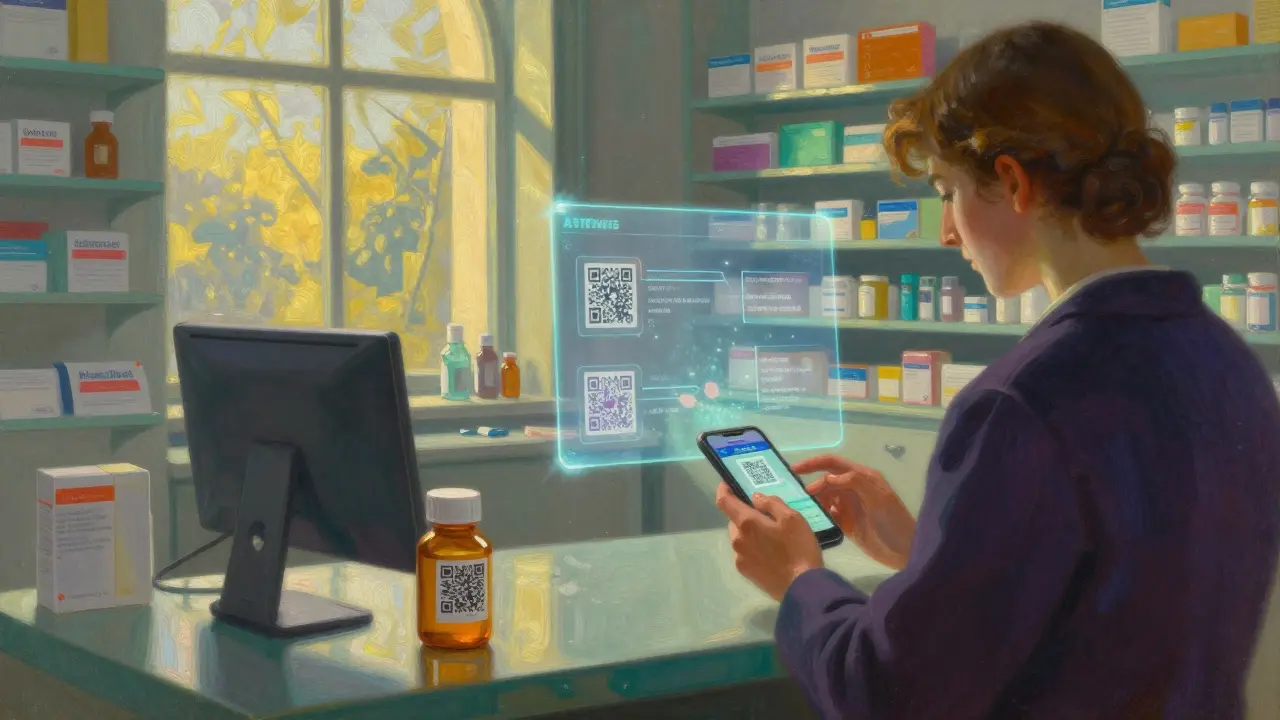
We are moving toward a world where labels are more than just stickers. Many pharmacies are now using QR codes that you can scan with your phone to see a video demonstration of how to take your medicine. Some are even experimenting with augmented reality (AR) that overlays instructions on the bottle via your camera. If your pharmacy offers these digital tools, ask how to access them. They can be a lifesaver for people who struggle with reading traditional text-only labels.
What should I do if the generic name on the label is different from what my doctor said?
Don't panic. Most prescriptions are filled with the generic version of a brand-name drug. For example, you might be prescribed "Lipitor" but the label says "Atorvastatin." These are the same medication. However, you should always ask your pharmacist to confirm that the generic is the exact equivalent of the brand-name drug your doctor intended.
Why is the expiration date important if the medicine still looks fine?
The expiration date is the date until which the manufacturer guarantees the full potency and safety of the drug. Over time, chemicals break down. While some drugs just lose strength (meaning they won't treat your condition effectively), others can degrade into substances that are harmful or cause unexpected side effects.
Can I ask for a printed list of all my medications and their labels?
Yes, and you should. Requesting a comprehensive medication list (CML) helps you and your doctors avoid dangerous drug-drug interactions. This is especially important if you use different pharmacies for different prescriptions.
What is a Medication Guide, and do I always get one?
A Medication Guide is a detailed paper handout required by the FDA for specific high-risk drugs. It provides more depth than a label, including serious risks and a list of questions to discuss with your doctor. You only get these for specific medications that have a higher potential for serious side effects.
What if the pharmacy label says 'take as directed' but doesn't give a time?
"Take as directed" is a vague instruction that can lead to errors. If your label is missing specific timing or frequency, stop and ask the pharmacist to clarify. They can check the original prescription from your doctor to provide the exact schedule you should follow.
Next Steps for Your Safety
Depending on your situation, here is how to handle your next pharmacy visit:
- If you're managing multiple meds: Bring all your current bottles to the pharmacist and ask for a "brown bag review" to check for interactions.
- If you have visual impairments: Ask for large-print labels or a digital version of your instructions before you leave the counter.
- If you're a caregiver: Use the "5 Rights" checklist for every single single medication you pick up for your loved one to ensure no swaps occurred.
Srikanth Makineni
April 7, 2026 AT 13:00bathroom cabinets are basically humidifiers for pills. move them to a drawer