
Most people think herpes is just a cold sore you get once in a while. But the truth is, herpes simplex virus is far more complex - and far more common - than most realize. Around two out of three people under 50 carry HSV-1, and one in eight people aged 15 to 49 have HSV-2. Many don’t even know they’re infected. That’s because herpes doesn’t always show up with blisters. Sometimes, it’s silent. And when it does flare up, it can be painful, confusing, and emotionally heavy.
Two Viruses, One Family
Herpes simplex virus isn’t one thing. It’s two distinct viruses: HSV-1 and HSV-2. They look almost identical under a microscope - both are enveloped, double-stranded DNA viruses about 180-200 nanometers wide. But their behavior? Totally different.
HSV-1 used to be called the "oral herpes" virus. It’s the one that gives you cold sores around your mouth. But now, it’s the leading cause of new genital herpes cases in high-income countries like the UK and the US. In fact, about 30-50% of new genital infections are HSV-1. That’s because more people are getting it through oral sex.
HSV-2, on the other hand, still mostly sticks to the genitals. It’s responsible for 70-80% of genital herpes cases. It’s also more likely to come back. While HSV-1 genital outbreaks might happen once a year or less, HSV-2 can flare up four to five times a year on average. And here’s the kicker: HSV-2 sheds virus from the skin even when there are no symptoms - on 10-20% of days. That means you can pass it on without knowing.
What Does a Herpes Outbreak Actually Look Like?
When symptoms appear, they follow a pattern. First, you might feel it before you see it. A tingling, burning, or itching sensation - usually in one spot. That’s the prodrome. It lasts a few hours to a day. Then, small red bumps appear. Within hours, they turn into fluid-filled blisters. These clusters are typically 0.5 to 1.5 cm wide. They break open, form ulcers, crust over, and heal without scarring - usually in 7 to 21 days.
Primary oral HSV-1 infection in kids? That’s often herpetic gingivostomatitis. Think fever over 38.5°C, mouth full of painful sores, bad breath, trouble swallowing. About 5-10% of these kids end up in the hospital because they won’t drink.
Primary genital HSV-2? It’s brutal. 93% of people get painful ulcers. 78% have burning when they pee. 65% have swollen lymph nodes in the groin. Fever and muscle aches? Common. Some people can’t walk without pain. And yes - it can take weeks to heal without treatment.
Recurrent outbreaks? Usually milder. Less fever. Fewer blisters. Shorter duration. Most people learn to recognize the warning signs. That’s when antiviral meds work best - if you take them within 24 hours of the first tingle.
It’s Not Just the Mouth or Genitals
Herpes doesn’t stop at skin. HSV-1 is the #1 cause of herpes keratitis - a corneal infection that leads to 50,000 cases of vision loss in the US every year. It’s rare, but dangerous. If you have a cold sore and rub your eye, you can blind yourself.
HSV-2 usually causes meningitis - inflammation of the lining around the brain and spinal cord - in healthy adults. It comes with headache, stiff neck, fever, and light sensitivity. It’s not as scary as encephalitis, but it still lands people in the ER.
HSV-1, though? That’s the main culprit behind herpes encephalitis - a life-threatening brain infection. It attacks the temporal lobe. Seizures, confusion, personality changes - it’s rare (just 2 cases per million people), but if you don’t treat it fast with IV antivirals, death or permanent brain damage is likely.
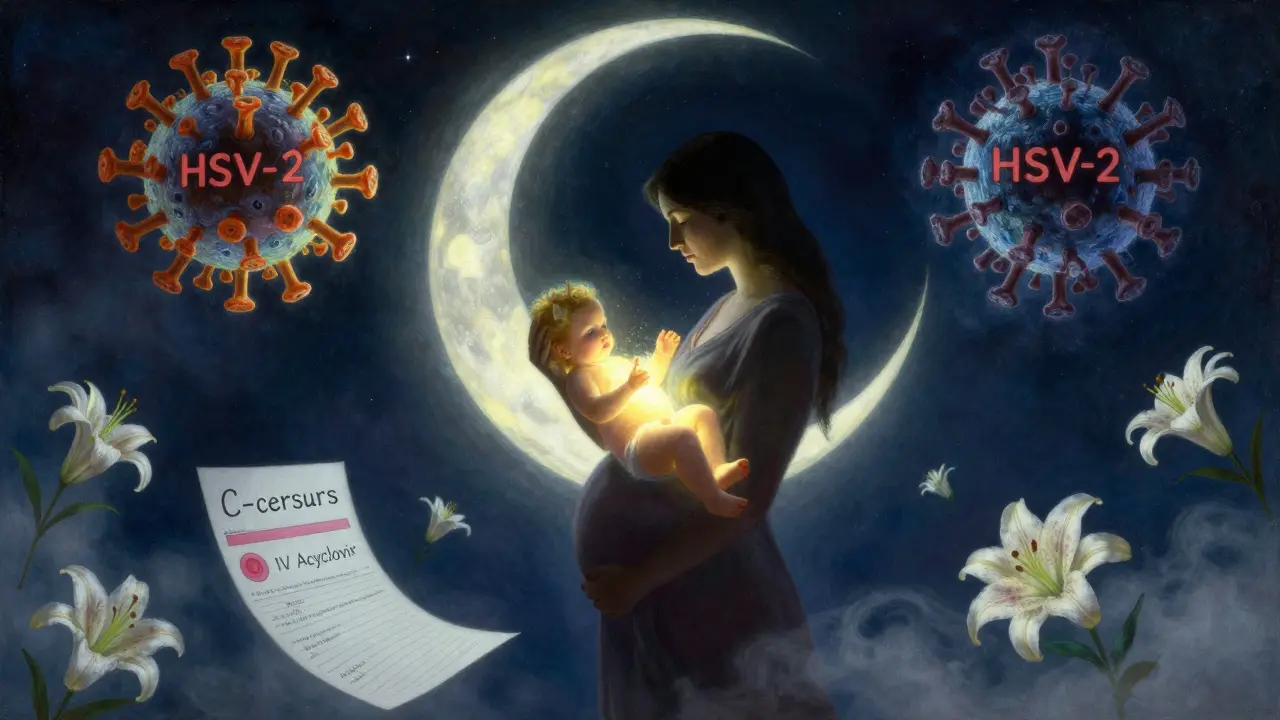
And then there’s neonatal herpes. One in 3,200 babies in the US gets it - usually during birth from an infected mother. HSV-2 causes 70% of cases, but HSV-1 is deadlier. Babies with HSV-1 encephalitis have a 30% chance of dying. That’s why doctors test pregnant women with active outbreaks and often recommend C-sections to prevent transmission.
How Do You Treat It?
There’s no cure. But there are three antiviral drugs that work well: acyclovir, valacyclovir, and famciclovir. They don’t kill the virus. They stop it from copying itself. That’s enough to shorten outbreaks, reduce pain, and lower the chance you’ll pass it on.
For a first genital outbreak, doctors usually prescribe acyclovir 400mg three times a day for five days. It cuts healing time from 19 days to 10. Pain drops from 12 days to 8. Valacyclovir (500mg twice daily) works just as well and means fewer pills - twice a day instead of three times.
For frequent outbreaks - say, six or more a year - daily suppressive therapy is recommended. Valacyclovir 500mg once a day reduces transmission to partners by nearly half. That’s not just a number. It’s peace of mind.
For herpes in the eye? Topical trifluridine drops - one drop every two hours while awake. It cuts healing time from 21 days to 14. For brain infections? High-dose IV acyclovir - 10mg/kg every eight hours. Delay by even a day, and outcomes get worse.
And resistance? It’s real. About 10% of HSV in people with advanced HIV is resistant to acyclovir. For them, foscarnet or the newer drug pritelivir (approved by the FDA in 2023) are options. Pritelivir cuts viral shedding by 87% in 48 hours - faster than anything before.
Testing and Diagnosis
Don’t guess. Get tested. The gold standard? PCR swab from a fresh blister. It’s 95-98% accurate. Viral culture? Outdated. Only 70-80% accurate.
For people without sores, blood tests check for antibodies. Type-specific tests like HerpeSelect or EUROIMMUN’s recomLine test can tell HSV-1 from HSV-2 with over 96% accuracy. But wait - these tests aren’t reliable until 12-16 weeks after infection. If you test too soon, you might get a false negative.
Most people don’t know they have herpes until they have an outbreak. In the US, only 19% of infected people are diagnosed. That’s why testing matters - especially if you’re sexually active or pregnant.
Living With Herpes
It’s not just about medicine. It’s about stigma. A survey of 1,500 people with herpes found 74% felt anxious about telling partners. 45% had relationship problems. 32% waited over six months to disclose.
But stories from Reddit and patient forums show a different side. People on daily valacyclovir report outbreaks dropping from 10 days to 2-3. Pain goes from a 7/10 to a 2/10. Some say they’ve had zero outbreaks in years.
Side effects? Headache and nausea are common with acyclovir. Famciclovir is gentler on the stomach. People with kidney issues need dose adjustments. And yes - antivirals cost money. Without insurance, valacyclovir can run $300-$400 a month. With insurance? $35-$60.
Support exists. ASHA’s hotline handles 12,000 calls a year. CDC’s website gets over 3 million visits annually. You’re not alone. And the more people talk openly, the less shame there is.
What’s Next?
The herpes market is growing. New drugs like pritelivir and amenamevir are showing promise - faster, stronger, better against resistant strains. Therapeutic vaccines? Still in trials. But early results show they can cut viral shedding by half.
WHO is pushing for universal HSV-2 screening in pregnant women. If adopted, it could prevent 1,200 neonatal cases a year in the US alone.
By 2030, experts predict a 30% drop in transmission - not because of a vaccine, but because more people are getting tested, treated, and talking about it. Knowledge is the real antiviral.
franklin hillary
February 1, 2026 AT 20:28Herpes isn't a moral failing it's a virus like any other
People treat it like it's the plague but we don't shame people for having the flu or HPV
Knowledge is power and the more we talk about this the less stigma there is
Antivirals work better than most people realize and suppressive therapy is a game changer
Stop making it about shame and start making it about science
Lilliana Lowe
February 3, 2026 AT 08:54Actually, your assertion that HSV-1 is now the leading cause of genital herpes in high-income countries is statistically accurate but grossly oversimplified. The CDC’s 2022 surveillance data indicates a 12.7% increase in oral-genital transmission among individuals aged 18–29, but this is confounded by sampling bias in urban clinics. Furthermore, the term "silent shedding" is misleading-viral shedding is quantifiable, not existential. One must also consider the epidemiological transition from HSV-2 to HSV-1 in genital infections, which correlates inversely with declining childhood HSV-1 exposure. This is not mere anecdote-it’s seroepidemiology.
June Richards
February 4, 2026 AT 03:36Wow so now we're giving out gold stars for having a common STD? 🙄
People still get diagnosed with herpes and cry for weeks. It's not "just a virus" if it ruins your dating life.
Bob Cohen
February 5, 2026 AT 09:39June you're missing the point
It's not about whether it's "ruining lives" it's about whether we're treating people like humans
My cousin had HSV-2 for 15 years, took valacyclovir daily, never transmitted it, got married, had two kids
She didn't need pity she needed accurate info and zero judgment
Stop turning medical facts into moral drama
Deep Rank
February 6, 2026 AT 09:51oh my god i had a cold sore once and then i kissed my bf and he got a big one on his dick and now he wont talk to me and i feel so guilty and also i think the doctor was judging me when i asked if i could still eat pizza and i cried in the parking lot and now i dont trust anyone and also why does the internet always say "its not a big deal" like i dont know that but it still hurts and i just want someone to say it’s okay to be scared and not okay to be perfect
Jamie Allan Brown
February 6, 2026 AT 12:06Deep, thank you for sharing that. It takes courage to speak up like that.
Herpes doesn’t define your worth, and no one deserves to feel alone with this.
There are communities out there-real ones-where people talk about this without shame.
You’re not broken. You’re human.
And yes, pizza is still fine.
Ishmael brown
February 7, 2026 AT 18:36HSV-1 genital outbreaks are increasing because people are being groomed by Big Pharma to have oral sex like it's a health trend 😏
They don't want you to know that the real cause is 5G radiation activating latent viruses in the trigeminal ganglia 🤫
Also, the CDC is funded by pharmaceutical companies who profit from antivirals. Just saying.
My cousin's neighbor's dog got herpes from a squirrel. Coincidence? I think not. 🐶💉
Lu Gao
February 9, 2026 AT 03:57Bro the 5G thing is wild but have you considered that HSV-1 has been around since ancient Egypt? 😅
Also, I got HSV-1 orally as a kid, then got genital HSV-1 from oral sex at 22. No drama. No trauma. Just took valacyclovir when I felt the tingle. Zero outbreaks in 4 years now.
Science > conspiracy. Also, dogs don’t get human herpes. That’s a myth. 🐶❌
Jaden Green
February 10, 2026 AT 23:47Let’s be honest-the entire narrative around herpes is a liberal social engineering project designed to normalize promiscuity under the guise of "reducing stigma."
Why are we medicating a natural consequence of sexual behavior? Why not encourage abstinence or monogamy instead of promoting lifelong antiviral dependency?
And let’s not forget: HSV-2 is a punishment for reckless conduct. The fact that we now treat it like a cold is a symptom of societal decay.
My grandmother never had herpes. She also never had 12 partners before 25.
Nancy Nino
February 12, 2026 AT 09:56While I appreciate the clinical precision of the original post, I must respectfully contest the implication that stigma is solely a product of ignorance. The sociocultural dimensions of genital herpes, particularly as it intersects with gender, sexuality, and moral judgment, require more nuanced discourse than mere epidemiological data can provide.
Moreover, the normalization of antiviral suppression as a default public health strategy may inadvertently diminish personal agency in sexual decision-making. One must consider whether medical intervention, however efficacious, should supplant ethical reflection.
Angel Fitzpatrick
February 13, 2026 AT 15:41HSV isn't a virus-it's a bioweapon deployed by the WHO to depopulate the sexually active demographic.
They've been quietly seeding the population with latent herpes since the 1970s to create a compliant, fear-driven citizenry.
That's why they push PCR tests and suppressive therapy-it's not about health, it's about control.
And don't get me started on the fact that neonatal herpes rates dropped after the 2008 vaccine trials were buried.
They don't want you to know about the 1983 CDC internal memo on "viral modulation of reproductive behavior."
Check the source. Dig deeper. The truth is in the footnotes.