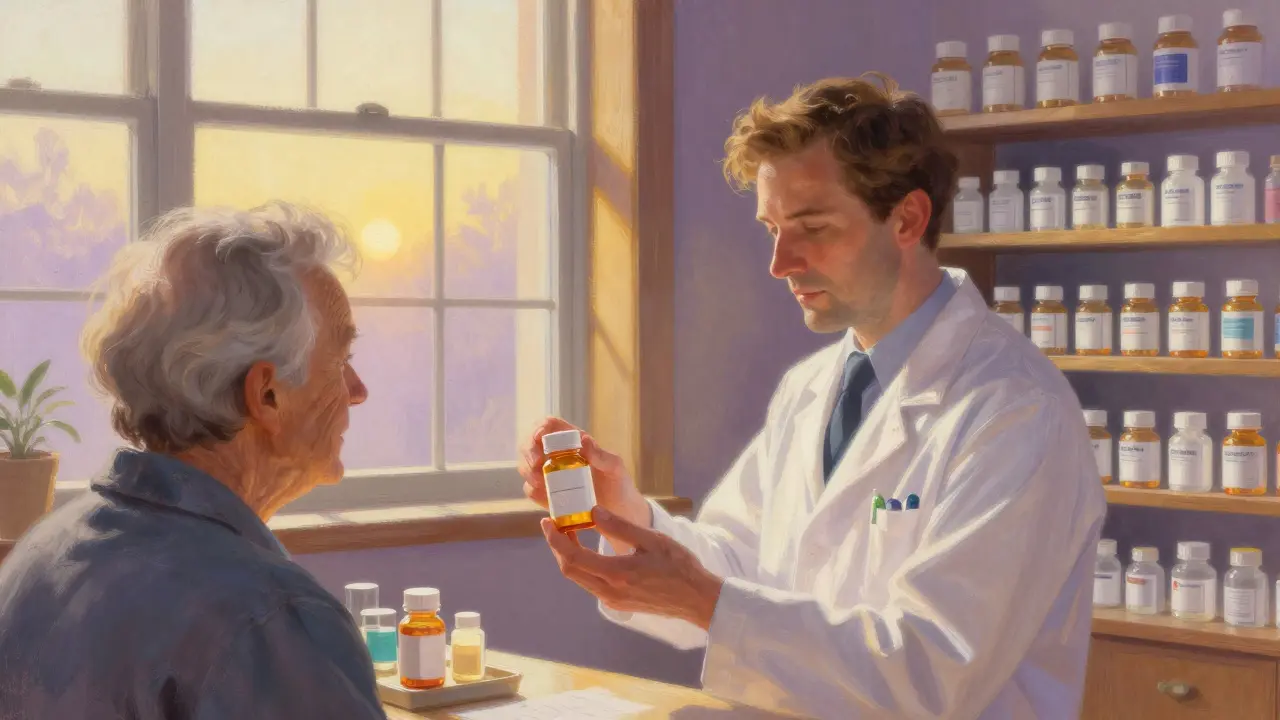
Switching from a brand-name drug to a generic can feel risky. What if the new pill doesn’t work the same? What if you start feeling weird-headaches, nausea, or just not quite right? For many people, these fears aren’t imaginary. They’re real. And they often come down to one thing: inactive ingredients.
Most generic drugs are required by the FDA to have the same active ingredient as the brand-name version. That’s the part that actually treats your condition. But the rest-the fillers, dyes, binders, and coatings? Those can change. And for some medications, especially ones with a narrow therapeutic index like warfarin, levothyroxine, or epilepsy drugs, even tiny differences in those inactive ingredients can throw off how your body absorbs the drug. That’s where authorized generics come in.
An authorized generic isn’t just another generic. It’s the exact same pill as the brand-name version, made by the same company, in the same factory, with the same ingredients-down to the last filler. The only difference? No brand name on the label. It’s sold at generic prices, often 15-20% cheaper than the brand. You get the same drug, same effects, same side effects-just without the brand markup.
Why Authorized Generics Are Different From Regular Generics
Regular generics go through the Abbreviated New Drug Application (ANDA) process. That means the maker has to prove the drug is bioequivalent to the brand. But bioequivalent doesn’t mean identical. It means the active ingredient behaves similarly in your body-within an acceptable range. That range? Usually 80-125% of the brand’s absorption rate. For most drugs, that’s fine. For others, it’s not.
Authorized generics skip all that. They’re produced under the original brand’s New Drug Application (NDA). That means they’re made using the exact same formula, same equipment, same quality controls. No bioequivalence testing needed. They’re not just similar-they’re the same.
That’s why pharmacists and doctors often recommend them for patients who’ve had bad reactions to traditional generics. A 2023 study in US Pharmacist found that 32% of patients reported side effects after switching to a regular generic, especially with thyroid or blood-thinning meds. But when they switched to an authorized generic? Those complaints dropped sharply.
One pharmacist on Reddit shared a case: a patient on levothyroxine had been switching between three different generics over six months, each time feeling fatigued or jittery. After switching to the authorized generic-identical to the brand-the symptoms vanished. The patient didn’t know the difference until the pharmacist explained it. That’s the power of consistency.
How Authorized Generics Are Made and Sold
Here’s how it works: the brand-name company (like Pfizer, Merck, or AbbVie) makes the drug. When a generic competitor files to copy it, the brand company can launch its own version-same pill, different label-and sell it under a private label through distributors like AmerisourceBergen or Cardinal Health.
These aren’t knockoffs. They’re not repackaged. They’re the exact same tablets or capsules, just without the brand name. Sometimes the color or imprint changes slightly-just so you can tell it’s not the branded version. But the active ingredient? Same. The inactive ingredients? Same. The manufacturing line? Same.
The FDA doesn’t list authorized generics in the Orange Book (the official guide to therapeutic equivalence), because they’re sold under the original NDA. But they’re still considered therapeutically equivalent. Pharmacists can substitute them for brand-name drugs unless the prescriber writes “do not substitute.”
That’s a key point: you don’t need a new prescription. If your doctor didn’t say “dispense as written,” your pharmacist can switch you to an authorized generic without asking. And if you’re on Medicare Part D? 92% of the time, you’ll pay the same generic copay as you would for a regular generic.
When Authorized Generics Are Most Useful
Not every drug has an authorized generic. Only about 15-20% of brand-name medications offer one as of 2023. But they’re most common for drugs where consistency matters most:
- Thyroid meds like levothyroxine: tiny changes in absorption can cause weight gain, fatigue, or heart palpitations.
- Blood thinners like warfarin: even small shifts in dosage can lead to dangerous clots or bleeding.
- Anti-seizure drugs like phenytoin or carbamazepine: inconsistent absorption can trigger seizures.
- Immunosuppressants like cyclosporine: used after transplants; even slight changes can cause organ rejection.
If you’ve been on one of these drugs for years and suddenly started feeling off after switching to a generic, ask your pharmacist: “Is there an authorized generic for this?” You might be surprised.
GoodRx users give authorized generics a 4.2/5 rating for these high-risk drugs-compared to 3.7/5 for regular generics. That’s not a small gap. It’s the difference between feeling stable and feeling unstable.

Why Don’t More People Know About Them?
Here’s the catch: authorized generics are sneaky. They don’t advertise. They don’t show up on TV. They’re sold quietly through pharmacies and mail-order services. And many patients don’t realize they’ve been switched until they notice the pill looks different-or they get a bill that’s lower than expected.
A 2022 Kaiser Family Foundation survey found that 28% of patients didn’t know they were getting an authorized generic until after they picked up the prescription. Some panicked, thinking they’d been given the wrong medicine. Others were relieved when they found out it was the same drug, just cheaper.
Pharmacies are getting better at identifying them. About 87% of chain pharmacies now use National Drug Code (NDC) databases to cross-reference authorized generics. But that doesn’t mean every pharmacist remembers to tell you. You have to ask.
Here’s what to say at the pharmacy: “I’m on [drug name]. Is there an authorized generic available? I want to make sure I’m getting the same formula.” If they hesitate, ask for the pharmacist to check the NDC. Most will have the info in seconds.
The Controversy: Are Authorized Generics Really Helping?
There’s a dark side. When the Hatch-Waxman Act passed in 1984, it gave the first generic company 180 days of exclusive rights to sell a generic version after patent challenges. The idea was to reward innovation and speed up competition.
But brand companies started using authorized generics as a loophole. Instead of waiting for the first generic to enter, they’d launch their own version during that 180-day window. Suddenly, the first generic had to compete with a cheaper, identical product-and often lost market share. The FTC found that when authorized generics entered during exclusivity, prices dropped 25-30% more than when they didn’t. Great for consumers. Bad for the first generic company.
Some experts, like Harvard’s Dr. Aaron Kesselheim, say this tactic undermines the system designed to encourage generic competition. The Generic Pharmaceutical Association (GPhA) reported that 43% of authorized generics launched during the first generic’s exclusivity period-exactly when the law meant to give them a head start.
But here’s the thing: even if the strategy is questionable, the outcome isn’t. Patients still get cheaper, identical drugs. And with the FDA planning to add a dedicated section for authorized generics in the Orange Book by mid-2024, transparency is improving. The Biden administration has also signaled it wants to crack down on anti-competitive behavior.

What You Should Do Right Now
If you’re taking a brand-name drug and paying a high copay, here’s your action plan:
- Check the drug name on FDA’s list of authorized generics (updated quarterly).
- Ask your pharmacist: “Is there an authorized generic for this?” Don’t wait for them to offer it.
- If one exists, ask for it by name. Say: “I’d like the authorized generic version, please.”
- Compare your new prescription to your old one. Same shape? Same color? Same imprint? If not, that’s normal-it’s just a different label.
- Monitor how you feel. If you’ve had issues with regular generics, this might be the solution.
If your insurance doesn’t cover it at generic pricing, call them. 78% of commercial insurers do cover authorized generics at the generic rate. If they say no, ask for a coverage appeal. You’re entitled to the lowest-cost option that’s therapeutically equivalent.
And if you’re switching from a brand to a generic and you’ve had bad reactions before? Don’t guess. Ask for the authorized version. It’s not a gamble. It’s the same drug you’ve been on-just without the brand name.
Final Thought: It’s Not About Generic vs. Brand. It’s About Consistency.
Medication isn’t just about what’s in the pill. It’s about what’s in your body. For some people, the difference between a brand and a generic isn’t cost-it’s control. Control over their health. Control over their symptoms. Control over their peace of mind.
Authorized generics give you that control. No guesswork. No surprises. Just the same drug, at a lower price.
You don’t have to settle for “close enough.” You deserve the real thing. And sometimes, the real thing is hiding under a different label.
Liz MENDOZA
December 28, 2025 AT 09:36I switched my levothyroxine to an authorized generic last year after months of fatigue and brain fog. Within two weeks, I felt like myself again-no more afternoon crashes, no more panic about whether my TSH was going to spike. I didn’t even know these existed until my pharmacist mentioned it. Now I tell everyone I know who’s on meds like this. It’s not about brand loyalty-it’s about stability.
Gerald Tardif
December 29, 2025 AT 12:19Man, I wish I’d known this five years ago. My dad was on warfarin for years, kept switching generics, kept ending up in the ER with weird bruising. We finally got him on the authorized version-same pill, same everything-and he hasn’t had a single bleed since. Funny how the system makes you suffer before you find the quiet fix.
Monika Naumann
December 31, 2025 AT 03:34It is truly a disgrace that pharmaceutical corporations in the United States exploit the vulnerability of patients for profit. In my country, India, we have strict regulations that ensure bioequivalence without such loopholes. This entire system is a capitalist farce, and the FDA’s silence on this matter is complicit.
Elizabeth Ganak
January 1, 2026 AT 14:56OMG I didn’t even know this was a thing! I’ve been switching generics for my seizure meds and had no idea why I kept feeling off. I’m calling my pharmacist tomorrow. Thank you for writing this-I feel like I just got handed a secret weapon.
Satyakki Bhattacharjee
January 2, 2026 AT 01:47People are too lazy to think. The body adapts. You think your thyroid is so fragile? It’s not. You’re just afraid of change. Stop blaming the pill and start blaming your fear. Everything changes. Why should your medicine be different?
Kishor Raibole
January 2, 2026 AT 18:48Let us not be deceived by the siren song of corporate benevolence. The authorized generic is not a gift-it is a calculated maneuver, a Trojan horse disguised as relief. The brand-name manufacturer, in its infinite wisdom, seeks to crush the fledgling generic competitor under the weight of its own identical product. This is not healthcare. This is economic warfare waged upon the poor and the desperate.
Kylie Robson
January 3, 2026 AT 06:01Actually, the bioequivalence range of 80-125% is defined under 21 CFR 320.22, and while authorized generics bypass ANDA requirements, they are still subject to the same CMC (Chemistry, Manufacturing, and Controls) standards as the originator product under the NDA. The key differentiator is manufacturing continuity, not regulatory classification. Also, the Orange Book doesn't list them because they’re not separate NDAs-they’re NDA-authorized products under the same NDA number. Misconceptions abound.
Andrew Gurung
January 3, 2026 AT 06:14Bro… I just spent $180 on my brand-name pill last month. I switched to the authorized generic and paid $22. I cried. Not because I was sad. Because I realized I’d been paying for a logo. A FREAKING LOGO. 🤡💸
Paula Alencar
January 4, 2026 AT 23:18Let me tell you something about the human body-it is not a machine that can be calibrated with algorithms. It is a symphony of delicate balances, and when you change the instrument-even slightly-you disrupt the harmony. I have seen patients, bright, functioning, whole, reduced to shadows after switching generics. And then, like a miracle, when they found the authorized version… the color returned to their cheeks. The light returned to their eyes. This isn’t just chemistry. It’s dignity. It’s identity. It’s the right to be treated as a person, not a cost center.
Nikki Thames
January 5, 2026 AT 03:14How is it possible that people still don’t know this? Are you really that disconnected from your own healthcare? You don’t read your prescription labels? You don’t ask questions? You just swallow whatever they hand you and call it ‘trust’? This isn’t negligence-it’s negligence with a side of entitlement.
Chris Garcia
January 6, 2026 AT 14:51In Nigeria, we have no such luxury. Our generics are often repackaged, sometimes expired, sometimes without proper labeling. To hear that in the U.S., there is a way to get the exact same medicine at half the price… it feels like a dream. I wish every developing nation could access this kind of transparency. This isn’t just medicine-it’s justice.
James Bowers
January 8, 2026 AT 04:29Stop glorifying this. It’s not magic. It’s just the same pill with a different label. People act like they’ve discovered the Holy Grail. It’s pharmaceutical marketing dressed as enlightenment. You’re not special for knowing this. You’re just late to the party.
Will Neitzer
January 9, 2026 AT 12:31Thank you for the clarity. I’ve been advocating for this in my patient education workshops for years, but most clinicians are unaware of the distinction between authorized generics and standard generics. The FDA’s forthcoming Orange Book update will be a watershed moment-finally, a standardized identifier for these products. When pharmacists can instantly flag authorized generics via NDC lookup, we’ll see a dramatic reduction in adverse events tied to formulation variability. This is precision medicine, quietly implemented.