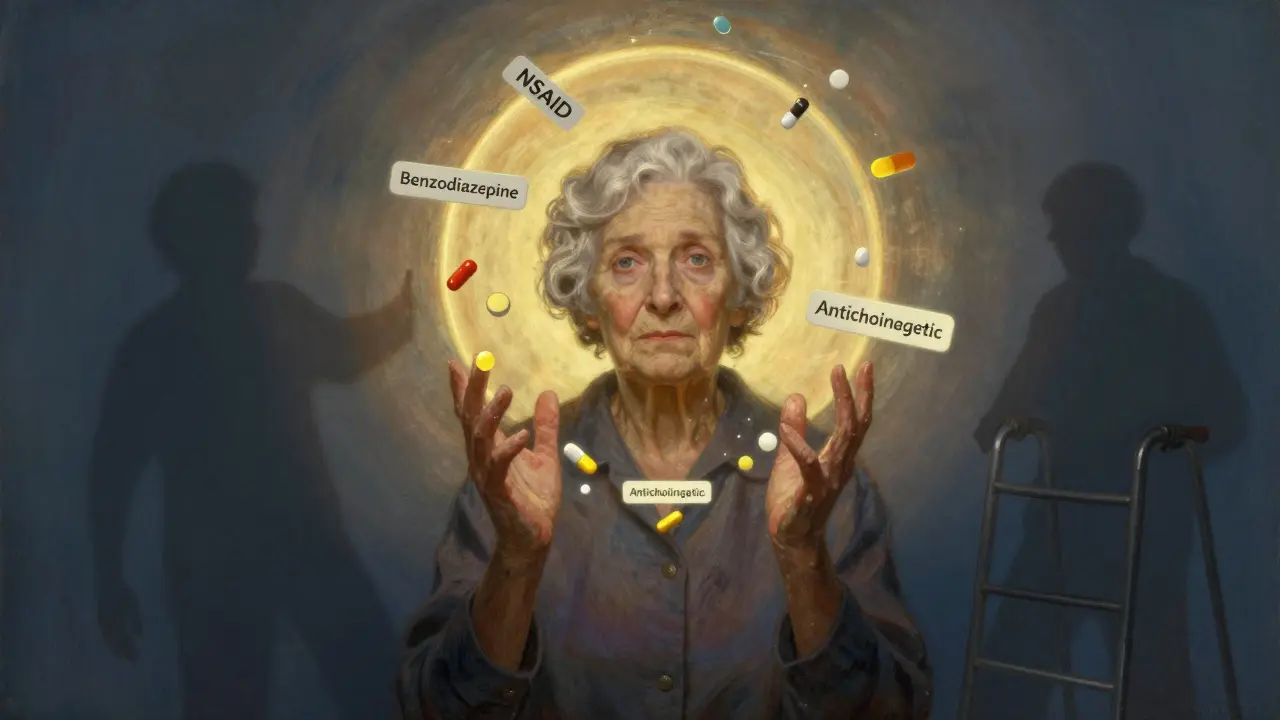
What Is Polypharmacy, and Why Does It Matter for Older Adults?
When someone takes five or more medications at the same time, that’s called polypharmacy. It’s not always wrong-many older adults need multiple drugs to manage conditions like high blood pressure, diabetes, arthritis, or heart disease. But the more pills you take, the higher the risk of something going wrong. In the UK and the US, nearly 4 in 10 adults over 65 are on five or more medications. In nursing homes, that number jumps to over 80%. And it’s getting worse. Between 2010 and 2019, the number of older adults taking 10 or more drugs rose from 10% to nearly 15%.
This isn’t just about numbers. Every extra pill adds risk. Older bodies process drugs differently. Kidneys and liver don’t clear medications as fast. The brain becomes more sensitive to side effects. A drug that’s safe for a 40-year-old might cause confusion, dizziness, or falls in a 75-year-old. And when you’re on five or more meds, the chance of dangerous drug interactions jumps from 6% to over 50%. With seven or more, it’s almost certain.
How Drug Interactions Turn Harmless Pills Into Dangerous Mixes
Imagine taking a blood pressure pill, a painkiller, and a sleep aid-all prescribed by different doctors. Each one seems fine on its own. But together? They can drop your blood pressure too low, make you dizzy, and increase your risk of falling. That’s a drug interaction. And it’s not rare. NSAIDs like ibuprofen, often used for arthritis, can mess with kidney function when taken with diuretics or ACE inhibitors. Antidepressants can interact with blood thinners, raising bleeding risk. Even common OTC meds like antihistamines (found in allergy or sleep aids) can cause confusion and urinary retention in older adults because they block acetylcholine-a key brain chemical.
One of the biggest problems is the prescribing cascade. A patient takes a medication, develops a side effect-say, constipation from an opioid-so another doctor prescribes a laxative. Then the laxative causes diarrhea, so they get an anti-diarrheal. Now they’re on three drugs for one original issue. No one steps back to ask: Is the first drug even necessary? This cycle is common in older adults, especially when care is split between specialists who don’t talk to each other.
The Hidden Dangers: Falls, Hospitalizations, and Cognitive Decline
Polypharmacy doesn’t just cause interactions-it leads to real, life-changing harm. Studies show older adults on five or more medications are twice as likely to fall. Falls lead to broken hips, long hospital stays, and loss of independence. One study found that reducing unnecessary meds cut falls by up to 22%. Another found that people on 10 or more drugs had a 50% higher chance of being hospitalized for a drug-related problem.
And it’s not just physical. Many medications-especially anticholinergics (used for overactive bladder, allergies, or depression) and benzodiazepines (sleep or anxiety drugs)-are linked to memory problems and faster cognitive decline. A 2023 study tracked older adults for five years and found those on three or more anticholinergic drugs had a 50% higher risk of developing dementia. These drugs don’t cause dementia directly, but they make the brain work harder, mask symptoms, and accelerate decline in people already at risk.
Then there’s adherence. How many of us forget to take one pill a day? Now imagine 10 pills, with different times, instructions, and refills. Many older adults give up. They skip doses, double up accidentally, or stop entirely because it’s too confusing. That’s not laziness-it’s a system failure.

What Is Deprescribing? It’s Not Just Stopping Pills
Deprescribing isn’t about cutting meds randomly. It’s a planned, careful process of reducing or stopping drugs that are no longer helping-or are doing more harm than good. It’s not about removing everything. It’s about keeping what’s essential and ditching what’s risky.
Doctors use tools like the Beers Criteria and STOPP/START to guide this. The Beers Criteria list drugs that should generally be avoided in older adults-like long-acting benzodiazepines, certain antipsychotics, and some NSAIDs. STOPP/START goes further: it identifies prescriptions that are inappropriate (STOPP) and ones that are missing (START). For example, a patient on multiple painkillers might not be getting a bone-strengthening drug for osteoporosis. That’s a START opportunity.
Successful deprescribing happens in steps. First, review every medication-prescription, OTC, vitamins, supplements. Then, ask: Is this still needed? Is the benefit still greater than the risk? Has the condition improved? Could a non-drug option work? For example, instead of a sleep aid, could better sleep hygiene help? Instead of a laxative, could more fiber and water do the job?
Why Is Deprescribing So Hard to Do?
If it’s so clear that polypharmacy is dangerous, why aren’t more doctors doing it? Three big reasons.
First, time. A typical GP appointment is 10 minutes. Reviewing a 12-drug list takes longer than that. And most systems don’t pay doctors for medication reviews-they pay for prescribing.
Second, fear. Doctors worry that stopping a drug will make symptoms come back. A patient on a statin for 10 years might panic if you suggest stopping. But what if the statin is no longer needed? Or what if the patient’s liver is damaged from long-term use? Without clear data, it’s easier to keep prescribing.
Third, patients believe their meds are helping-even when they’re not. Many older adults have been on the same pills for years. They think, “This is what keeps me going.” They don’t know the difference between a drug that treats a problem and one that just masks a symptom.
And let’s not forget the system. In the UK, GPs are pressured to hit targets-cholesterol levels, blood sugar, blood pressure. That pushes them to add more drugs, not fewer. Specialists prescribe for their own area without seeing the full picture. No one’s in charge of the whole medication list.

Who Can Help? Pharmacists, Caregivers, and You
Deprescribing doesn’t have to be done alone. Pharmacists are your best ally. In the UK, community pharmacists can do Medication Use Reviews (MURs) or New Medicine Services (NMS)-free, one-on-one sessions to go over your meds. They spot interactions, check for duplicates, and flag risky drugs. Ask for one if you’re on five or more pills.
Caregivers play a huge role too. If you’re helping a parent or partner manage meds, keep a written list. Include the name, dose, reason, and time of day. Use a pill organizer with alarms. Take that list to every appointment-even if it’s for a sore knee. Doctors need to see the full picture.
And you? Ask questions. Don’t be shy. At every visit, ask: “Is this medicine still needed?” “Could any of these be stopped?” “Are there side effects I should watch for?” Write down the answers. If you’re not sure, ask for a referral to a geriatrician or pharmacist who specializes in older adults.
Real-Life Success: What Happens When You Deprescribe
There are real stories of people getting better after cutting back.
One 82-year-old woman in Birmingham was on 11 medications: for high blood pressure, arthritis, anxiety, sleep, heartburn, and an overactive bladder. She was falling regularly, confused most days, and couldn’t walk without a walker. Her GP referred her to a geriatric pharmacist. After a full review, they stopped three drugs: a sleeping pill (benzodiazepine), an anticholinergic for bladder control, and a low-dose aspirin she’d been taking for 15 years with no clear reason. Within six weeks, her balance improved. Her confusion lifted. She started walking without her walker again.
Another man, 78, was on five painkillers for back pain. He had stomach ulcers and kidney issues. His doctor switched him to physical therapy, heat packs, and a single, safer pain reliever. His kidney function improved. He stopped needing regular blood tests.
These aren’t miracles. They’re results of careful review.
What You Can Do Right Now
You don’t need to wait for a doctor’s appointment to start improving your medication safety.
- Make a complete list of everything you take: prescriptions, OTC drugs, vitamins, supplements, herbal teas. Include doses and why you take them.
- Take that list to your GP or pharmacist. Ask for a full medication review.
- Ask: “Which of these are absolutely necessary?” “Which ones might be doing more harm than good?”
- If you’re on a benzodiazepine, anticholinergic, or NSAID long-term, ask if there’s a safer alternative.
- Don’t stop anything on your own. But do start asking questions.
Medications save lives. But they can also take them away-if we’re not careful. For older adults, the goal isn’t to take as many pills as possible. It’s to take only the ones that truly make a difference-and let go of the rest.
What is considered polypharmacy in older adults?
Polypharmacy is generally defined as taking five or more medications at the same time. This includes prescription drugs, over-the-counter medicines, vitamins, and herbal supplements. While some older adults need multiple medications for chronic conditions, the risk of side effects and dangerous interactions rises sharply once you hit five or more drugs.
Can deprescribing really improve health in older adults?
Yes. Studies show that carefully reducing unnecessary medications can lead to fewer falls, less confusion, fewer hospital visits, and better quality of life. One study found a 22% drop in falls after deprescribing high-risk drugs like benzodiazepines and anticholinergics. The key is doing it slowly and with medical supervision-not stopping cold turkey.
Which medications are most dangerous for older adults?
The Beers Criteria identifies several high-risk drugs for older adults, including benzodiazepines (like diazepam), anticholinergics (like diphenhydramine in sleep aids), NSAIDs (like ibuprofen), and certain antipsychotics. These drugs increase risks of falls, confusion, kidney damage, and dementia. Even common OTC meds like cold and allergy pills can be dangerous when taken long-term.
Why don’t doctors always reduce medications?
Many doctors lack time, training, or support to review complex medication lists. There’s also fear-of symptoms returning, patient pushback, or legal concerns. Payment systems often reward prescribing more drugs than reviewing them. Plus, patients often believe their meds are helping, even when they’re not.
How can I help an older relative manage their medications?
Keep a written list of all medications, including doses and reasons. Use a pill organizer with alarms. Go to appointments with them and ask the doctor: "Is this still needed?" and "Could any be stopped?" Ask for a Medication Use Review from a community pharmacist. Never stop a drug without professional advice.
Are over-the-counter drugs and supplements safe for older adults?
Not always. Many older adults don’t realize OTC drugs and supplements can interact with prescriptions. For example, St. John’s Wort can reduce the effect of blood thinners. Antihistamines in cold medicines can cause confusion. Even calcium supplements can interfere with thyroid or kidney meds. Always tell your doctor or pharmacist about everything you take-even if you think it’s "natural" or "harmless."
Sandeep Jain
December 27, 2025 AT 10:53roger dalomba
December 29, 2025 AT 02:37Brittany Fuhs
December 29, 2025 AT 23:24Sophia Daniels
December 31, 2025 AT 22:04Nikki Brown
January 2, 2026 AT 10:09Steven Destiny
January 3, 2026 AT 22:54sakshi nagpal
January 5, 2026 AT 12:56Peter sullen
January 6, 2026 AT 17:39Fabio Raphael
January 7, 2026 AT 21:22Amy Lesleighter (Wales)
January 8, 2026 AT 23:45Becky Baker
January 10, 2026 AT 02:43Rajni Jain
January 10, 2026 AT 15:42Natasha Sandra
January 10, 2026 AT 15:53