Why Your Diet Matters More Than Medicine
If you've been told your kidneys aren't working as they used to, the advice you hear next usually centers on what you eat. We often think of medication as the heavy lifter in our healthcare journey, but when it comes to Chronic Kidney Diseasea condition where the kidneys lose function gradually over time, your plate plays a starring role. A proper renal diet isn't just about restriction; it's about protecting your heart, balancing your blood pressure, and giving your remaining kidney tissue a fighting chance.
You might wonder why we focus so heavily on three specific minerals. The answer lies in how these filters work. Healthy kidneys filter waste and extra fluid from your bloodstream naturally. When they struggle, dangerous substances build up. Sodium causes water retention, potassium messes with heart rhythm, and phosphorus weakens bones. Ignoring these isn't just about feeling tired; hyperkalemia (high potassium) can stop a heart mid-beat. That's why the National Kidney Foundation emphasizes that roughly 90% of adults with this condition don't even know they have it until late stages. Diet is your primary tool to slow progression before you reach dialysis.
The Three Big Minerals to Watch
Navigating this terrain requires precision. You can't just eat "healthy" in the traditional sense because many heart-healthy foods-bananas, spinach, avocados-are actually risky for compromised kidneys. Instead, we focus on three key targets defined by clinical guidelines like KDIGO and KDOQI.
Sodium: The Fluid Retainer
Most people get way too much salt without realizing it. Processed foods contribute about 75% of your daily intake. A single serving of canned soup can hide 800mg of sodium, which is nearly half your daily limit. For those with non-dialysis kidney issues, aiming for under 2,000mg daily is the sweet spot. Think of one teaspoon of table salt-that's the upper boundary.
Reducing sodium directly lowers blood pressure. If you cut out just 1,000mg per day, you might drop systolic pressure by 5 to 6 points. This puts less strain on your glomeruli, the filtering units inside your kidneys. Read labels religiously. Look for "no salt added" versions and avoid brine-cured meats like ham or bacon.
Potassium: The Heart Rhythm Regulator
This is where the confusion really starts. Doctors tell us to load up on fruits and veggies, but for stage 3 to 5 kidney patients, potassium builds up fast. Levels above 5.5 mEq/L are clinically dangerous. While your kidneys still handle some regulation, they hit a wall. You need to aim for 2,000-3,000mg daily depending on your labs.
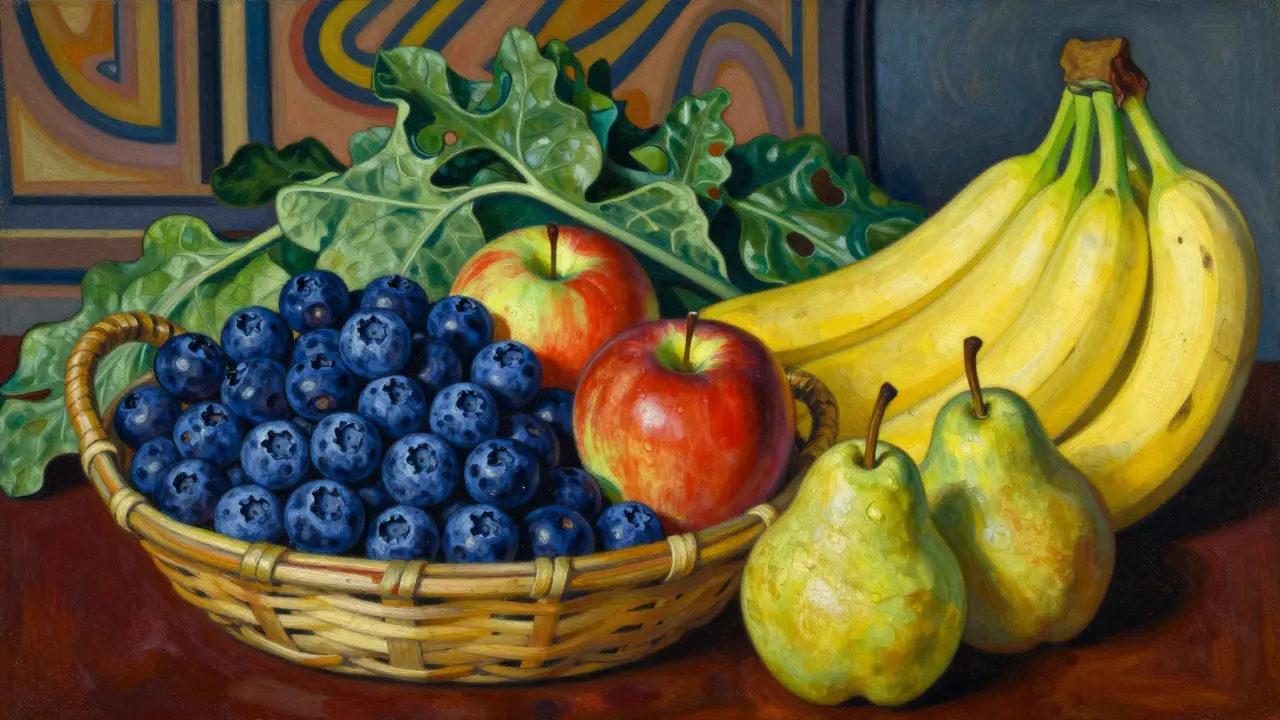
The trick is knowing which foods hold the most risk. A medium banana packs 422mg. Blueberries? Only 65mg per half cup. Swapping your morning fruit bowl from bananas to berries changes your entire load without sacrificing taste. Animal proteins absorb potassium at 80-90%, whereas plant sources sit around 50-70%. Understanding this difference gives you flexibility.
Phosphorus: The Bone Leacher
Phosphorus management gets overlooked until it's too late. High levels leach calcium from your bones, causing fractures and itchy skin. The goal is 800-1,000mg daily. Here is the twist: natural phosphorus (in dairy, meat) absorbs about 50-70%, but additives in processed foods absorb 90-100%.
A can of cola delivers 450mg of phosphorus almost entirely absorbed by your body. Compare that to a slice of processed cheese with 250mg. Both sound okay, but the additive version hits harder. Limit colas and frozen dinners, and choose white bread over whole grain. Whole grains seem healthy, but they contain bran and germ which load up on phosphorus that your kidneys can't clear.
Practical Strategies for Daily Life
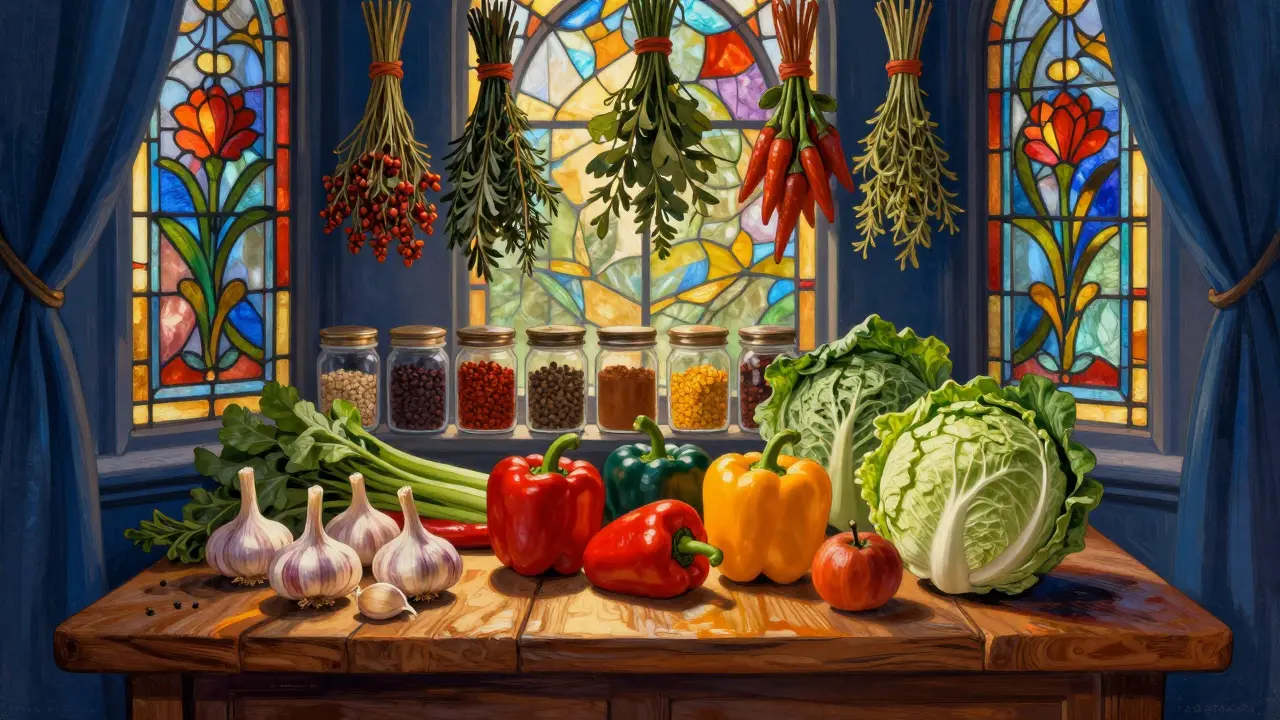
Dietary change sounds daunting because you are rewriting years of eating habits. Experts note it takes 3 to 6 months to truly adapt. Start with flavor swaps. Salt enhances taste by masking other sensations. To replace that kick, use herb blends like Mrs. Dash or make your own mixes with garlic powder, onion powder, and black pepper.
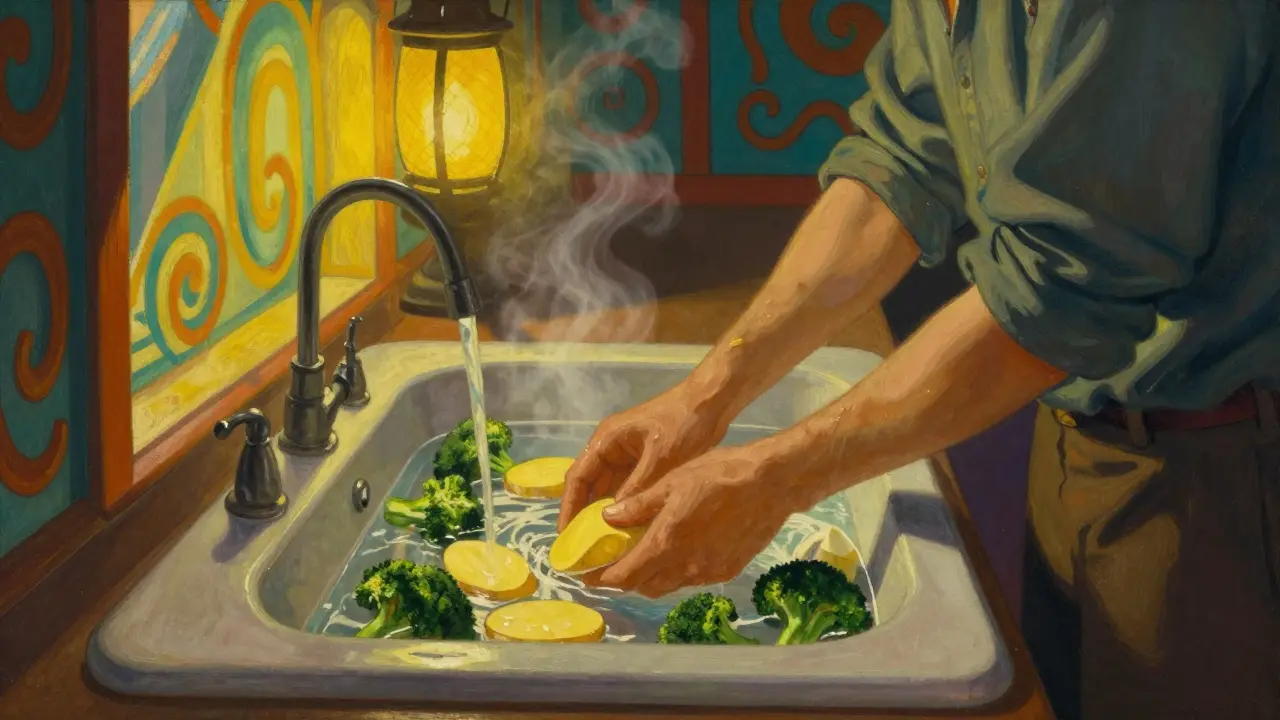
Vegetable prep needs attention too. Many greens are loaded with potassium. If you love broccoli or potatoes, use the leaching method. Cut them small, soak in warm water for a few hours, then boil in fresh water. This process pulls up to 50% of the potassium out of the veg before you cook it. Don't throw away the cooking water; drain it immediately. This is a game-changer for including veggies without fear.
| Nutrient | Choose These (Low Risk) | Limit These (High Risk) |
|---|---|---|
| Vegetables | Cabbage, Cauliflower, Peppers | Spinach, Tomatoes, Beetroot |
| Fruits | Apples, Pears, Berries, Pineapple | Bananas, Oranges, Avocado, Prunes |
| Protein | Egg whites, Chicken breast (moderate portion) | Liver, Anchovies, Processed Deli Meats |
| Grains | White rice, White pasta, Barley | Oats, Brown Rice, Quinoa |
| Dairy | Rice milk (unsweetened), Butter | Milk, Cheese, Yogurt |
Protein: Finding the Balance
We often assume "less is more" for protein, but strict restriction can backfire. Older research suggested dropping intake drastically to save the kidneys. Recent studies by experts like Dr. Srinivasan Beddhu show that going below 0.6g/kg/day increases malnutrition risk significantly in elderly patients. Malnutrition is a leading cause of mortality in kidney patients, sometimes worse than the kidney failure itself.
The revised advice leans towards quality. Aim for 0.55 to 0.8 grams of protein per kilogram of body weight daily. Fish like salmon and cod offer a great middle ground-they are naturally low in sodium but moderate in potassium. Eat 2-3 ounces two or three times a week rather than large portions once a week. This maintains muscle mass while limiting waste production that your kidneys struggle to excrete.
Troubleshooting Common Struggles
Even with the best plans, life happens. You might attend a dinner party or feel craving a specific snack. Here is how to handle it without derailing progress. First, portion control matters more than perfection. Two bites of a forbidden fruit won't kill you, but a whole bowl will spike your blood chemistry. Second, check your urine output. If you produce less than a liter a day, you likely need a fluid cap around 1 liter total. Thirst is your enemy here; keeping a hard candy nearby can help distract your mouth without adding fluid volume.
Supplements are another trap. Multivitamins often contain hidden vitamins or minerals that stress the kidneys. Always check with your nephrologist before taking anything new. Some binders, designed to trap phosphorus in the gut, work alongside diet, but relying on them as a "license to eat" misses the point. They are a safety net, not a permission slip.
When to Seek Help
Monitoring is essential because your needs change as kidney function declines. Regular blood tests track serum electrolytes. If your doctor sees trends creeping toward danger zones, the diet needs immediate tightening. Don't wait for symptoms like numbness or extreme fatigue. Those are signs the imbalance has already taken hold.
Working with a Registered Dietitian Nutritionist (RDN) specifically trained in renal care is the golden ticket. They understand the nuance between organic and inorganic phosphorus better than a general nutritionist. With the right guidance, you maintain energy, protect your bones, and delay complications effectively.
Can I completely eliminate salt from my diet?
Completely eliminating sodium is not recommended because some is essential for nerve function and hydration. The goal is limitation, typically under 2,300 mg per day, focusing on removing added salt and processed foods rather than banning all natural occurrence.
Do cooked vegetables have less potassium than raw ones?
Yes, cooking leaches potassium into the water. Boiling vegetables in a large pot of water reduces their potassium content significantly compared to steaming or eating them raw.
Is drinking water bad for kidneys?
Water is vital unless you are in fluid restriction mode due to low urine output. If your kidneys cannot filter waste effectively, excess water can cause swelling and fluid overload. Listen to your doctor regarding your specific fluid limits.
Are herbs safe to use instead of salt?
Most fresh and dried herbs are safe and sodium-free. However, always check pre-mixed seasoning packets as they often contain hidden salt or phosphate preservatives.
What happens if I accidentally eat too much potassium?
A single meal rarely causes immediate harm unless you have severe kidney failure. However, consistent over-consumption leads to hyperkalemia, which affects heart rhythm. If you suspect a spike, monitor your symptoms and consult your healthcare provider for potential blood testing.