Levothyroxine Dose Adjustment Calculator
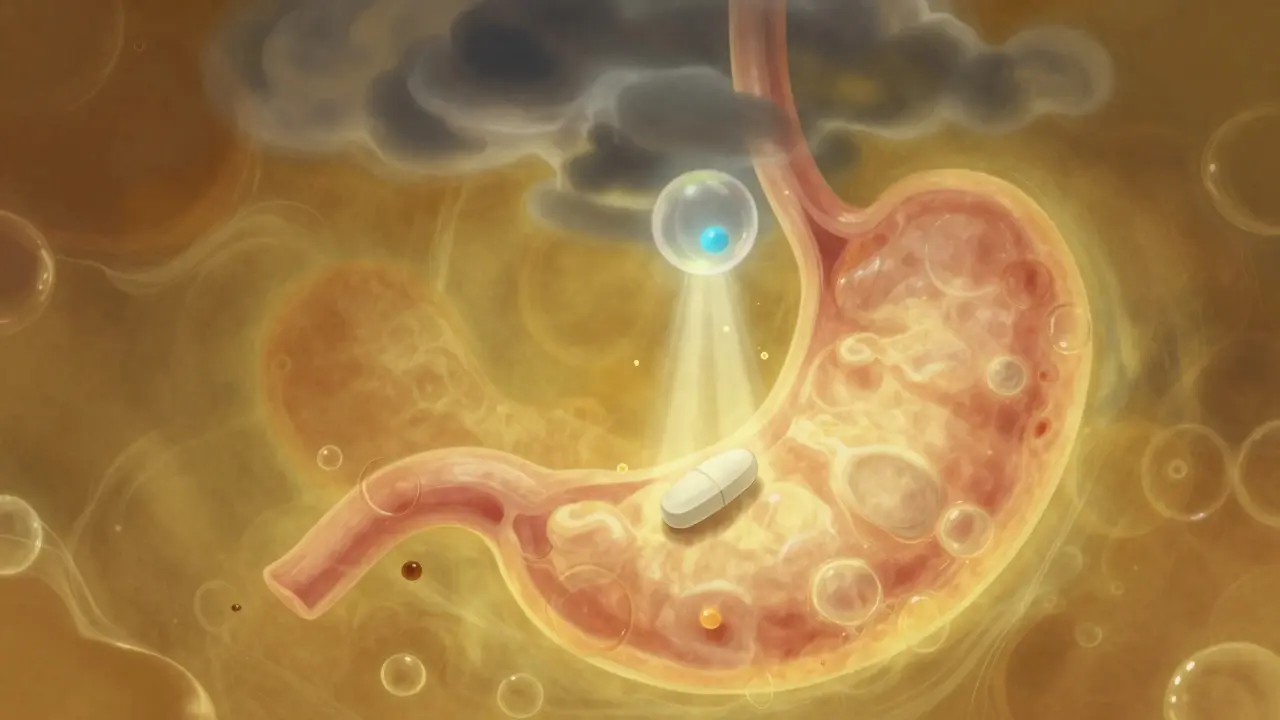
When taking proton pump inhibitors (PPIs) like omeprazole, levothyroxine absorption can decrease. This calculator helps determine if you need a dose adjustment based on your TSH levels.
Recommended Action
Adjustment Needed
Your TSH level is .
Consider increasing your dose by mcg.
Per guidelines, increase levothyroxine by 12.5-25 mcg. Retest TSH in 6-8 weeks.
If you're taking levothyroxine for hypothyroidism and also use a proton pump inhibitor (PPI) for heartburn or acid reflux, you might be at risk for a hidden problem: your thyroid medication isn't working as well as it should. This isn't a rare issue - it affects levothyroxine users who take PPIs long-term, and many people don't even realize it's happening. The result? Fatigue, weight gain, brain fog, and worsening thyroid symptoms - even if your dose seems "correct."
Why Levothyroxine Needs Stomach Acid
Levothyroxine is a synthetic version of the thyroid hormone T4. It's not absorbed like a regular pill. For it to work, it needs to dissolve in an acidic environment in your stomach. That means your stomach pH needs to be around 1 to 2 - very acidic. This acidity helps break down the tablet so the hormone can pass through the intestinal wall and into your bloodstream.
Proton pump inhibitors - drugs like omeprazole (Prilosec), esomeprazole (Nexium), and pantoprazole (Protonix) - shut down the acid-producing pumps in your stomach. They're powerful. A single dose can keep your stomach pH at 4 to 6 for hours, sometimes days. That’s great for healing ulcers. But for levothyroxine? It’s a problem. Less acid = less dissolution = less absorption.
The Evidence: It’s Real and Measurable
Multiple studies confirm this interaction. A 2021 systematic review in the Journal of General Internal Medicine looked at seven studies involving over 1,200 patients. Every single one showed higher TSH levels when levothyroxine was taken with PPIs. TSH is the hormone your pituitary gland releases when your thyroid isn't producing enough. Higher TSH = your body is signaling that levothyroxine isn’t doing its job.
One 2023 study published in PubMed (PMID: 37259094) gave 40mg of pantoprazole daily to patients already stable on levothyroxine. Within six weeks, their TSH rose significantly - even though they didn’t change their levothyroxine dose. And here’s the kicker: it didn’t matter if they took the PPI in the morning with levothyroxine or in the evening. The effect lasted long after the PPI was gone.
Who’s Most at Risk?
Not everyone on both drugs has problems. But if you fall into any of these groups, you should be extra careful:
- You’ve been on a PPI for more than 3 months
- You’ve noticed new fatigue, weight gain, or cold intolerance
- Your last TSH test was normal, but you still feel off
- You take your levothyroxine with coffee, food, or calcium - which also interfere
According to data from the Mayo Clinic, about 15-20% of people taking both drugs need a higher levothyroxine dose. In the U.S., roughly 15 million people take levothyroxine. About 18% of them also take a PPI. That’s nearly 2.7 million people potentially under-treated.

What You Can Do: Practical Solutions
There are several ways to fix this - but not all work the same way.
1. Switch to Liquid Levothyroxine
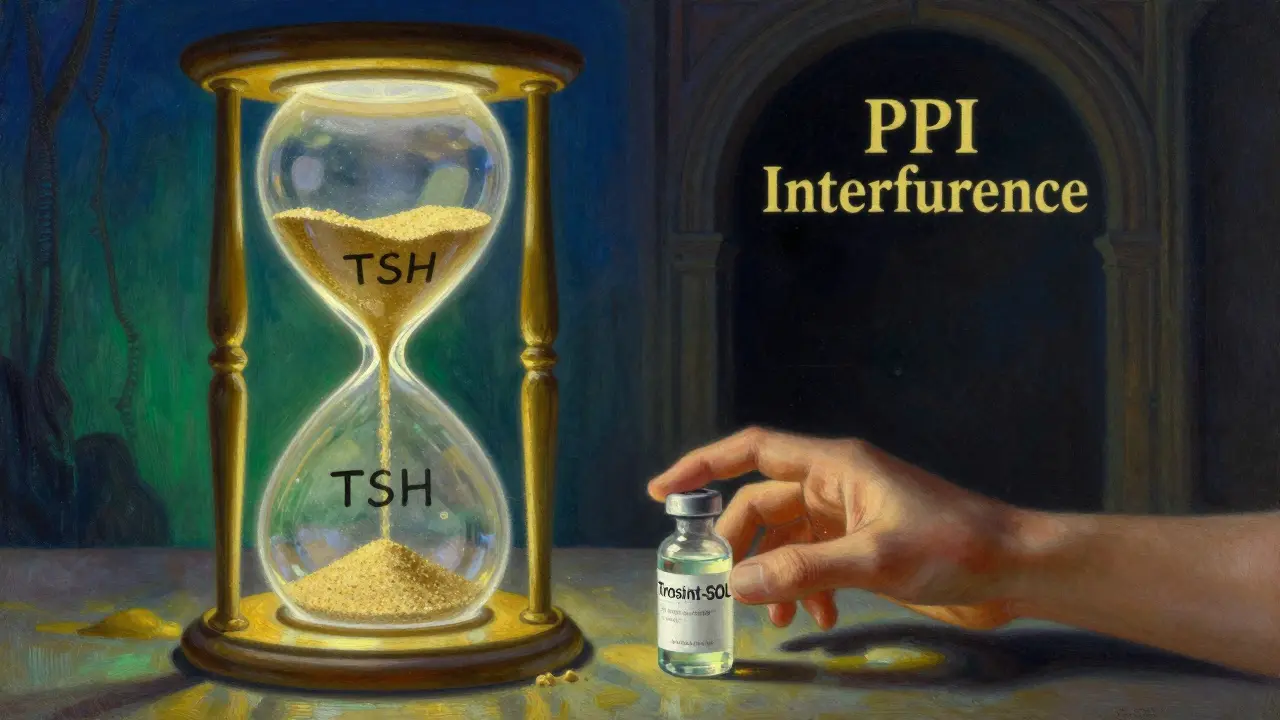
The most effective solution for many is switching from tablets to a liquid formulation like Tirosint-SOL. Unlike tablets, this version doesn’t need stomach acid to dissolve. It’s absorbed directly in the upper intestine. A 2019 study in the Journal of Clinical Endocrinology & Metabolism confirmed this works even with PPIs. Patients on Tirosint-SOL maintained stable TSH levels while on omeprazole.
But there’s a catch: cost. Generic levothyroxine tablets cost $15-$25 per month. Tirosint-SOL runs $350 or more. Insurance may cover it if you have documented absorption issues - but you’ll need your doctor to fight for it.
2. Try an H2 Blocker Instead
Not all acid reducers are created equal. H2 blockers like famotidine (Pepcid) work differently. They don’t shut down acid pumps permanently - just temporarily. A 2018 study in Pharmacotherapy found no significant TSH changes when famotidine was taken with levothyroxine.
If you don’t need maximum acid suppression (like for severe GERD), switching from a PPI to famotidine might be enough. Take it at night if you get nighttime heartburn. It’s cheaper, often available over the counter, and doesn’t interfere with levothyroxine.
3. Dose Timing? Don’t Rely on It
You might have heard: "Take your PPI 4 hours after levothyroxine." That sounds logical. But research says it doesn’t work. PPIs suppress acid for up to 72 hours. Even if you space them out, your stomach stays too neutral. A 2023 study tested morning vs. evening PPI timing with levothyroxine - and found no difference. The effect is systemic, not timing-dependent.
What Your Doctor Should Do
If you’re on both drugs, your doctor should:
- Check your TSH before starting a PPI
- Test again at 6-8 weeks after starting the PPI
- If TSH rises above your target range, increase your levothyroxine dose by 12.5-25 mcg
- Re-test in another 6-8 weeks
According to Cleveland Clinic data, 43% of patients stabilize after one adjustment. Some need two. Rarely, three. But if you don’t test, you won’t know.
Real Stories: What Patients Are Saying
On Reddit’s r/Hypothyroidism community, over 147 users shared experiences in late 2023. The results were clear:
- 72% reported increased fatigue after starting PPIs
- 58% gained weight despite no diet changes
- 68% needed higher levothyroxine doses
- 23% felt better after switching to Tirosint-SOL
- 17% improved after switching to famotidine
One woman in Ohio wrote: "I was on 100mcg levothyroxine for years. My TSH was 1.8. I started omeprazole for acid reflux. Six months later, I was exhausted. My TSH jumped to 7.2. My doctor upped my dose to 125mcg - and I felt like myself again. I didn’t know the PPI was the culprit. No one told me."
What’s Coming Next?
The FDA is working on new labeling rules for thyroid medications to clearly warn about PPI interactions. Phase 3 trials are testing enteric-coated levothyroxine tablets designed to dissolve in the small intestine - bypassing stomach acid entirely. If they work, they could be a cheaper alternative to liquid formulations.
Also, Tirosint-SOL’s patent expires in 2025. That could mean generic versions become available, cutting the cost dramatically. But as a 2022 study in the Journal of Pharmaceutical Sciences points out, replicating the exact absorption profile of Tirosint-SOL is technically difficult. Don’t expect a cheap generic overnight.
Bottom Line
If you take levothyroxine and a PPI, you need to act - not guess. Don’t assume your dose is still right. Don’t rely on spacing out your pills. Don’t wait until you feel terrible. Get your TSH tested. Talk to your doctor about alternatives. You deserve to feel your best - and this interaction is fixable.
Alex Brad
February 28, 2026 AT 22:07Raman Kapri
March 1, 2026 AT 03:58Megan Nayak
March 1, 2026 AT 08:07Tildi Fletes
March 1, 2026 AT 23:23Siri Elena
March 3, 2026 AT 14:05Also, ‘Tirosint-SOL costs $350’? That’s a discount compared to the cost of your untreated brain fog. You’re paying for it in missed work, crying in the shower, and forgetting where you put your keys. Priorities, darling.
Divya Mallick
March 5, 2026 AT 06:22Dean Jones
March 6, 2026 AT 19:21The thyroid isn’t broken. The system is. We treat symptoms like they’re the disease. We don’t ask why the stomach stopped producing acid naturally. We just shove in a pump inhibitor and call it a day. Then we blame the thyroid.
Maybe the answer isn’t a more expensive pill. Maybe it’s a less stressful life.
Betsy Silverman
March 7, 2026 AT 16:20If you’re on both meds and feel off-get tested. Don’t wait. Your fatigue isn’t ‘just aging.’ It’s a signal. And this interaction is one of the most preventable ones in endocrinology.
Ivan Viktor
March 9, 2026 AT 10:27Yeah, I’ll just keep suffering. And maybe start drinking apple cider vinegar. That’s probably more effective anyway.