
Most people think dark spots on the skin are just from the sun. But if you’ve tried sunscreen, exfoliants, and brightening serums-and nothing sticks-you’re not alone. The truth is, not all dark spots are the same. Two of the most common types-melasma and sun damage-look similar, but they behave completely differently. Treat one like the other, and you could make it worse.
What’s Really Going On Under Your Skin?
Hyperpigmentation means your skin is making too much melanin in certain spots. It’s not a disease. It’s a response. But why it happens matters a lot.Sun damage, or solar lentigines, shows up as small, flat, brown spots. They’re common on the face, hands, and shoulders. If you’re over 60 and have fair skin, you’ve probably got them. These spots come from years of UV exposure. Every time your skin gets burned or tanned, melanocytes (the pigment-making cells) get triggered. Over time, they cluster and leave behind dark patches. It’s straightforward: more sun = more spots.
Melasma is different. It’s not just about sun exposure. It’s hormonal. It shows up as larger, irregular patches-usually on the cheeks, forehead, nose, or upper lip. It’s most common in women, especially during pregnancy, while taking birth control, or during menopause. People with medium to dark skin tones (Fitzpatrick III-VI) are far more likely to get it. In fact, Black, Asian, and Hispanic women are 3 to 5 times more likely to develop melasma than Caucasian women. And it’s not just UV light that triggers it. Visible light from screens and windows, even heat from a hair dryer, can make it worse.
Here’s the key difference: sun damage is a surface reaction. Melasma is a deep, stubborn signal from your body. Treat it like sun damage, and you’ll likely end up with darker patches, not lighter ones.
Topical Treatments: What Works and What Doesn’t
There are dozens of creams, serums, and lotions claiming to fade dark spots. But only a few have real science behind them.Hydroquinone is still the gold standard. At 4% concentration, it blocks the enzyme that makes melanin. It’s effective-especially when combined with tretinoin and a corticosteroid. This triple combo works for about 50-70% of melasma patients within 12 weeks. But here’s the catch: you can’t use it forever. After three months, there’s a 2-5% risk of ochronosis-a rare but permanent blue-black discoloration. That’s why dermatologists limit it to short bursts.
Tretinoin (0.025% to 0.1%) doesn’t lighten pigment directly. Instead, it speeds up skin cell turnover. Think of it like a gentle scrub from the inside. It helps push out old, darkened cells and replaces them with fresh ones. It’s often paired with hydroquinone because it makes the skin more responsive. But it can cause peeling, redness, and dryness. Start slow: use it every other night, then build up.
Vitamin C (L-ascorbic acid) at 10-20% works as an antioxidant. It doesn’t just brighten-it actually reverses oxidized melanin. It’s safe for daily use, even during pregnancy. Apply it in the morning under sunscreen. It’s not a miracle worker on its own, but it supports other treatments and protects against free radicals from pollution and light.
Other ingredients like niacinamide, kojic acid, and tranexamic acid are rising in popularity. Tranexamic acid, applied topically at 5%, has shown 45% improvement in melasma over 12 weeks in clinical studies-with almost no side effects. It’s especially helpful for people who can’t use hydroquinone. Niacinamide (5%) reduces pigment transfer between cells and calms inflammation. Both are great for long-term maintenance.
Why Sunscreen Isn’t Enough (and What to Use Instead)
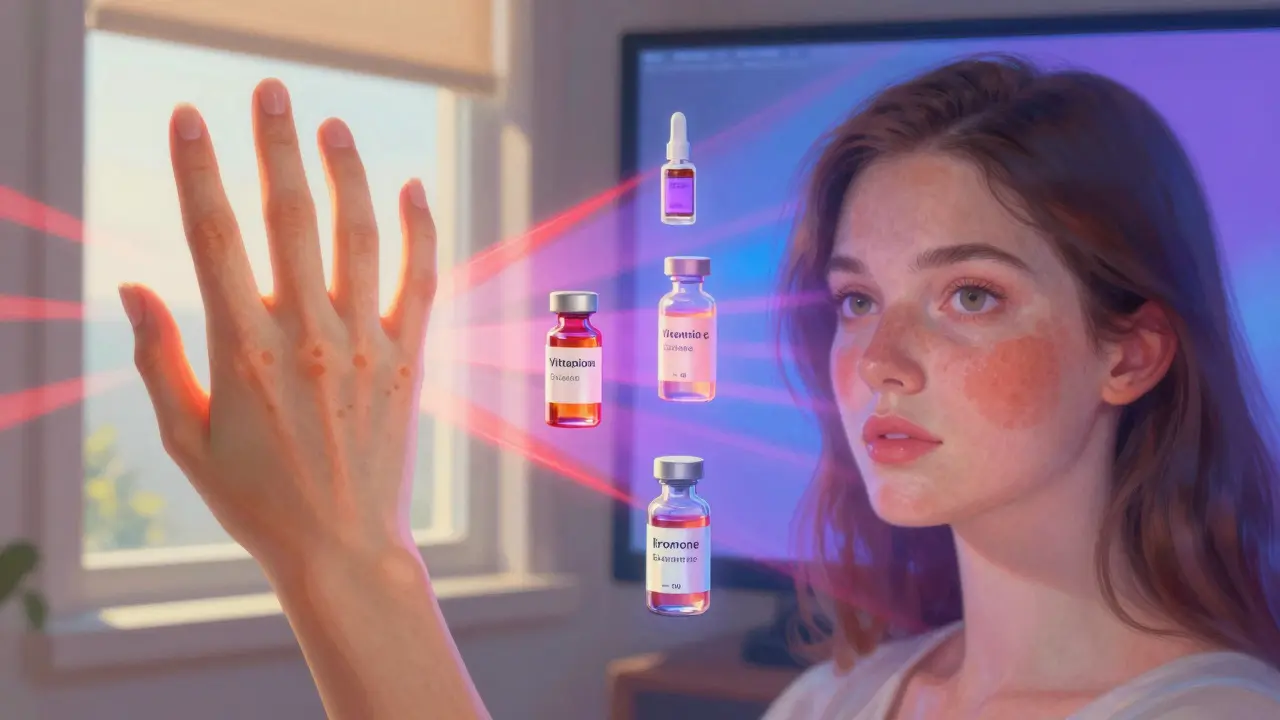
If you’re only using regular sunscreen, you’re leaving a big gap. Standard sunscreens block UV rays-but not visible light or infrared heat. And those? They’re major triggers for melasma.Studies show visible light contributes to 25-30% of melasma cases. That means sitting by a window, walking outside on a cloudy day, or even using your phone can feed the pigmentation. That’s why dermatologists now recommend mineral sunscreens with iron oxides. Zinc oxide and titanium dioxide block UV. Iron oxides block visible light. Together, they’re the only combo proven to protect against melasma flare-ups.
Use SPF 50+, reapply every two hours if you’re outside, and never skip it indoors. Even if you’re working from home, light through windows can trigger dark spots. And don’t skimp on the amount. Most people use less than a quarter teaspoon for their face. You need a full teaspoon to get the protection listed on the bottle.
Laser and Light Treatments: A Double-Edged Sword
IPL (Intense Pulsed Light) and lasers can zap sun damage fast. One or two sessions, and those spots fade. But for melasma? It’s risky.Laser treatments generate heat. And heat wakes up melanocytes. If your melasma isn’t already under control, a laser can make it darker-sometimes permanently. Dermatologists won’t even consider laser for melasma until they’ve used topical treatments for 8-12 weeks to calm the pigment cells. Even then, they proceed cautiously.
For sun damage? IPL at 515-755nm wavelengths works well. The spots darken right after treatment, then flake off in 3-5 days. Success rates? 75-90% improvement in 2-3 months. For melasma? Only 40-60% improvement, even with perfect care. And recurrence? Over 80% within a year if sun protection slips.
Chemical peels (glycolic, salicylic) can help both conditions when done every 4-6 weeks. But in darker skin types, they carry a 25% risk of causing post-inflammatory hyperpigmentation (PIH)-another kind of dark spot that forms after skin injury. So they’re not a quick fix. They’re part of a longer plan.
What Most People Get Wrong
The biggest mistake? Stopping treatment too soon.Melasma isn’t cured. It’s managed. Studies show 95% of people see it come back within six months if they stop using their topicals or skip sunscreen. You need a maintenance routine-forever.
Another big error? Using too many products at once. Layering vitamin C, retinol, hydroquinone, and acids on the same night? That’s a recipe for irritation. And irritation triggers more pigmentation. Stick to a simple routine: vitamin C in the morning, hydroquinone and tretinoin at night (on alternating days), and sunscreen every single day.
And don’t rely on over-the-counter serums alone. Eighty-five percent of melasma patients try drugstore products first. Most contain less than 2% niacinamide or 5% vitamin C-too weak to make a real difference. Prescription-strength topicals are the only ones proven to work.
What’s New in Treatment
The field is moving fast. Cysteamine cream (10%) showed 60% improvement in melasma in clinical trials with almost no irritation. It’s not widely available yet, but it’s coming. Tranexamic acid is gaining traction as a safer alternative to hydroquinone, especially in the EU and Japan where hydroquinone is restricted.Doctors are also testing “melanocyte rest” protocols: using 8-12 weeks of topical suppression before any laser or peel. This reduces recurrence from 60% down to 25%. It’s not sexy, but it works.
Down the road, genetic testing may guide treatment. Some people’s skin just makes more melanin. Others respond better to certain ingredients. Personalized care is the next frontier.
Realistic Expectations
There’s no magic solution. Melasma won’t vanish overnight. Sun damage fades faster, but it returns if you’re not careful. The goal isn’t perfection-it’s control.With consistent care, you can expect:
- 20-30% improvement in 4-6 weeks
- 50-70% improvement in 3-6 months
- Long-term stability with daily sunscreen and maintenance topicals
That’s not a cure. But it’s enough to feel confident again.
Simple Routine That Works
Here’s what a daily routine looks like for someone with melasma or sun damage:Morning:
- Cleanse with a gentle, non-foaming wash
- Apply vitamin C serum (15% L-ascorbic acid)
- Use mineral sunscreen with zinc oxide and iron oxides (SPF 50+)
Evening:
- Cleanse again
- Alternate nights: hydroquinone (4%) one night, tretinoin (0.05%) the next
- On non-treatment nights, use niacinamide or tranexamic acid
Start slow. If your skin stings or peels, cut back to every third night. Build up over 4-6 weeks. Patience beats intensity every time.
Is melasma the same as sun spots?
No. Melasma is hormone-driven and appears as large, symmetrical patches on the face, often triggered by heat and visible light. Sun spots (solar lentigines) are caused by UV exposure and appear as smaller, scattered spots on sun-exposed areas like the hands and shoulders. They need different treatments.
Can I use hydroquinone forever?
No. Hydroquinone should be limited to 3-4 months at a time due to the risk of ochronosis-a rare but permanent darkening of the skin. After that, switch to maintenance ingredients like niacinamide, tranexamic acid, or azelaic acid.
Do I need sunscreen if I’m indoors?
Yes. Visible light from windows and screens can trigger melasma. Use a mineral sunscreen with iron oxides every day-even if you never leave the house. Regular sunscreen won’t block this type of light.
Why do lasers make melasma worse?
Lasers and IPL generate heat, which stimulates melanocytes-the cells that make pigment. In melasma, those cells are already overactive. Heat can trigger them to produce even more pigment, making dark spots darker. That’s why doctors delay lasers until the skin is calm from topical treatment.
How long until I see results from topical treatments?
You’ll start noticing subtle changes in 4-6 weeks. Real improvement-like 50% lighter patches-usually takes 3-6 months. Melasma responds slowly. Patience and consistency are more important than strong products.
Are natural remedies like lemon juice or aloe vera effective?
No. Lemon juice is acidic and can irritate the skin, potentially causing more pigmentation. Aloe vera soothes but doesn’t reduce melanin. Stick to ingredients backed by clinical studies: hydroquinone, tretinoin, vitamin C, niacinamide, and tranexamic acid.
Next Steps
If you’re struggling with dark spots, start with a dermatologist visit. Get a proper diagnosis. Melasma, sun damage, and post-inflammatory hyperpigmentation all look alike-but they need different strategies.Don’t buy expensive serums online hoping for a miracle. Focus on the basics: sunscreen with iron oxides, a proven topical like hydroquinone or tranexamic acid, and patience. It’s not glamorous. But it works.
And remember: the sun is stronger than any cream you can buy. Protect your skin every day-not just when it’s sunny.
Joni O
January 18, 2026 AT 14:17Been dealing with melasma for years and this is the first time someone explained why sunscreen alone isn't enough. Iron oxides? I had no idea. Started using a mineral SPF with them last month and my cheeks are already less patchy. 🙌
Jake Moore
January 20, 2026 AT 10:40Just want to say-this is one of the most accurate breakdowns of melasma vs sun damage I’ve ever read. Seriously, if you’re using drugstore serums and wondering why nothing works, stop. Go see a derm. Prescription topicals aren’t glamorous but they’re the only thing that actually moves the needle. Been on the hydroquinone + tretinoin combo for 5 months. Not perfect, but I can finally wear makeup without feeling like I’m hiding.
Dayanara Villafuerte
January 21, 2026 AT 05:37YESSSSSSSSS to the iron oxide sunscreen! 🙏 I used to think I was being paranoid about indoor light… until I switched to a tinted mineral SPF with iron oxides and my forehead stopped turning into a Jackson Pollock painting. Also, vitamin C in the AM? Non-negotiable. My skin doesn’t look ‘glowy’ but it looks… stable. That’s the win.
Danny Gray
January 22, 2026 AT 08:16Interesting how this ignores the real root cause: modern life. We’re bathed in blue light, stressed to hell, and eating processed junk. Skin is just the mirror. You can slap on all the tranexamic acid you want, but until you detox your environment, you’re just treating symptoms. Also, did you know melasma is linked to gut dysbiosis? Probably not, since the medical industry doesn’t want you to know that.
Ryan Otto
January 23, 2026 AT 02:25Let me be the first to point out the glaring omission here: no mention of the pharmaceutical-industrial complex’s deliberate suppression of natural alternatives. Hydroquinone is banned in the EU for a reason-it’s a toxic compound peddled by Big Derm. Meanwhile, licorice root extract, niacinamide, and even green tea polyphenols have been shown in peer-reviewed studies to be equally effective without the risk of ochronosis. But of course, you won’t hear that from a dermatologist paid by L’Oréal.
Praseetha Pn
January 24, 2026 AT 11:38OMG I’m so glad I’m not alone. I tried every damn serum on Amazon-vitamin C, kojic acid, arbutin, you name it-and my melasma got DARKER. Then I went to a derm, got hydroquinone, and now I’m like… holy shit, this actually works? But I’m terrified to stop because I know it’ll come back. Also, why does everyone say ‘just wear sunscreen’ like it’s that easy? I’m a teacher, I’m outside all day. I reapply every 90 minutes like a maniac. Still got patches. Sigh.
Selina Warren
January 25, 2026 AT 14:42It’s not about fixing your skin-it’s about accepting your body’s language. Melasma isn’t a flaw. It’s a signal. Maybe it’s hormones. Maybe it’s stress. Maybe it’s inherited trauma passed through your cells. The skin doesn’t lie. We treat it like a cosmetic problem because we’re afraid of what it’s trying to tell us. The real treatment? Slow down. Breathe. Stop chasing perfection. The spots will fade if you stop fighting yourself.
Robert Davis
January 27, 2026 AT 09:12Everyone’s acting like this is groundbreaking info. Newsflash: dermatologists have known this for decades. The real story is how the beauty industry markets snake oil to desperate women. ‘Brightening serum’ is code for ‘we’re selling you hope.’ And don’t get me started on influencers pushing ‘natural remedies.’ Lemon juice on your face? That’s not holistic, that’s self-harm.
Jay Clarke
January 28, 2026 AT 00:34Look, I get it. You want to fix your skin. But let’s be real-you’re not doing this for yourself. You’re doing it because society told you that dark spots = unattractive = unworthy. And now you’re spending hundreds on creams, stressing out over SPF reapplication, and feeling guilty if you skip a night. You’re not broken. The standard is.
kenneth pillet
January 29, 2026 AT 15:58Used hydroquinone for 3 months. Stopped because I got scared of ochronosis. Switched to niacinamide and tranexamic acid. Took 6 months but my spots faded 70%. No drama. No peeling. Just slow, steady progress. Also, sunscreen with iron oxides is a game changer. I use the one with the tint. Looks like a light foundation. Win.
Tyler Myers
January 30, 2026 AT 10:45Did you know the FDA approved hydroquinone in 1982 without any long-term safety studies? And now it’s still the gold standard? Meanwhile, countries like Japan banned it in 2001. Coincidence? Or just another case of American pharma lobbying? Also, why is there no talk about how birth control pills are the #1 trigger for melasma? No one wants to talk about that. Too political.
Eric Gebeke
January 30, 2026 AT 23:14So you’re telling me the answer to melasma is… more products? More chemicals? More expensive routines? You’re missing the point. The real solution is to stop trying to control your body. Let it be. Let the spots stay. You’re not broken. The world is just too obsessed with flawless skin. I stopped treating mine. And guess what? I feel freer than ever.