
When the temperature rises, most people think about staying cool, drinking water, and avoiding the sun. But for seniors taking certain medications, heat isn’t just uncomfortable-it can be deadly. Every year, more than 600 Americans die from heat-related causes, and older adults make up the majority. Why? Because common prescriptions can quietly sabotage the body’s ability to handle heat. The problem isn’t the weather alone. It’s what’s in the medicine cabinet.
Medications That Turn Heat Into a Danger Zone
Not all meds are created equal when it comes to heat. Some don’t just treat illness-they interfere with how the body cools itself. Diuretics like hydrochlorothiazide and furosemide are among the biggest culprits. These drugs help with high blood pressure and swelling, but they also make you pee more. And here’s the catch: they dull your thirst by 30 to 40%. That means a senior might not feel thirsty even when their body is screaming for water. By the time they notice symptoms, it’s often too late.Then there are ACE inhibitors and ARBs-meds like benazepril and losartan. These are common for heart and kidney health. But they reduce thirst by about 25%, and they lower blood volume. When combined with diuretics, the risk multiplies. Blood pressure drops, dizziness kicks in, and falls become more likely. In fact, 22% of heat-related hospitalizations in seniors involve this exact combo.
Antipsychotics like quetiapine and clozapine, often given to seniors with dementia, disrupt the brain’s thermostat. Research from the Mayo Clinic shows they can raise core body temperature by 1.5 to 2 degrees Fahrenheit. That might sound small, but in a heat wave, it’s enough to push someone into heat stroke.
Anticholinergic drugs-found in Benadryl, Tylenol PM, and some bladder medications-shut down sweating. Sweating is how your body cools down. If that’s cut by 35 to 50%, your skin stays hot, your core heats up, and your body can’t recover. And don’t forget certain antibiotics and antifungals. They make skin ultra-sensitive to the sun. A simple walk outside can cause a severe burn in minutes.
Why Seniors Are More Vulnerable
Age isn’t just a number when it comes to heat. As we get older, our bodies change. We have less water in our system. Our sweat glands don’t work as well. We feel thirst later. And many seniors have multiple chronic conditions-heart disease, diabetes, kidney problems-that already strain the body. Add medications that interfere with temperature control, and you’ve got a perfect storm.Eighty-seven percent of seniors over 65 take two or more prescription drugs. That’s not unusual. It’s normal. But it means the risk isn’t from one med-it’s from the mix. A diuretic plus an anticholinergic plus an ACE inhibitor? That’s a triple threat. The CDC warns that these combinations cause electrolyte imbalances, especially low sodium levels below 135 mmol/L. That leads to confusion, weakness, and even seizures.
And here’s something most people don’t realize: seniors often don’t show the classic signs of heat stress. They might not sweat. They might not complain of dizziness. Instead, they get quiet, confused, or forgetful. A 2022 study found that 41% of seniors experiencing heat stress show altered mental status before any physical symptoms. Caregivers who notice this change can act before it becomes an emergency.
What to Do Before Summer Hits
Prevention starts before the heat arrives. Don’t wait for a heat wave to review meds. Schedule a medication review with your doctor or pharmacist in late spring. Bring a list of everything you take-prescriptions, over-the-counter drugs, supplements, even herbal teas. Ask these questions:- Is this medication linked to dehydration or reduced sweating?
- Does it affect my body’s ability to regulate temperature?
- Should I adjust the dose or timing during hot weather?
- Do I need to temporarily lift fluid restrictions?
Studies show that structured reviews like this cut heat-related ER visits by 37% in seniors over 75. That’s not a small win. That’s life-saving.
If you’re on fluid restrictions because of heart failure, talk to your doctor about temporary changes during heat waves. Forty-three percent of these patients develop dangerous electrolyte imbalances when they stick to strict limits in hot weather. Your doctor might say it’s safe to drink an extra glass or two-just for the summer.
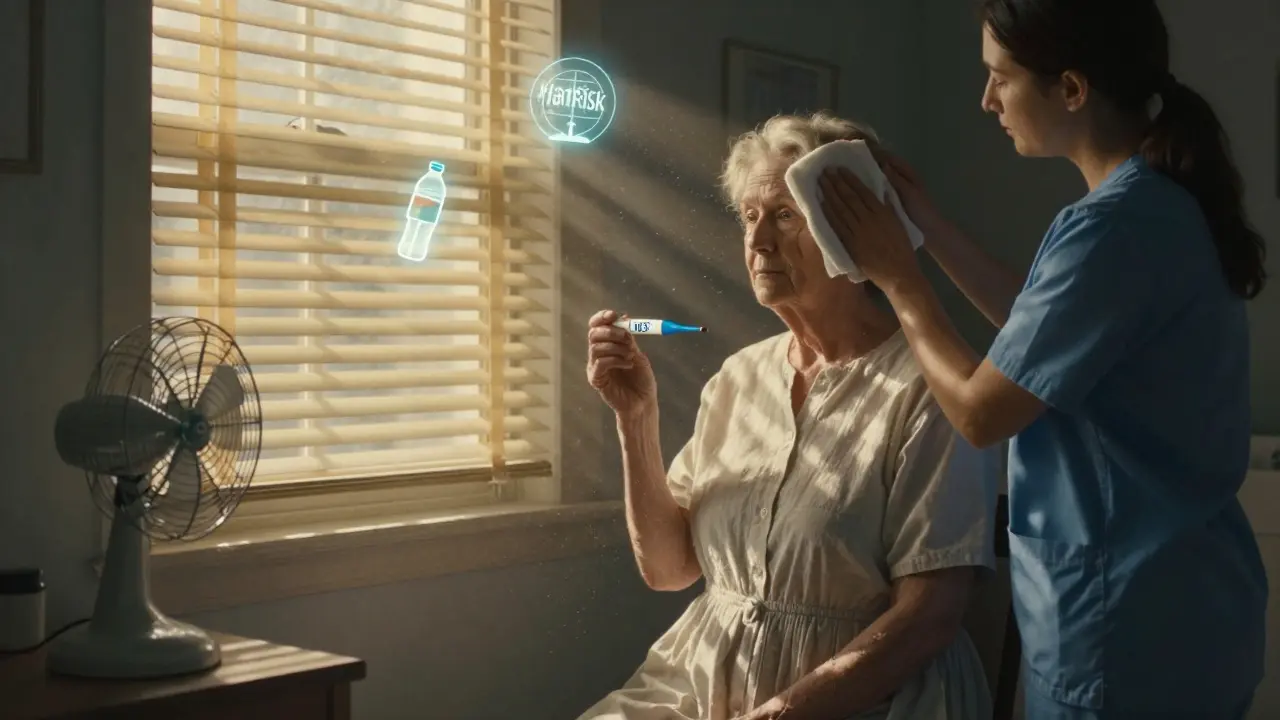
Hydration That Actually Works
Drinking water isn’t enough. You need the right kind of fluids. The CDC says avoid alcohol and caffeine. Both increase urine output by 40 to 60%, which makes dehydration worse. Even one glass of wine or a cup of coffee on a hot day can undo your efforts.For those on diuretics, electrolyte drinks with 120-150 mg of sodium per 8 ounces help. Look for brands with no added sugar or artificial sweeteners. Coconut water can work too-it has natural sodium and potassium. But don’t rely on sports drinks unless they’re low-sugar. Many are just sugar water with a little salt.
Drink regularly-even if you’re not thirsty. Aim for 8 to 10 eight-ounce glasses a day during hot weather. Set alarms if you need to. Keep a water bottle in every room. Make it part of your routine: drink when you wake up, after taking meds, before meals, and before bed.
Staying Cool Without AC
Air conditioning isn’t a luxury-it’s a medical necessity for many seniors. The CDC recommends keeping indoor temperatures below 78°F (25.6°C). If you don’t have AC, use fans, close blinds during the day, open windows at night, and take cool showers. But don’t rely on fans alone if the temperature is above 90°F. They just blow hot air around.Wear loose, light-colored clothing made of cotton or linen. Synthetic fabrics trap heat. Natural fibers can reduce how hot you feel by 5 to 7 degrees. A wide-brimmed hat and UV-blocking sunglasses help too. And sunscreen-broad-spectrum SPF 15 or higher-isn’t optional. Some meds make your skin burn four to six times faster. Reapply every two hours, or after sweating.
What Caregivers Should Do
If you’re caring for an older adult, your role is critical. Check in daily during heat waves. Don’t just ask, “Are you okay?” Look for subtle signs: confusion, slurred speech, lack of appetite, dry skin, or not using the bathroom as much. These can be early warning signs of heat stress.Plan outings for early morning or evening. Avoid the 10 a.m. to 4 p.m. window when it’s hottest. Take them to libraries, malls, or community centers with AC. Many senior centers offer free cooling stations during heat alerts.
Consider using a simple thermometer to check their temperature. If it’s above 100.4°F, it’s time to act. If it hits 103°F or higher, call 911. Heat stroke doesn’t wait. It can cause brain damage or death within hours.
Programs like the American Geriatrics Society’s “I’m OK” initiative-where caregivers check in twice daily and monitor temperature-have cut hospitalizations by 33% in participating communities. It’s not fancy. It’s just consistent attention.

Recognizing the Emergency Signs
Know the difference between heat exhaustion and heat stroke. Heat exhaustion includes heavy sweating, nausea, dizziness, muscle cramps, headache, and weakness. It’s serious, but treatable. Move to a cool place. Drink water. Apply cool cloths. Rest.Heat stroke is a medical emergency. Signs include:
- Body temperature above 103°F
- Hot, red, dry, or damp skin
- Fast, strong pulse
- Confusion, loss of consciousness
If you see these, call 911 immediately. Don’t wait. Don’t try to “wait it out.” Sixty-five percent of heat exhaustion cases turn into heat stroke within 2 to 4 hours if untreated. And once it hits heat stroke, the risk of permanent damage or death jumps dramatically.
While waiting for help, move the person to shade or AC. Cool them with wet cloths or a cool bath. Do not give them anything to drink if they’re confused or unconscious.
New Tools to Help
The CDC launched the Heat and Medication Risk Assessment Tool (HM-RAT) in June 2023. You can use it online or ask your doctor for a printed version. Just enter your meds, age, and location-it gives you a personalized risk level and tips.HeatRisk.gov, a joint project by the National Institute on Aging and the EPA, combines weather forecasts with medication risk data. It sends alerts to seniors and caregivers when dangerous heat is coming. Over 1.2 million people used it during the 2023 summer.
Researchers are also testing a new supplement designed for seniors on multiple meds. Early results show it improves thermoregulation by 28%. It’s not available yet, but it shows how seriously this problem is being taken.
With climate change, extreme heat days are expected to increase by 50% by 2050. That means this won’t go away. It’ll get worse. The good news? We already have the tools to prevent most of these deaths. It’s not about fancy tech. It’s about awareness, planning, and simple daily habits.
Which medications are most dangerous in hot weather?
Diuretics (like hydrochlorothiazide and furosemide), ACE inhibitors (like benazepril), ARBs (like losartan), antipsychotics (like quetiapine), and anticholinergics (like diphenhydramine) are the top offenders. These drugs reduce thirst, impair sweating, disrupt body temperature control, or cause dehydration. Combining two or more increases risk significantly.
Should seniors stop taking their meds during heat waves?
Never stop or change medication without talking to a doctor. Some meds, like those for blood pressure or heart failure, are essential. Instead, ask your provider if doses need adjustment, if fluid intake should be increased temporarily, or if timing of doses should be changed to avoid peak heat hours.
How much water should a senior drink in hot weather?
Most seniors should aim for 8-10 eight-ounce glasses of water daily during hot weather. But those on fluid restrictions (like with heart failure) must consult their doctor first. Some may need to increase intake slightly, while others may need to stay on strict limits. The key is personalized advice-not a one-size-fits-all rule.
Can seniors use fans instead of air conditioning?
Fans help when temperatures are below 90°F. Above that, they just move hot air around and won’t lower body temperature effectively. If you don’t have AC, go to a public place with cooling-libraries, malls, senior centers. Heat-related illness doesn’t care if you’re “just using a fan.”
What should I do if a senior shows signs of heat stress?
Act fast. Move them to a cool place, remove excess clothing, apply cool wet cloths, and give them water if they’re alert. If they’re confused, have a high temperature (above 103°F), or aren’t improving in 30 minutes, call 911 immediately. Heat stroke can kill within hours.
Are there any free resources to help seniors stay safe in the heat?
Yes. HeatRisk.gov offers free alerts based on local weather and medication risks. Many local Area Agencies on Aging provide cooling center locations, transportation to AC spaces, and wellness checks. Call 211 or visit your county’s public health website for local support.
Stacy Thomes
January 22, 2026 AT 17:55THIS IS LIFE OR DEATH PEOPLE. My grandma took hydrochlorothiazide and almost died last summer because she didn’t feel thirsty. She just sat there, quiet, like nothing was wrong. Then she collapsed. Don’t wait for them to say something. Watch for silence. Watch for confusion. Drink water like it’s your job. Seriously.
dana torgersen
January 22, 2026 AT 22:23Wow… i just… i didn’t know… like… i mean… anticholinergics? really?… like… benadryl??… and… and… it’s not just dehydration… it’s like… your body’s thermostat… is… broken??… like… why isn’t this on every pharmacy label??… i feel like… we’re all just… walking blind…
Dawson Taylor
January 23, 2026 AT 09:22Prevention is systemic. The burden should not fall solely on the elderly or their caregivers. Regulatory agencies must mandate clearer warnings on high-risk medications. Pharmacists must conduct mandatory heat-risk screenings during refill counseling. This is not anecdotal-it is epidemiological.
Sallie Jane Barnes
January 24, 2026 AT 22:15Thank you for writing this. My mom is on three of these meds. I printed this out and took it to her pharmacist. We got her on a low-sodium electrolyte drink and switched her bedtime med from Tylenol PM to plain melatonin. She’s been sleeping better and hasn’t felt dizzy once this summer. Small changes matter.
Andrew Smirnykh
January 26, 2026 AT 04:02In my country, we don’t have the same access to AC or even clean water. But the principle remains: hydration and awareness. I’ve shared this with my elderly neighbors here. We check on each other. No technology needed. Just presence.
Laura Rice
January 26, 2026 AT 13:21my aunt took benadryl every night for years… then one summer she got so confused she tried to put the ice pack on the stove… we thought it was dementia… turns out it was the meds + heat. i cried for a week. this post? it’s a gift. please share it with your aunt, your uncle, your neighbor. someone’s life depends on it.
Susannah Green
January 28, 2026 AT 00:40Important note: electrolyte drinks with 120-150mg sodium per 8oz? Check the label! Many ‘healthy’ brands use potassium chloride instead of sodium, which doesn’t help with hyponatremia. Also, avoid anything with sucralose-it can worsen kidney strain. I recommend Nuun or LMNT (unsweetened). Coconut water is great, but only if it’s 100% pure-no added sugars or flavors!
Sue Stone
January 28, 2026 AT 23:37I’ve got a fan and a hat. That’s it. I’m 78. I don’t have AC. I drink water when I remember. I don’t feel like a victim. I just live. But thanks for the info.
Anna Pryde-Smith
January 29, 2026 AT 08:22Why is this even a problem? Because doctors don’t care. They write prescriptions like they’re printing coupons. No one tells you about the heat risk. No one. It’s medical negligence. And now the CDC has a tool? Took them long enough. I’m calling my senator.
Dawson Taylor
January 30, 2026 AT 04:20While the urgency is valid, the emotional tone of some comments risks alienating the very caregivers who need to act. A calm, evidence-based approach yields more sustainable behavioral change. This issue requires policy, education, and compassion-not outrage alone.