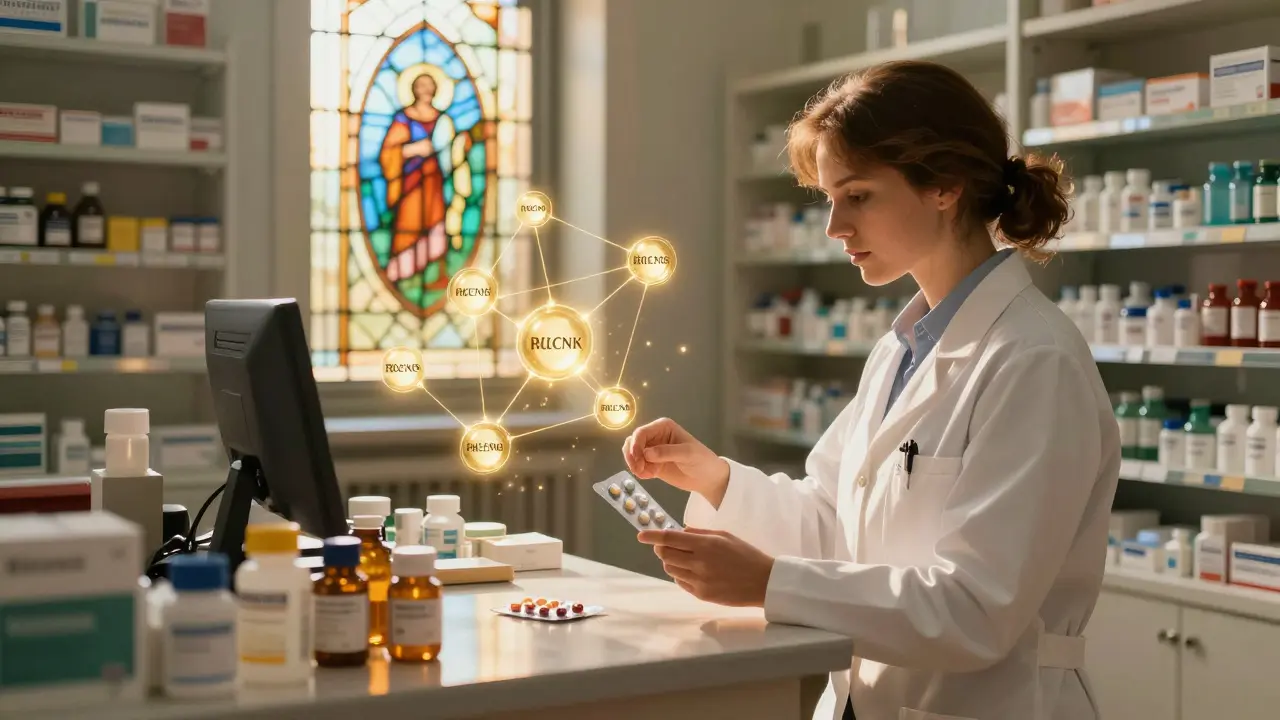
Every year, millions of people around the world take generic medicines because they’re affordable, effective, and widely available. But what if the pill you just bought from an online pharmacy isn’t real? What if it’s a fake-filled with chalk, rat poison, or no active ingredient at all? This isn’t science fiction. The World Health Organization estimates that 1 in 10 medical products in low- and middle-income countries is counterfeit. Even in the U.S. and U.K., where regulations are tighter, counterfeit drugs still slip through cracks in the supply chain. And with more people buying medicines online, the risk is growing.
Why fake drugs are a silent crisis
Counterfeit drugs don’t just waste money. They kill. In 2018, over 100,000 people died in sub-Saharan Africa from fake antimalarials. In India, fake antibiotics led to antibiotic-resistant infections spreading faster than doctors could treat them. Even in developed countries, counterfeit versions of insulin, heart meds, and cancer drugs have been found in online pharmacies that look legitimate but operate without oversight. Traditional methods of spotting fakes-holograms, color-shifting ink, or even checking packaging-have failed. INTERPOL found that 38% of fake drugs still get past these defenses. Why? Because counterfeiters copy the look. They don’t need to replicate the science-just the label.How blockchain changes everything
Blockchain isn’t about cryptocurrency. It’s about trust. At its core, blockchain is a digital ledger that records every step a drug takes-from the factory floor to your pharmacy shelf. Each pill gets a unique digital ID, like a fingerprint, stored on a shared, tamper-proof system. No one can alter it. No one can delete it. And anyone with permission can verify it in under two seconds. Here’s how it works in practice:- A pharmaceutical company prints a QR code on each medicine blister pack. That code links to a unique serial number registered on a blockchain.
- When the drug moves to a distributor, the scan updates the ledger: “Shipped from Pfizer, Batch #X789, to AmerisourceBergen, Jan 12, 2025.”
- At the pharmacy, a pharmacist scans the code. The system checks the blockchain: Is this batch real? Has it been tampered with? Has it passed through unauthorized channels?
- If anything’s off-even a single mismatch-the system flags it instantly.
What makes blockchain better than old systems
Before blockchain, most companies used centralized databases. One company owned the data. If that system went down-or was hacked-everything broke. And if a distributor didn’t update their records? The trail went cold. Blockchain fixes that. It’s decentralized. Every participant-manufacturer, wholesaler, hospital, pharmacy-has a copy of the same ledger. No single point of failure. No one can cheat the system without being caught. Here’s how it stacks up:| Feature | Blockchain | Traditional Holograms/Barcodes | Centralized Databases |
|---|---|---|---|
| Counterfeit detection rate | 99.8% | 62% | 71% |
| Verification time | 2.3 seconds | 2-5 minutes | 3-10 minutes |
| System uptime | 99.99% | 95% | 92% |
| Interoperability across companies | Yes | No | Partial |
| Can be copied by counterfeiters | No | Yes (38% success rate) | Yes (if database is breached) |

Real-world wins: From India to the U.K.
Apollo Hospitals in India rolled out blockchain across 5,000 pharmacies in 2023. Result? A 94% drop in counterfeit antimalarial drugs. That’s tens of thousands of lives saved. In the U.K., NHS pilot programs are now testing blockchain for high-value generics like insulin and HIV meds. Pharmacists report fewer returns, less waste, and more confidence in what they’re dispensing. One pharmacy in Birmingham told us: “Before, we had to call five different suppliers to verify a batch. Now, we scan once. Done.” Even small online pharmacies are starting to adopt it. Companies like MediLedger and SAP offer cloud-based blockchain solutions that don’t require massive IT teams. You don’t need to be Pfizer to use it anymore.But it’s not perfect
Blockchain doesn’t fix everything. It tracks documentation-not the actual chemical content. A fake drug could still have the right QR code but the wrong ingredients. That’s why experts like Dr. Sarah Wynn-Williams warn: “Blockchain gives you proof of origin, not proof of purity.” That’s why the best systems now combine blockchain with lab testing. Some companies are already testing AI-powered spectrometers that scan pills and compare their chemical signature to the blockchain record. If the code says “Metformin 500mg” but the pill’s molecular structure doesn’t match? The system flags it as a double fake. Another issue? Cost. Installing DSCSA-compliant serialization equipment costs around $150,000 per production line. For a small generic manufacturer, that’s a huge barrier. Many still can’t afford it. That’s why 63% of generic drug makers haven’t adopted blockchain yet. And connectivity matters. In rural areas, poor internet can delay verification. One Reddit user in Wales wrote: “We had a patient waiting for their blood pressure meds. The system was down for 40 minutes. Felt like a nightmare.”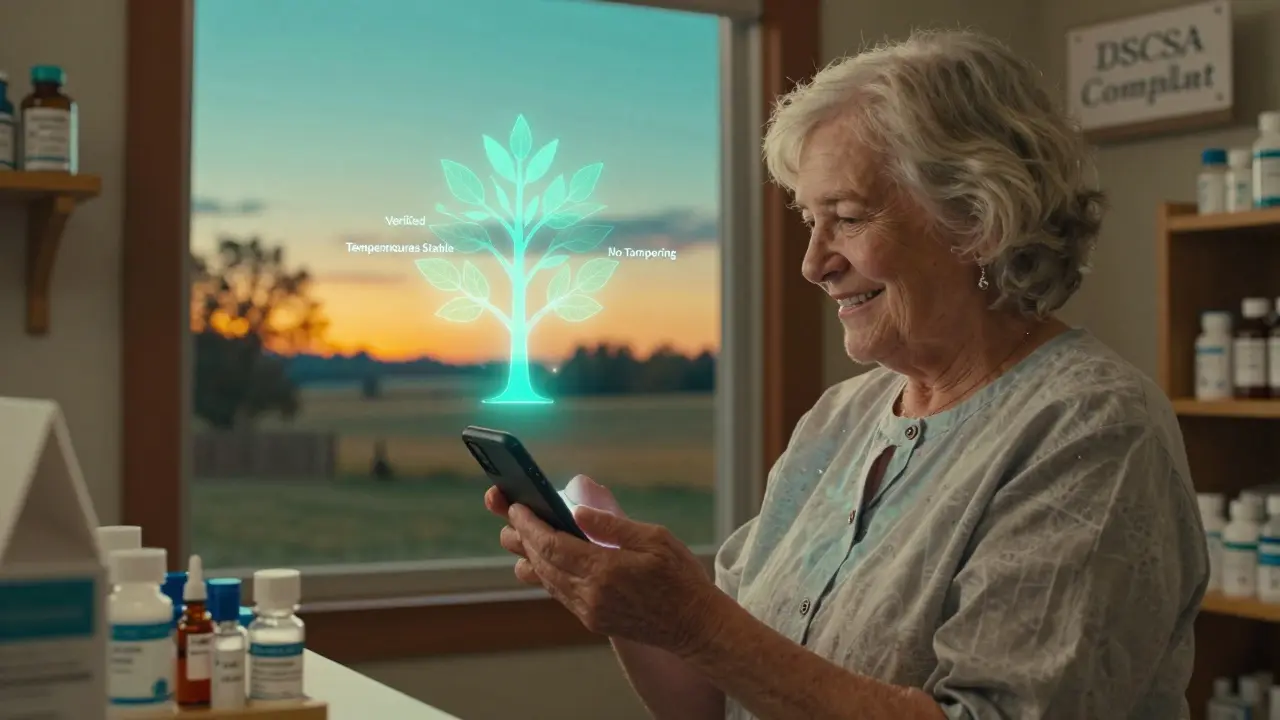
What’s next? The road to 2026 and beyond
By January 2026, the FDA will enforce new blockchain verification standards. Every prescription drug sold in the U.S. must be traceable on a compliant system. The EU’s Falsified Medicines Directive already requires it. Other countries are following. New updates are rolling out fast:- MediLedger’s Version 4.2 (March 2024) cuts false alarms by 37% using AI.
- Pfizer is testing IoT sensors on shipping containers to track temperature and humidity-critical for insulin and vaccines.
- Quantum-resistant encryption is being tested for 2025-2026, future-proofing the system against hacking.
What you can do now
If you’re a patient: Look for pharmacies that display verification badges. Ask if they use blockchain to confirm drug authenticity. If they don’t know what you’re talking about, it’s a red flag. If you’re a pharmacist or pharmacy owner: Start exploring platforms like MediLedger or SAP’s Digital Supply Chain. Many offer free trials and training. HIMSS offers certification courses-$1,200, but worth it if you’re serious about safety. If you’re buying online: Stick to licensed pharmacies. In the U.K., look for the GPhC logo. In the U.S., check the NABP’s Verified Internet Pharmacy Practice Sites (VIPPS) list. Never buy from sites that don’t require a prescription.Final thought: Trust isn’t optional anymore
We used to trust pharmacies because they were local, familiar, and regulated. Now, the supply chain is global, digital, and fragmented. The old ways of trust-reputation, word-of-mouth, brand names-are no longer enough. Blockchain doesn’t promise perfection. But it offers something better: verifiable proof. It turns guesswork into certainty. It gives patients, pharmacists, and regulators a shared truth. In a world where your next pill could save your life-or end it-truth isn’t a luxury. It’s the minimum standard.Can blockchain stop all counterfeit drugs?
Blockchain stops counterfeit drugs from entering the supply chain by verifying every step of the journey. But it doesn’t test the chemical content of the drug. A fake pill with a real QR code could still be dangerous. That’s why the best systems combine blockchain with lab testing and AI-powered analysis.
Is blockchain only for big pharma companies?
No. While large companies like Pfizer and Genentech led the way, platforms like MediLedger and SAP now offer cloud-based blockchain solutions that small and mid-sized manufacturers can use without heavy IT investment. Some systems cost under $50,000 to start.
How do I know if my pharmacy uses blockchain?
Ask them. Many pharmacies now display a digital verification badge on their website or in-store. You can also check if they’re part of the MediLedger Network or use DSCSA-compliant systems. In the U.S., the NABP VIPPS list includes pharmacies that meet strict verification standards.
Can I verify my own medicine at home?
Yes-if your pharmacy uses a consumer-facing app. Some systems, like those from Alibaba’s Ali Health, let patients scan the QR code on their medicine pack with a smartphone app to check authenticity. In the U.K. and U.S., this is still rare but growing. Look for apps linked to official pharmacy networks.
Why hasn’t every pharmacy adopted blockchain yet?
Cost and complexity. Installing serialization equipment and integrating with legacy pharmacy software takes months and thousands of dollars. Smaller pharmacies, especially in rural areas, lack the budget or IT staff. Also, internet reliability in some regions makes real-time verification difficult.
Is blockchain safe from hacking?
Permissioned blockchains used in pharma (like Hyperledger Fabric) are far more secure than public ones like Bitcoin. They’re private, encrypted, and require multiple approvals to update records. No single entity controls the system. As of 2024, there have been zero successful hacks of any major pharmaceutical blockchain network.
Will blockchain make my medicine more expensive?
Not directly. While implementation costs exist, blockchain reduces waste from recalls, returns, and expired inventory. It also cuts labor costs-pharmacists spend less time verifying drugs manually. Experts estimate blockchain saves the U.S. healthcare system $20 billion annually in safety stock alone. Those savings can offset costs over time.
What’s the difference between blockchain and DSCSA?
DSCSA is a U.S. law requiring electronic tracking of prescription drugs. Blockchain is one way to meet that law. DSCSA doesn’t mandate blockchain-it just requires interoperable, digital tracing. Many companies use blockchain because it’s the most reliable way to comply.
By 2026, blockchain won’t be optional for prescription drugs-it’ll be the standard. The question isn’t whether it works. It’s whether you’re ready to trust it.
Ajay Brahmandam
December 22, 2025 AT 12:00Been using generic meds for years in India. Saw a fake insulin pack last year-looked identical. Scanned the QR, app said ‘unverified.’ Saved my dad’s life that day. Blockchain isn’t magic, but it’s the first thing that actually gives you a reason to breathe easy.
jenny guachamboza
December 23, 2025 AT 16:40Blockchain? 😏 LMAO. You really think the FDA isn’t just letting Big Pharma lock down the market? They’re using this to kill off small labs that make cheaper generics. I’ve seen the docs-this is a monopoly play disguised as safety. Also, what’s to stop them from faking the blockchain? 😂
Aliyu Sani
December 25, 2025 AT 10:05Here in Nigeria, we’ve all learned to smell the pills. Fake ones smell like plastic and regret. Blockchain? Sounds like a rich man’s solution. But I get it-when your child’s fever won’t break and the only ‘antimalarial’ you can afford is from a roadside vendor… you need more than smell. You need proof. Still… who maintains the ledger? Who audits it? The same people who let the fakes in?
Gabriella da Silva Mendes
December 26, 2025 AT 16:11Oh great. So now we’re trusting a digital ledger run by Silicon Valley billionaires who can’t even fix their own apps? We’re supposed to believe that a QR code is safer than a local pharmacist who’s known us since we were kids? In America, we used to trust our community. Now? We scan barcodes like we’re in some dystopian grocery store. This isn’t progress. It’s surrender.
Kiranjit Kaur
December 27, 2025 AT 14:01This is HUGE. I work in a rural pharmacy in Punjab and we’ve been struggling with fake blood pressure meds for years. Last month we went live with MediLedger. One scan. Done. No more calling 5 suppliers. No more sleepless nights. My patients are smiling again. 🙌 This isn’t tech for tech’s sake-it’s trust restored.
Sam Black
December 28, 2025 AT 03:22Blockchain’s not perfect, but it’s the first system that doesn’t assume everyone’s lying. It’s not about locking people out-it’s about letting the honest ones breathe. I’ve seen pharmacists cry when they finally verify a batch after months of doubt. That’s not just tech. That’s dignity.
Cara Hritz
December 29, 2025 AT 12:47Wait so you’re saying a QR code is more reliable than a lab test? That’s insane. What if the QR is copied? What if the server goes down? What if the code is printed on a fake pill that’s just chalk? You’re not solving the problem-you’re just moving the guesswork to a different screen.
Jamison Kissh
December 29, 2025 AT 20:49It’s interesting how we’ve outsourced trust to machines. We used to trust doctors, pharmacists, brands. Now we trust algorithms. But what if the algorithm is wrong? What if the ledger is corrupted? What if the person who owns the key to the blockchain is compromised? We’re not eliminating risk-we’re just making it invisible. And that’s scarier.
Tony Du bled
December 31, 2025 AT 15:28Used to work in a pharmacy in Arizona. We had a guy come in once, scared out of his mind because his diabetes med looked ‘off.’ We scanned it-system said ‘valid.’ He cried. Said his brother died from a fake one in Mexico. That moment? That’s why this matters. Not the tech. The human.
Kathryn Weymouth
January 1, 2026 AT 21:14The FDA’s 99.8% accuracy rate is misleading. That’s not the rate of counterfeit detection-it’s the rate of successful verification of legitimate drugs. The false negative rate-where fake drugs slip through-is not disclosed. Transparency is essential. Without it, this system is just a marketing campaign dressed in blockchain.
Nader Bsyouni
January 2, 2026 AT 21:30Blockchain is just capitalism’s new religion. You don’t need to verify a pill-you need to question why it’s even being sold at all. Why do we need so many generics? Why are drugs so expensive in the first place? This isn’t a solution-it’s a distraction from the real problem: profit over people
Julie Chavassieux
January 4, 2026 AT 14:01…and then… the system… went down… for 40 minutes… and a woman… waited… for her blood pressure pills… and… she… almost… had… a… stroke…
Herman Rousseau
January 5, 2026 AT 00:11Look, I’ve been in pharma logistics for 20 years. This is the first time I’ve seen a system that actually works without needing a PhD to operate it. Yes, it’s expensive. Yes, it’s not perfect. But it’s the only thing that gives small pharmacies a fighting chance. Stop hating on the tool. Start helping people get access to it.
Vikrant Sura
January 5, 2026 AT 02:1099.8% accuracy? That’s still 2 false positives per 1000 scans. Multiply that by millions of prescriptions. You’re creating a system that causes panic every time a legitimate drug gets flagged. This isn’t safety-it’s noise. And noise kills trust faster than fakes ever could.
Candy Cotton
January 6, 2026 AT 10:39It is imperative to note that the implementation of blockchain-based pharmaceutical verification protocols constitutes a monumental advancement in the realm of public health infrastructure. The United States of America, as a global leader in medical innovation, must ensure that such systems are deployed with the utmost rigor, adherence to regulatory compliance, and alignment with the foundational principles of biomedical ethics.