
When a child gets sick, parents don’t just want relief-they want safe relief. Giving a child the same medicine as an adult, even in a smaller dose, can be dangerous. Kids aren’t small adults. Their bodies process drugs differently. Their kidneys and liver aren’t fully developed. Their weight changes rapidly. And their ability to swallow pills? Often nonexistent. That’s why age-appropriate medications aren’t just a nice idea-they’re a medical necessity.
Why Kids Need Different Medicines
For decades, doctors guessed at pediatric doses, using adult guidelines and shrinking them down. That changed after the Pediatric Research Equity Act (PREA) was passed in 2003 and strengthened in 2007 and 2012, requiring drugmakers to test medications in children before approval. The result? A flood of new, child-specific formulations. Today, the World Health Organization’s Essential Medicines List for Children (EMLc) 2023 clearly separates recommendations for children under 5 and those aged 5-12, recognizing that a 2-year-old and a 10-year-old need completely different approaches.One of the biggest risks? Off-label prescribing -using a drug in a way not officially approved for children. About half of all pediatric medications are used off-label, especially in babies under 1 year. This isn’t always bad-it’s often necessary because many drugs haven’t been tested in kids-but it demands extra caution.
Key Medications for Common Childhood Illnesses
Pain and Fever: Acetaminophen and Ibuprofen
- Acetaminophen is the go-to for fever and mild pain in children of all ages. Dose: 10-15 mg per kg of body weight every 4-6 hours. Maximum daily dose: 75 mg/kg or 3,750 mg, whichever is lower.
- Ibuprofen works well for inflammation and higher fevers. Dose: 5-10 mg/kg every 6-8 hours. Maximum single dose: 400 mg for kids under 12. Don’t use it in babies under 6 months without a doctor’s OK.
Never give aspirin to anyone under 18. It can trigger Reye’s syndrome a rare but deadly condition that causes liver and brain swelling, often after a viral infection like the flu or chickenpox.
Antibiotics: When and What to Use
Antibiotics are overprescribed. The CDC says 30% of pediatric outpatient antibiotic prescriptions are unnecessary-often for colds, coughs, or ear infections that are viral, not bacterial. But when they’re needed, the right choice matters.
- Amoxicillin is first-line for ear infections, sinus infections, and strep throat. Dose: 25-35 mg/kg/day split into 2-3 doses. Maximum single dose: 500 mg. For kids under 40 kg, use liquid form.
- Amoxicillin-clavulanate is used for stubborn ear infections or when amoxicillin fails. Dose: 25-45 mg/kg/day (based on amoxicillin component). Max single dose: 875 mg.
- Azithromycin is reserved for kids allergic to penicillin. But it’s less effective-up to 40% of strep bacteria are now resistant to it.
- Fluoroquinolones (like ciprofloxacin) are avoided in children under 18. They can damage growing cartilage, even though they work great in adults.
Antivirals: For Flu and Other Viral Infections
For flu in kids over 2 weeks old, oseltamivir (Tamiflu) is recommended if started within 48 hours of symptoms. Dose: 20 mg/kg/day split into two doses for kids under 40 kg. Max single dose: 1,000 mg. New fruit-flavored suspensions have boosted adherence by 58% in toddlers.
For high-risk kids-those with asthma, heart disease, or weakened immune systems-treatment may extend to 10-14 days. Never give molnupiravir to anyone under 18. It’s not approved for children due to potential DNA damage risks.
Medications to Avoid Completely
The Key Potentially Inappropriate Drugs in Pediatrics (KIDs) List (2025 edition) is the gold standard for identifying dangerous drugs in kids. It’s updated yearly by pediatric pharmacists and doctors from the Pediatric Pharmacy Association, AAP, and AAFP.
- Codeine and tramadol - Banned for all children. These drugs convert to morphine in the body, but kids metabolize them unpredictably. Some turn them into too much morphine-leading to fatal breathing problems.
- Angiotensin receptor blockers (like losartan) - Avoid in infants under 1 month. They can cause severe kidney damage due to underdeveloped renal tubules.
- Montelukast (Singulair) - Use with caution under age 18. The FDA added a black box warning in 2020 for neuropsychiatric side effects: nightmares, depression, suicidal thoughts.
- Nonsteroidal anti-inflammatory drugs (NSAIDs) in dehydrated kids - Can cause acute kidney injury. Always check hydration before giving ibuprofen.
Formulations Matter More Than You Think
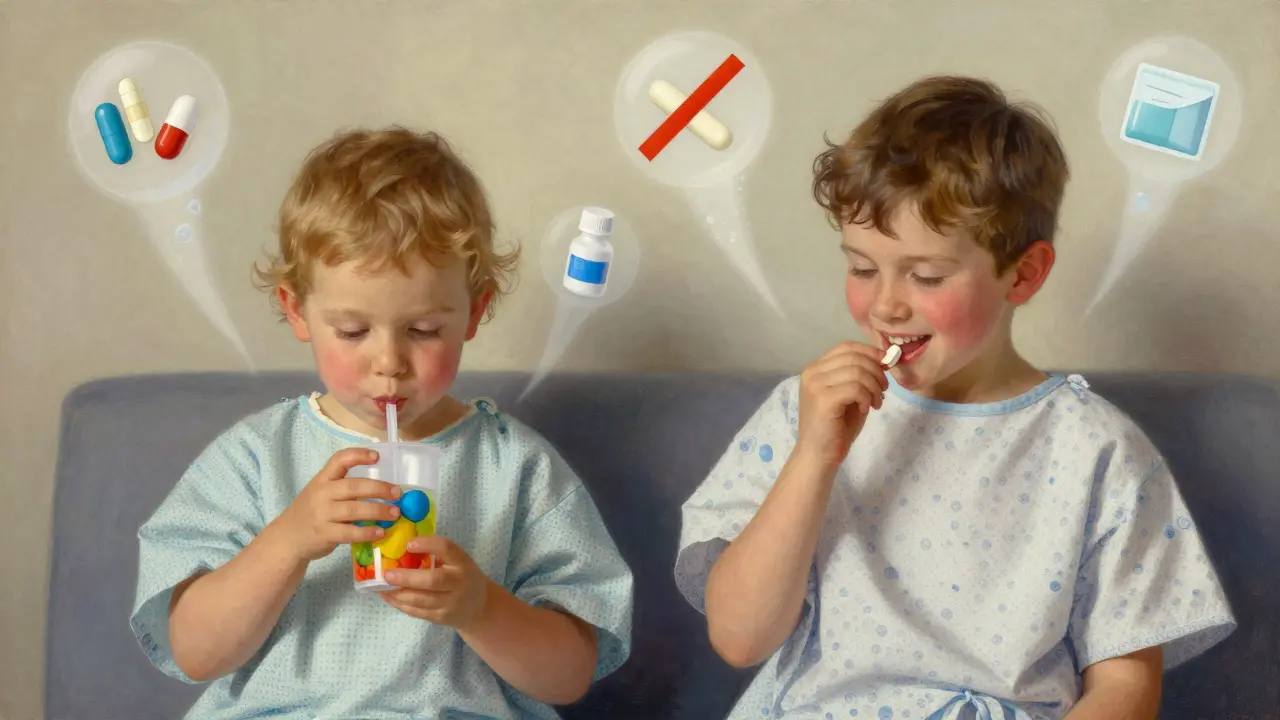
A 2022 survey of 1,247 pediatricians found that 68% struggled with dosing because commercial formulations didn’t match their patients’ weights. A 15 kg toddler might need 5 mL of a liquid antibiotic, but the only available bottle has 10 mL or 15 mL doses-forcing parents to guess or split pills.
For kids under 5, the right formulation is critical:
- Liquid suspensions - Best for infants and toddlers. Must be palatable. Bitter drugs like amoxicillin often taste awful-flavoring helps.
- Chewable tablets - Good for kids 2-5 who can chew safely. Avoid if they have a choking risk.
- Orally disintegrating tablets (ODTs) - Dissolve on the tongue. Great for kids who refuse liquids or have feeding tubes.
For older kids (6-12), standard tablets are fine. Adolescents can usually handle adult pills, but dose adjustments still apply. The FDA’s 2024 draft guidance now requires drugmakers to test taste, texture, and ease of administration-because a medicine that won’t stay down is useless.
Real-World Challenges Parents Face
“I have to use a syringe to measure 2.5 mL of ibuprofen for my 18-month-old,” says one parent on Reddit. “I feel like I’m doing lab work. One wrong drop and I panic.”
A Children’s Hospital of Philadelphia study found that 42% of caregivers made dosing errors using household spoons, cups, or eyeballing the dose. Only 12% used the dosing tool that came with the medicine.
Here’s how to avoid mistakes:
- Always use the syringe or dosing cup that came with the bottle.
- Never use a kitchen spoon-they vary wildly in size.
- Write down the dose, time, and amount before giving it.
- Double-check the weight. A 10 kg child is not the same as a 15 kg child.
- If the bottle says “100 mg/5 mL,” don’t assume the next bottle is the same. Concentrations change.
Non-adherence is a huge problem. 35% of kids stop taking antibiotics early because they taste bad or are hard to swallow. That’s how antibiotic resistance starts. Fruit-flavored versions, like the new oseltamivir suspension, have cut dropout rates by nearly half.
What Parents and Providers Should Do
For parents:
- Always ask: “Is this approved for my child’s age?”
- Ask for the weight-based dose, not just “give 5 mL.”
- Keep a list of all medications-including vitamins and supplements.
- Use the FDA Pediatric Dosing Calculator app -used by 63% of pediatric pharmacists-to verify doses.
For providers:
- Use electronic health records with pediatric safety alerts (Epic, Cerner). They reduce dosing errors by 61%.
- Standardize concentrations in your clinic. Use 100 mg/mL for amoxicillin, not 125 mg/mL or 250 mg/mL.
- Refer to the KIDs List 2025 before prescribing anything new.
- Don’t assume parents know how to measure doses. Show them.
What’s Changing in 2025 and Beyond
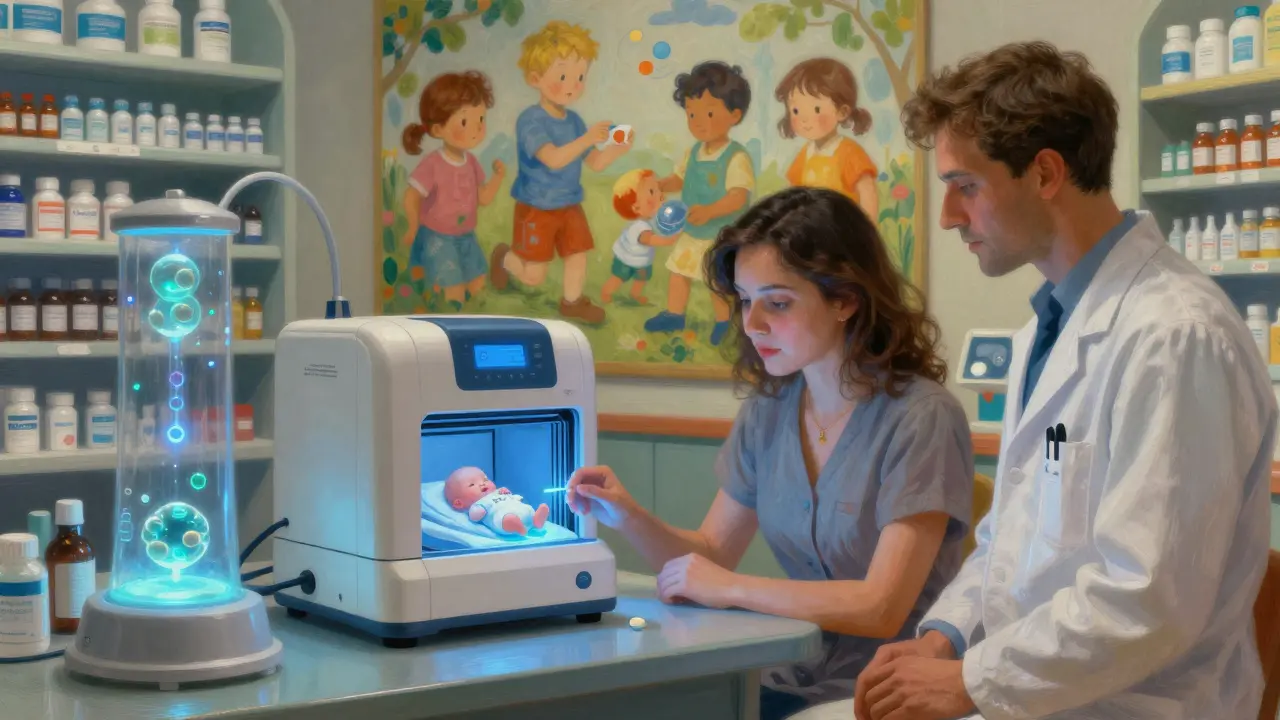
The future of pediatric meds is personalized. 3D-printed pills are being tested at Cincinnati Children’s Hospital. They can print exact doses-like 17.3 mg-for tiny babies, eliminating the need for liquid splits or crushing pills.
Also emerging: nanoparticle delivery systems that help drugs absorb better in newborns with immature guts. And global efforts are underway: the WHO aims for 90% access to essential pediatric medicines in low-income countries by 2030. Right now, only 34% of needed drugs are available there, compared to 92% in wealthy nations.
The message is clear: Children deserve medicines designed for them-not scaled-down adult versions. Progress is happening. But safe use still depends on knowledge, precision, and vigilance.
Can I give my child adult medicine if I cut the dose in half?
No. Adult pills aren’t just stronger-they’re made differently. They may contain fillers or coatings that are unsafe for children. Also, cutting pills doesn’t guarantee an accurate dose, especially for liquids or chewables. Always use pediatric formulations and follow weight-based dosing guidelines.
Is ibuprofen safer than acetaminophen for kids?
Both are safe when used correctly. Acetaminophen is gentler on the stomach and safer for younger infants. Ibuprofen works better for inflammation and lasts longer, but it can cause stomach upset or kidney stress if the child is dehydrated. Never give ibuprofen to babies under 6 months without a doctor’s approval.
Why is codeine banned for children?
Some children metabolize codeine into morphine much faster than others-sometimes dangerously so. This can cause life-threatening breathing problems, even with small doses. The FDA and WHO have banned its use in children under 12 and recommend extreme caution up to age 18. Safer alternatives like acetaminophen or ibuprofen exist.
How do I know if a liquid medicine is the right concentration?
Always check the label. Common concentrations are 100 mg/5 mL or 125 mg/5 mL for amoxicillin. Never assume. If your child’s dose calls for 150 mg and the bottle says 125 mg/5 mL, you’ll need 6 mL-not 5 mL. Use the dosing tool provided, and ask your pharmacist to confirm the math.
What should I do if my child vomits after taking medicine?
If vomiting happens within 15-20 minutes of giving the dose, it’s likely the medicine didn’t absorb. You can re-dose. If it’s been longer than 20 minutes, wait until the next scheduled dose. Don’t double up unless your doctor says so. Keep track of how often this happens-it may mean you need a different formulation.
Dan Nichols
January 27, 2026 AT 18:53Also why is everyone still using kitchen spoons? The dosing cup is right there. It's not rocket science.
Renia Pyles
January 29, 2026 AT 01:45Uche Okoro
January 29, 2026 AT 18:58Furthermore, the absence of standardized concentration protocols in outpatient clinics introduces significant dosing variance - a documented source of iatrogenic harm.
shivam utkresth
January 29, 2026 AT 23:48But the fruit-flavored oseltamivir? That’s magic. Kids actually take it. I’ve seen it. It’s not just science - it’s love in a bottle.
John Wippler
January 30, 2026 AT 05:13Imagine a baby getting a 17.3mg pill printed exactly for their weight. No guessing. No splitting. No panic.
This isn’t just science. It’s dignity. And it’s about time.
Aurelie L.
January 30, 2026 AT 19:05Joanna Domżalska
February 1, 2026 AT 02:32Maybe we should just stop medicating kids entirely and let nature take its course.
Josh josh
February 2, 2026 AT 05:22just use the dang syringe i swear
bella nash
February 3, 2026 AT 14:39