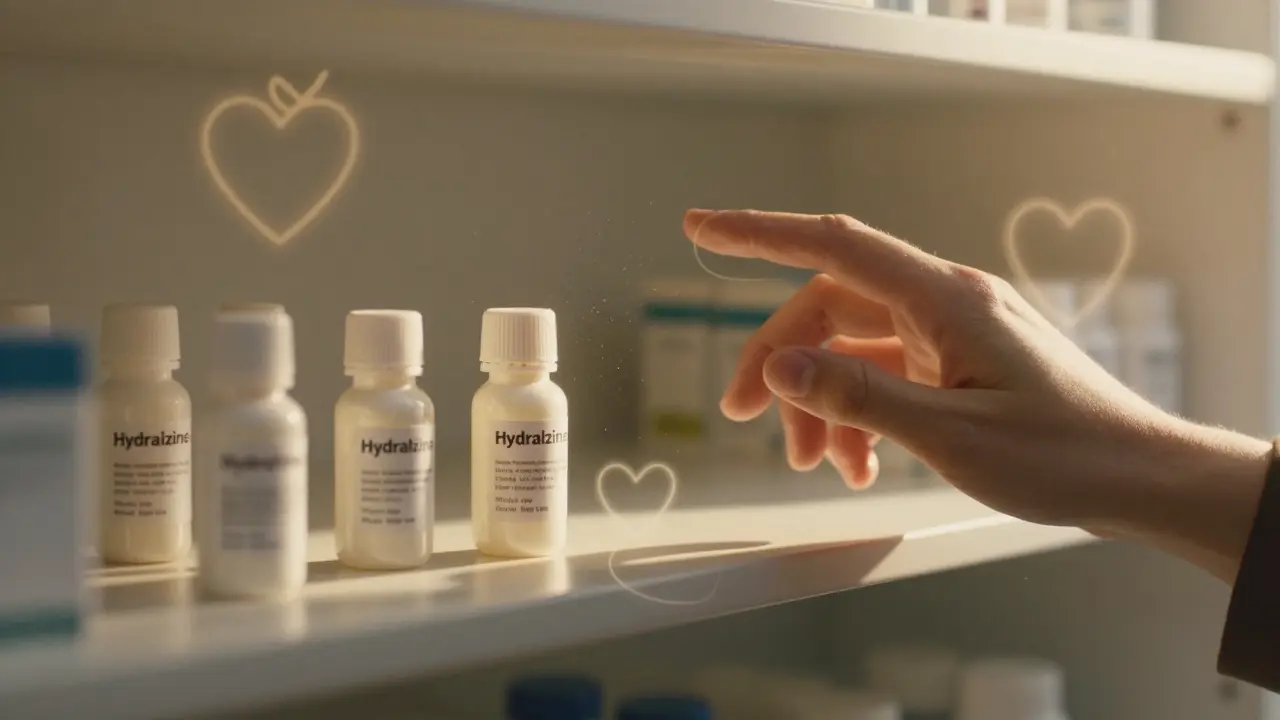
Every year, thousands of people in the UK and around the world are harmed because two drugs look or sound too similar. It’s not a mistake in judgment-it’s a flaw in the system. And it’s happening most often with generic drugs.
Take hydralazine and hydroxyzine. One treats high blood pressure. The other treats anxiety and allergies. Both come in small, white capsules. Both are taken once or twice daily. If a pharmacist grabs the wrong one by accident-or a nurse hears "hydroxyzine" over a crackly intercom and writes down "hydralazine"-the result can be deadly. A patient with heart failure might get a drug meant for itching. That’s not rare. It’s documented. And it’s preventable.
Why Generics Are the Main Culprit
Generic drugs are meant to be cheaper, safer alternatives to brand-name medications. But when multiple companies make the same drug, they don’t have to use the same packaging. One company’s 10mg hydroxyzine capsule might look almost identical to another’s 10mg hydralazine capsule. Same size. Same color. Same lettering style. It’s not a coincidence-it’s a design gap.
And it gets worse. Generic names often follow the same patterns. Take valacyclovir and a drug used to treat cytomegalovirus in transplant patients. The brand names are Valtrex and Valcyte. Both start with "Val-". Both are taken orally. Both are used in immune-compromised patients. The difference? One fights herpes. The other fights a virus that can kill. When a doctor says "Val-" quickly, or a pharmacist sees "Val" on a screen, which one do they pick?
According to the World Health Organization, about 25% of all medication errors stem from look-alike, sound-alike (LASA) names. And generics make up the bulk of those. Why? Because brand-name drugs usually have unique packaging and clear labeling. Generics? They compete on price, not visual distinction.
How LASA Errors Actually Happen
It’s not just about names. It’s about how we work.
- Prescribing: A doctor types "albuterol" but autofill suggests "atenolol"-both start with "A", both are common, both are used for breathing issues. The doctor clicks the wrong one. No one notices.
- Dispensing: A pharmacist reaches for a bottle of quinidine (for irregular heartbeat) and grabs quinine (for leg cramps). The labels are nearly identical. The difference? One can cause fatal arrhythmias if given to the wrong patient.
- Administration: A nurse hears "dopamine" over the phone and administers it to a patient who needs dobutamine. One raises blood pressure. The other increases heart output. In an ICU, mixing them can mean death in minutes.
A 2021 survey of UK pharmacists found that 78% had encountered a LASA error at least once a month. One in three said they’d had a near-miss-where a mistake was caught just in time. That’s not luck. That’s a system under pressure.
What Makes LASA Errors So Dangerous
Not all medication errors are equal. A wrong dose? Often caught before harm. A missed dose? Usually not fatal. But LASA errors? They’re different.
They’re deceptive. The drugs are prescribed for similar conditions. They’re taken the same way. They look the same. Even experienced staff get fooled. The UK’s National Reporting and Learning System recorded over 200,000 medication incidents between July 2018 and June 2019. Of those, 66 deaths and 159 cases of severe harm were directly tied to drug confusion.
And it’s not just adults. Children are especially vulnerable. A child given the wrong version of a drug meant for epilepsy or asthma can suffer irreversible damage. Studies show that while LASA errors are less common in pediatrics, the harm they cause is far more severe.
What’s Being Done-And What’s Not Working
There are solutions. But they’re not being used everywhere.
Tall man lettering-where key parts of the name are capitalized to highlight differences-has been shown to cut errors by 67%. So instead of "prednisone" and "prednisolone", you see "predniSONE" and "predniSOLONE". It’s simple. It works. Yet many hospitals still don’t use it.
Barcode scanning and clinical decision support systems? They can flag a mismatch before the drug leaves the shelf. One hospital system cut LASA errors by 45% using them. Another used AI-powered alerts in their electronic records and reduced errors by 82% in six months.
But here’s the catch: these tools aren’t mandatory. They’re expensive. And in underfunded clinics or pharmacies, they’re often seen as "nice to have." The UK’s NHS doesn’t have a national standard for LASA prevention. Each hospital does its own thing. Some have full systems. Others rely on posters and memory.
The U.S. FDA rejected 34 drug names in 2021 because they were too similar to existing ones. The European Medicines Agency now requires all new drugs to pass a name-similarity check. But in the UK? No such rule exists for generics. Companies can still release a new generic version of a drug with a name that sounds like another-and no one stops them.
How You Can Protect Yourself (or a Loved One)
You don’t need to be a doctor to spot a problem.
- Ask for the generic name: If you’re prescribed "hydroxyzine," ask if it’s the brand or generic. Ask for the manufacturer. If it’s different from last time, ask why.
- Check the pill: If your pill looks different, don’t assume it’s the same. Look at the imprint code on the pill. Search it online. Compare it to your last prescription.
- Speak up: If a nurse hands you a pill that looks wrong, say so. If the pharmacist doesn’t explain the difference between two similar drugs, ask again.
- Use a medication list: Keep a written list of every drug you take-name, dose, reason, and how often. Bring it to every appointment. Use it to cross-check new prescriptions.
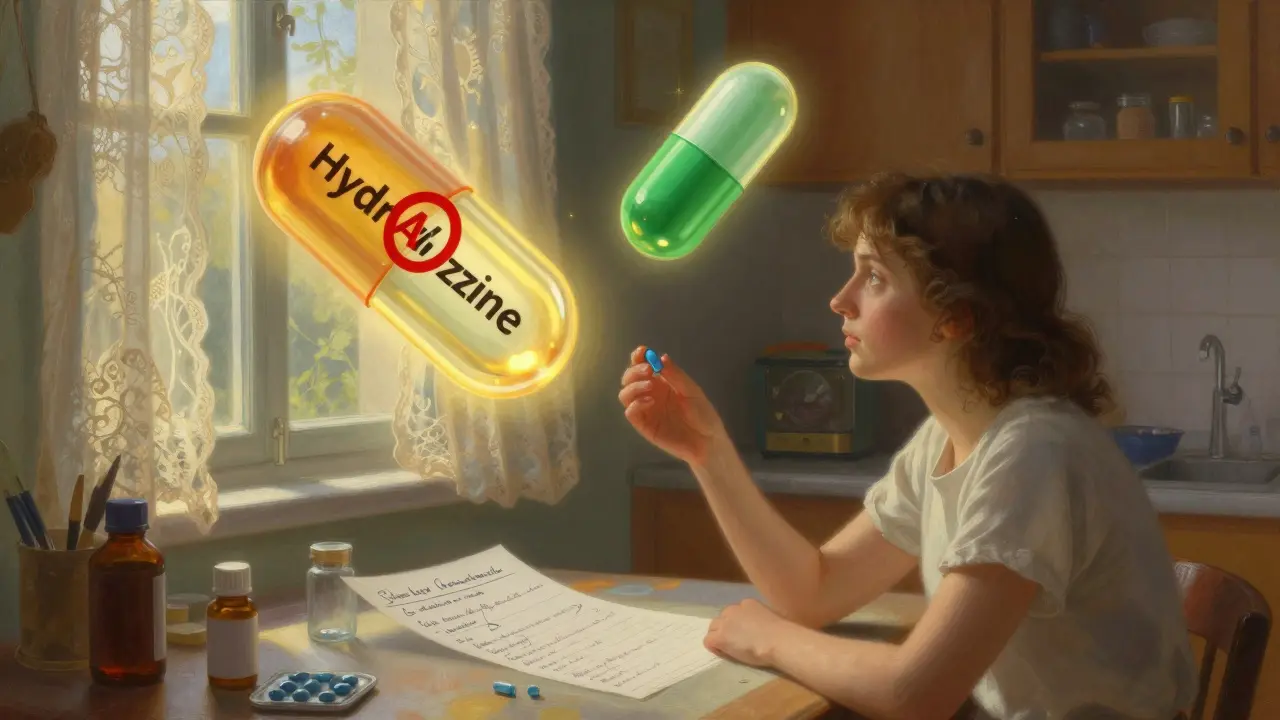
One woman in Birmingham told her pharmacist she’d never been given a blue capsule before for her blood pressure. The pharmacist checked-and realized she’d been given hydralazine instead of hydroxyzine. She’d been taking it for three weeks. No symptoms. But if she’d had heart problems? It could’ve been fatal.
The Future: Technology, Regulation, and Culture
Change is coming-but slowly.
The WHO’s "Medication Without Harm" campaign aims to cut severe medication errors by 50% by 2025. That includes tackling LASA errors. The UK’s National Patient Safety Agency has started pilot programs in some hospitals to use AI alerts and standardized packaging. But without national rules, progress is patchy.
What’s needed? Three things:
- Regulation: The UK must require standardized packaging for high-risk generics-same color, shape, and labeling rules across all manufacturers.
- Technology: All electronic prescribing systems must include tall man lettering and real-time LASA alerts.
- Culture: Stop blaming staff. Start fixing systems. A mistake isn’t carelessness-it’s a design failure.
Imagine if every generic drug came with a unique color code, like a traffic light for safety. Red for high-risk, yellow for moderate, green for low. Pharmacists could spot danger in a glance. Nurses could verify at a glance. Patients could trust their pills.
That’s not science fiction. It’s already being done in parts of Europe. And it works.
Final Thought
Medication errors with generics aren’t about bad people. They’re about bad systems. And they’re avoidable. We have the tools. We have the data. What we need is the will.
Next time you pick up a prescription, take a second look. Ask a question. Don’t assume. Your life might depend on it.
What are look-alike, sound-alike (LASA) drug names?
Look-alike, sound-alike (LASA) drug names are medications that look similar in packaging or spelling, or sound alike when spoken aloud. For example, hydralazine and hydroxyzine look almost identical on labels, and quinidine sounds very similar to quinine when said out loud. These similarities can lead to confusion during prescribing, dispensing, or administration, causing serious harm or death.
Why are generic drugs more likely to cause LASA errors?
Generic drugs are made by multiple manufacturers, and each can use different packaging, colors, and shapes. Unlike brand-name drugs, which have consistent, trademarked packaging, generics often look nearly identical-even when they treat completely different conditions. This increases the chance of picking the wrong one, especially when names are similar, like valacyclovir and valganciclovir.
Can tall man lettering really prevent errors?
Yes. Tall man lettering-capitalizing the different parts of similar drug names-makes it easier to spot differences. For example, predniSONE vs. predniSOLONE. Studies show this simple change can reduce LASA errors by up to 67%. It’s low-cost, easy to implement, and used successfully in many hospitals in the U.S. and Europe.
What should I do if my generic drug looks different?
Don’t assume it’s the same. Check the pill imprint code (the letters or numbers on the pill) and compare it to your previous prescription. Ask your pharmacist to confirm the drug name and purpose. If you’re unsure, request the brand name or ask for a printed list of what you’re taking. It’s better to double-check than to risk a mistake.
Are LASA errors common in the UK?
Yes. Between July 2018 and June 2019, the UK’s National Reporting and Learning System recorded over 206,000 medication incidents, with 66 deaths and 159 cases of severe harm linked to drug confusion. While not all were LASA errors, studies estimate that about 25% of all medication errors stem from look-alike or sound-alike confusion-making it one of the most common causes of preventable harm.
Can AI help reduce LASA errors?
Yes. AI-powered clinical decision support systems embedded in electronic health records can flag potential LASA errors before they happen. One study showed an 82% reduction in errors after implementing such a system. These tools cross-check drug names, doses, and patient history in real time, alerting prescribers and pharmacists to mismatches. While not yet standard in the UK, they’re becoming more common in high-performing hospitals.
Related entities: hydralazine, hydroxyzine, valacyclovir, valganciclovir, quinidine, quinine, dopamine, dobutamine, tall man lettering, electronic health records, clinical decision support, WHO Medication Without Harm, Institute for Safe Medication Practices, NHS, FDA, European Medicines Agency.
marjorie arsenault
March 4, 2026 AT 23:38Just wanted to say thank you for writing this. I’m a nurse, and I’ve had that moment where I almost grabbed the wrong bottle. It’s terrifying how easy it is. I started double-checking every pill now, even if it’s something I’ve given a hundred times. Small habits save lives.
Also, I keep a printed list of all my patients’ meds on my clipboard now. No more relying on memory. It’s changed everything.
Deborah Dennis
March 5, 2026 AT 00:51Ugh. Another ‘system failure’ article. Let’s be real-people are just lazy. If you can’t tell the difference between ‘hydralazine’ and ‘hydroxyzine,’ maybe you shouldn’t be handling meds. Training. Discipline. Focus. These aren’t optional. Stop blaming packaging.
Diane Croft
March 5, 2026 AT 08:37This is exactly why I always ask for the manufacturer name when I pick up a prescription. Last month, my blood pressure med looked different-I asked, and they’d switched from Teva to Mylan. Same drug, different imprint. I checked online. It was fine. But I almost didn’t notice. I’m glad I did.
Donna Zurick
March 6, 2026 AT 15:11My mom was on hydroxyzine for anxiety. One time, she got hydralazine by accident. She didn’t know the difference. She took it. Felt weird. Didn’t say anything. Thank god she called me that night. I made her go to urgent care. They caught it. This isn’t theoretical. It’s real. And it happens more than we think.
tatiana verdesoto
March 7, 2026 AT 01:57I’ve been in pharmacy tech for 12 years. I’ve seen this over and over. The worst part? The system rewards speed over safety. We’re told to fill 80 scripts an hour. No time to double-check. No time to think. And then someone gets hurt. It’s not the techs. It’s the structure.
Ethan Zeeb
March 7, 2026 AT 04:02Tall man lettering isn’t enough. We need color-coded packaging. Red for high-risk, green for low. Like traffic lights. Simple. Universal. No reading required. If you can’t see the difference at a glance, you shouldn’t be handling it. This isn’t rocket science. It’s basic design.
Darren Torpey
March 8, 2026 AT 04:52Imagine walking into a pharmacy and seeing every generic drug in a rainbow of colors-each one screaming its purpose. No more white capsules that look like twins. No more ‘Val-’ confusion. It’s 2025. We have the tech. We have the will. Why are we still playing Russian roulette with people’s lives?
Mariah Carle
March 9, 2026 AT 12:45It’s funny how we obsess over product design but ignore life-or-death design in medicine. A Tesla has 100 sensors. A pill bottle has zero. We’d never accept that in a car. Why do we accept it in a hospital?
Justin Rodriguez
March 10, 2026 AT 05:27I work in an ICU. We use barcode scanning and AI alerts. Since we implemented them, our LASA errors dropped to zero last year. Not one. Not a near-miss. Zero. It’s not magic. It’s consistency. And it should be mandatory everywhere. Not just the fancy hospitals.
Megan Nayak
March 11, 2026 AT 06:30Let’s be honest-this whole ‘patient safety’ thing is a performance. We’re not fixing the system. We’re just making better posters. The FDA rejects names? Great. But in the UK? Nothing. Companies still slap on ‘Val-’ like it’s a brand. The real problem? Profit. If generics looked different, they’d cost more. So we gamble with lives. Again.
Sharon Lammas
March 11, 2026 AT 21:56It’s not just about drugs. It’s about how we treat knowledge. We’ve turned medicine into a factory. We train people to move fast, not think deep. We reward efficiency over vigilance. And then we’re shocked when someone dies from a mix-up. The solution isn’t more tech. It’s a cultural shift. We need to honor attention. Not crush it.