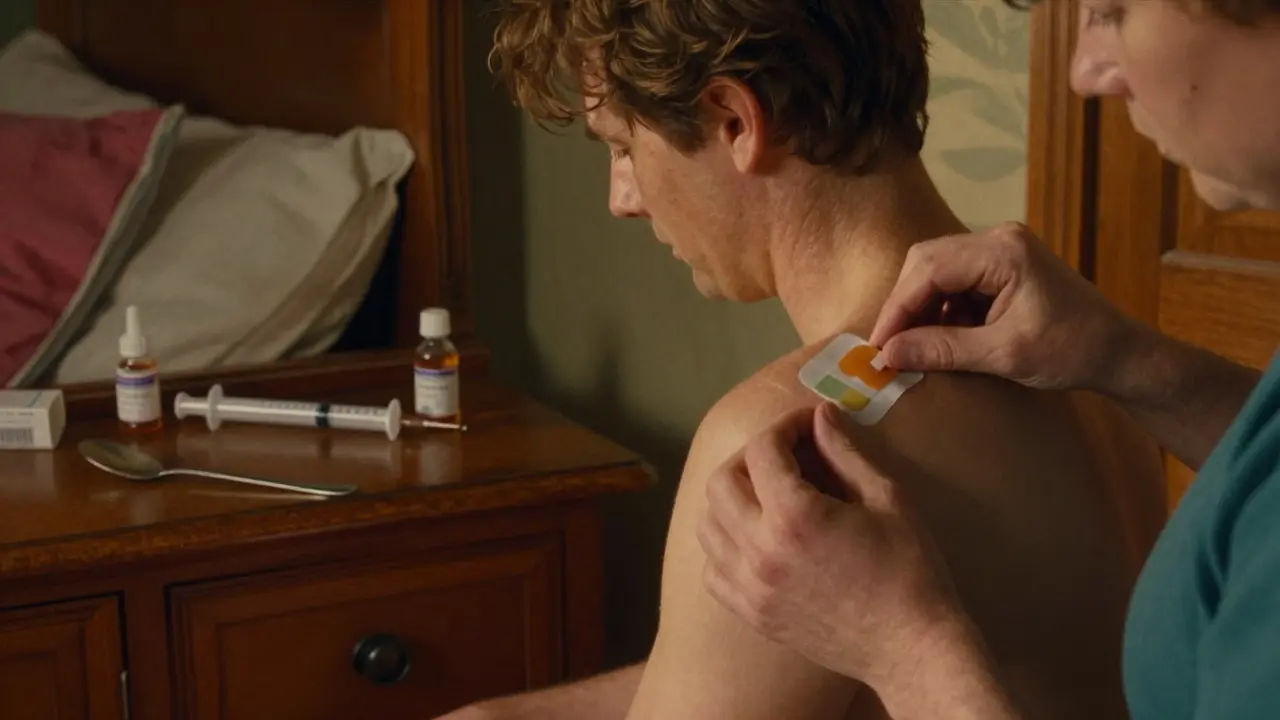
Overdose isn’t just a street drug problem. It’s happening in homes, pharmacies, and hospitals - often with medications that were meant to help. Fentanyl patches, liquid pain relievers, and extended-release pills are designed to make life easier for people managing chronic pain. But if they’re used wrong, even once, they can kill. And the risks are different for each form.
Why These Medications Are More Dangerous Than You Think
Most people assume that if a doctor prescribed it, it’s safe. That’s not true. These three types of medications - patches, liquids, and extended-release tablets - are engineered to release drugs slowly. That’s good for pain control. But if that mechanism breaks, the result is a flood of opioids into the bloodstream all at once.Fentanyl patches, for example, are meant to be worn on clean, dry skin and replaced every 72 hours. But if someone cuts the patch open, chews it, or sticks it under a heating pad to speed up absorption, they can absorb a lethal dose in minutes. One patch contains enough fentanyl to kill several adults who don’t have opioid tolerance.
Liquid medications - like oral morphine or codeine cough syrups - are even trickier. They come in different concentrations. A teaspoon of one brand might be 10 mg of morphine. Another might be 20 mg. If you use a kitchen spoon instead of the measuring cup that came with the bottle, you could easily double or triple your dose. And because liquids are absorbed faster than pills, the effects hit harder and quicker.
Extended-release tablets like OxyContin or tramadol ER are built to last. But if you crush them, snort them, or swallow them after chewing, you’re not getting 12 hours of pain relief. You’re getting a full day’s worth of opioids dumped into your system in seconds. That’s why so many overdose deaths happen to people who were taking their meds "as directed" - until they decided to break the pill to feel it faster.
How to Use Patches Safely
- Never cut, chew, or heat the patch. Even if it feels like it’s not working, don’t try to speed it up. Talk to your doctor instead.
- Apply it to clean, dry skin. Avoid areas with cuts, burns, or rashes. Don’t put it on skin that’s been treated with lotions or oils.
- Store patches out of reach. Kids and pets have died from sticking used patches on their skin. Fold the sticky side in half after removing it and throw it away where no one can find it.
- Dispose of used patches properly. Take them to a pharmacy that has a drug take-back program. If that’s not available, flush them down the toilet - yes, even though it sounds gross. It’s safer than leaving them lying around.
- Don’t share. A patch that works for you could kill someone else. Opioid tolerance varies wildly between people.
How to Use Liquid Medications Safely
- Always use the measuring tool that came with the bottle. A regular teaspoon holds about 5 mL. But a medical syringe or dosing cup might be marked in 0.5 mL increments. Using the wrong tool is one of the most common causes of accidental overdose.
- Check the concentration. Liquid opioids come in different strengths: 10 mg per 5 mL, 20 mg per 5 mL, even 50 mg per 5 mL. Write the concentration on the bottle with a marker so you don’t mix them up.
- Keep liquids locked up. Children and pets are drawn to sweet-tasting liquids. Store them in a locked cabinet, not on the counter.
- Don’t mix with alcohol or sedatives. Alcohol, benzodiazepines, sleep aids, and even some antihistamines can turn a safe dose into a deadly one. The combination slows breathing to a stop.
- Use a pill organizer for liquids too. If you’re on multiple medications, use a labeled container to track doses. It’s easy to forget you already took your liquid painkiller - and then take another.
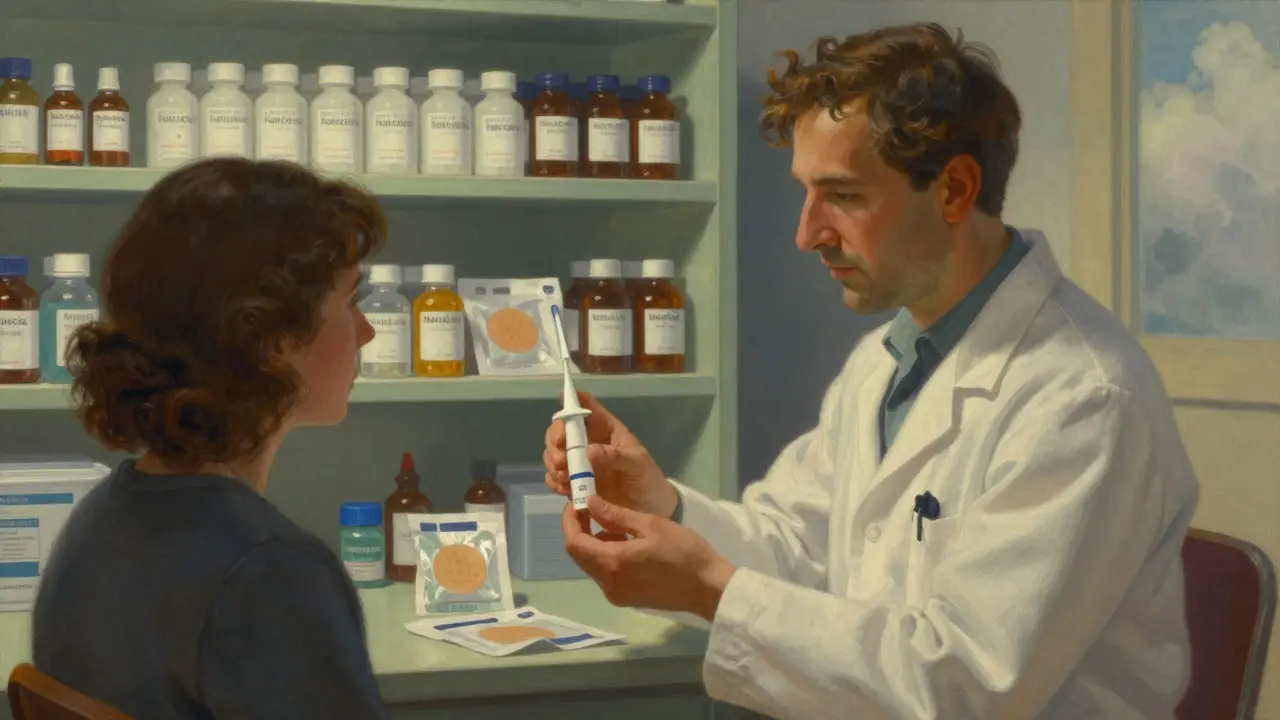
How to Use Extended-Release Tablets Safely
- Swallow whole. Never crush, chew, or break them. The coating or matrix that controls the release is destroyed when you tamper with the pill. You’re not getting "more pain relief" - you’re risking death.
- Take them at the same time every day. Skipping doses and then doubling up later is a dangerous habit. If you miss a dose, don’t take two to catch up. Call your doctor.
- Don’t take them with grapefruit juice. Grapefruit interferes with how your body breaks down many extended-release drugs, causing higher blood levels and increasing overdose risk.
- Watch for signs you’re taking too much. Dizziness, confusion, slow breathing, or bluish lips aren’t "just side effects." They’re early signs of overdose. Don’t wait for unconsciousness.
- Ask your doctor about switching to immediate-release. If you’re having trouble sticking to the schedule or you’re tempted to break the pill, talk to your doctor. Immediate-release options are safer if you’re not able to follow the strict dosing rules.
Naloxone Is Your Lifeline - But It’s Not a Cure
Naloxone (brand name Narcan) can reverse an opioid overdose. It’s available without a prescription in the UK and many parts of the US. But here’s what no one tells you: naloxone doesn’t work forever.Its effects last 30 to 90 minutes. Extended-release pills and patches keep releasing opioids for hours - sometimes days. That means after naloxone wears off, the person can slip back into overdose. That’s called renarcotization. It’s why calling 911 isn’t optional - it’s mandatory.
Keep naloxone where you can find it fast. Not in the back of a drawer. Not in your car. Keep it in your coat pocket, your purse, or taped to the inside of your medicine cabinet. Practice using it. There are training videos on the NHS website. Learn how to use the nasal spray. Know where the person’s nose is - you’re not spraying into their mouth.
And if you give someone naloxone, stay with them. Don’t leave to get coffee. Don’t call a friend. Stay until emergency services arrive. Even if they wake up, they’re not out of danger.
What to Do If You Suspect an Overdose
- Check responsiveness. Shake their shoulder and shout their name. If they don’t respond, assume overdose.
- Call 999 immediately. Say "I think someone is overdosing on opioids." That triggers the fastest response.
- Give naloxone. Use one spray in each nostril. If you don’t have it, start rescue breathing.
- Start rescue breathing. Tilt their head back, pinch their nose, and give one breath every 5 seconds. Keep going until help arrives.
- Stay with them. Even if they wake up, they need medical care. Their body is still absorbing opioids.
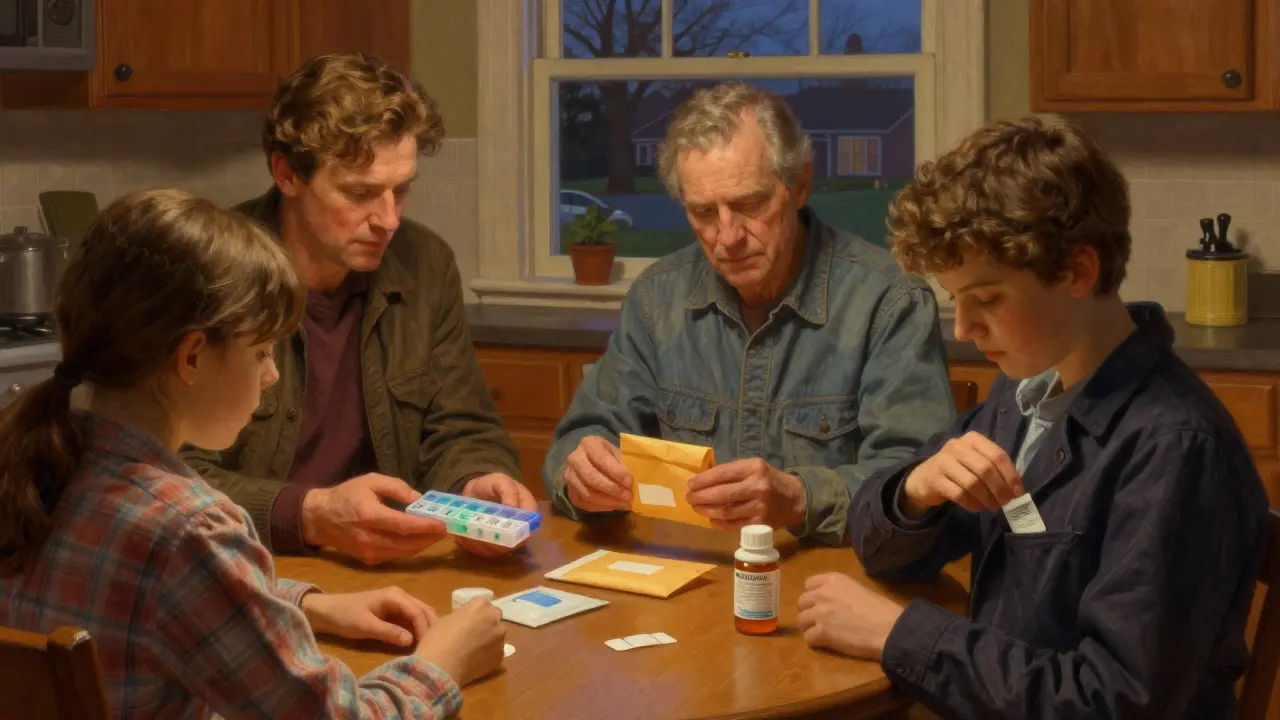
Other Critical Steps to Reduce Risk
- Don’t use alone. If you’re taking these meds at home, make sure someone knows you’re doing it. Text them when you take your dose. Ask them to check on you in an hour.
- Use a drug checking service. If you’re using any medication that came from outside a pharmacy - even if it was prescribed - get it tested. Fentanyl is showing up in unexpected places. Test strips cost less than a coffee and can save your life.
- Know your tolerance. If you haven’t taken opioids in a while - even just a few days - your tolerance drops fast. Start with half your usual dose.
- Ask about non-opioid alternatives. Physical therapy, nerve blocks, or antidepressants like duloxetine can manage chronic pain without the overdose risk.
Final Thought: Safety Isn’t About Willpower - It’s About Systems
People don’t overdose because they’re careless. They overdose because the system didn’t give them the tools to be safe. A patch isn’t dangerous because it’s bad. It’s dangerous because we don’t teach people how to handle it. A liquid isn’t dangerous because it’s strong. It’s dangerous because we give it out without a measuring tool. An extended-release pill isn’t dangerous because it’s powerful. It’s dangerous because we tell people to take it once a day - and then don’t check if they understand what that means.Preventing overdose isn’t about scaring people. It’s about giving them clear, simple, practical steps - and making sure they know naloxone is there, and that calling for help won’t get them in trouble. In the UK, the Good Samaritan law protects you if you call 999 for someone overdosing. You won’t be arrested. You won’t be judged. You’ll be helping someone live.
Can I use a kitchen spoon to measure liquid medication?
No. Kitchen spoons vary in size and are not accurate. Always use the measuring syringe, cup, or dropper that came with the medication. A teaspoon of one liquid opioid might be 10 mg - another might be 20 mg. Using the wrong tool can easily double your dose.
What happens if I cut open a fentanyl patch?
Cutting or heating a fentanyl patch releases the entire dose at once - which can be lethal. A single patch contains enough fentanyl to kill someone with no opioid tolerance. Never tamper with the patch. If it’s not working, contact your doctor.
Is naloxone enough to save someone from an overdose?
Naloxone can reverse an overdose, but its effects last only 30-90 minutes. Extended-release pills and patches keep releasing opioids for hours. The person can overdose again after naloxone wears off. Always call 999 - even if they wake up.
Can I take extended-release pills if I’ve missed a dose?
Never take two doses at once. If you miss a dose, take it only if it’s been less than 4 hours since your scheduled time. If it’s been longer, skip it and take your next dose at the regular time. Doubling up can cause a deadly overdose.
Where can I get naloxone in the UK?
Naloxone is available free of charge from pharmacies, needle exchange programs, and some community health centres. You don’t need a prescription. Ask your pharmacist for Narcan nasal spray or a naloxone injection kit. Many pharmacies offer free training on how to use it.
What to Do Next
- If you or someone you know uses these medications, get naloxone today - even if you think it’s unnecessary.
- Check the expiry date on your naloxone. It lasts 2-3 years, but it doesn’t last forever.
- Teach one person how to use naloxone. Your partner, your sibling, your neighbour. Make sure they know where it’s kept.
- Call your doctor and ask: "Is there a safer way to manage my pain?" There often is.
- Don’t wait for a crisis. Prevention starts with knowledge - and action.
Eliana Botelho
January 31, 2026 AT 03:16Okay but let’s be real - if your doctor just hands you a fentanyl patch and says ‘don’t cut it’ without explaining why it’s basically a death trap in adhesive form, that’s on them. I had a cousin who thought heating it with a hair dryer would ‘boost the effect’ because he saw it on a YouTube video. He didn’t die, but he spent three days in ICU and now he’s got a new rule: no meds without a 20-minute Google deep dive first. Also, why is naloxone still not in every damn medicine cabinet like fire extinguishers? We put smoke detectors everywhere. Why not this?
Darren Gormley
February 1, 2026 AT 05:08💀 This post is basically a 2000-word PSA for people who still think ‘as prescribed’ = ‘safe’. But here’s the thing - if you’re using extended-release opioids for chronic pain, you’re already playing Russian roulette with your nervous system. The system didn’t fail you. It was designed to fail you. Pharma knew. Doctors knew. We all knew. And yet we keep pretending this is medicine and not a slow-motion trap. 🤷♂️
Mike Rose
February 1, 2026 AT 21:17why do they make these pills so damn hard to break? like if i need more pain relief why cant i just chew it? its not like its candy or anything. also who has a measuring cup for syrup? i just use a spoon. its fine.
Russ Kelemen
February 2, 2026 AT 17:15There’s something deeply human about how we treat pain - we want it gone, fast, and we’ll bend rules to make that happen. But this isn’t about willpower. It’s about design. A patch that leaks when heated? A pill that turns into a bomb when crushed? A liquid with no clear markings? These aren’t accidents. They’re failures of empathy in engineering. We build systems that assume people are perfect, then punish them when they’re not. The real fix isn’t more warnings - it’s simpler delivery, better tools, and less shame. If you’re taking this stuff, you’re not weak. You’re surviving. And you deserve safer options.
Diksha Srivastava
February 3, 2026 AT 06:49you’re not alone 💪 i know it feels scary but just one step at a time - get that naloxone, tell someone you trust, and don’t be afraid to ask your doctor for alternatives. you’re doing better than you think. even reading this means you care. that’s huge. 🌱
April Allen
February 3, 2026 AT 10:21Let’s clarify a critical pharmacokinetic point: the dermal absorption kinetics of fentanyl patches are nonlinear under thermal stress. Heating increases permeability exponentially, not linearly - meaning a 10°C rise can increase plasma concentration by 300-500%. That’s not ‘faster relief’ - that’s acute respiratory depression territory. And with liquids, the variance in concentration between formulations isn’t just a ‘mistake’ - it’s a regulatory gap. The FDA allows ±10% variation in concentration labeling, but the actual bioavailability can swing ±30% depending on gastric pH and food intake. This isn’t negligence. It’s systemic under-regulation of high-risk, low-volume pharmaceuticals. We need standardized dosing units and mandatory patient education modules before dispensing. Not just ‘read the label’ - actual competency checks.
Sheila Garfield
February 5, 2026 AT 07:44I’ve seen too many people panic when their pain flares and just take an extra pill ‘just this once’. It’s not about being reckless - it’s about being desperate. I wish doctors would say: ‘If you’re tempted to break the pill or heat the patch, you’re not broken. You’re in pain. Let’s talk about adjusting your plan.’ Not ‘don’t do this’ - but ‘here’s what we can do instead.’ And yes, naloxone should be as common as aspirin. No shame. Just safety.
Shawn Peck
February 6, 2026 AT 05:55THIS IS WHY WE CAN’T HAVE NICE THINGS. PEOPLE ARE STUPID. YOU CAN’T GIVE PEOPLE DRUGS AND EXPECT THEM NOT TO BE IDIOTS. JUST STOP PRESCRIBING THIS STUFF. IT’S NOT A CURE, IT’S A CRUTCH. AND NALOXONE ISN’T A GET-OUT-OF-JAIL-FREE CARD - IT’S A BANDAID ON A GUNSHOT WOUND.
Jason Xin
February 7, 2026 AT 12:10Shawn’s got a point, but the real tragedy isn’t the users - it’s the system that treats pain like a bug to be crushed instead of a signal to be understood. I’ve seen patients get prescribed these meds because physical therapy was ‘too expensive’ or ‘not covered’. We’re not failing people because they’re careless. We’re failing them because we’d rather medicate than fix. Naloxone saves lives - but it doesn’t fix the fact that someone had to be in that much pain to need it in the first place.
Sazzy De
February 9, 2026 AT 06:21my dad used a fentanyl patch after back surgery. he never touched it. just kept it on. never cut it. never heated it. never took extra. but he still got dizzy and almost passed out once. turns out his liver was slow at processing it. no one told him to get blood work. just said ‘take it like normal’. i wish they’d just said: ‘everyone’s different. call us if anything feels off.’
Lily Steele
February 9, 2026 AT 11:26just got my naloxone from the pharmacy today. they gave me a sticker that says ‘i carry life’ and taught me how to use it in 3 minutes. no judgment. no paperwork. just ‘here you go, hope you never need it’. that’s the kind of care we need more of.