
Every year, about one in three adults over 65 falls. Many of these falls aren’t accidents-they’re side effects of medications. In fact, research shows that 65% to 93% of older adults injured in falls were taking at least one medication known to increase fall risk. These aren’t rare cases. They’re the norm. And the drugs causing them are often prescribed without a full understanding of how they affect balance, blood pressure, or mental clarity.
What Are Fall Risk-Increasing Drugs (FRIDs)?
FRIDs-Fall Risk-Increasing Drugs-are medications that make you drowsy, dizzy, unsteady, or confused. They don’t just make you feel off for a day. They can change how your body responds to movement, standing up, or turning around. The American Geriatrics Society lists nine main classes of these drugs, and each one carries its own level of danger.
Antidepressants top the list. Both tricyclics (like amitriptyline) and SSRIs (like sertraline) are linked to a higher chance of falling. Why? They affect brain chemicals that control balance and muscle control. A 2023 Mayo Clinic review found that antidepressants had the strongest association with falls compared to any other drug class.
Benzodiazepines-drugs like Xanax, Valium, and Ativan-are next. These are often prescribed for anxiety or sleep, but they stay in the body longer than people realize. Even if you take them at night, the drowsiness can linger into the next day. The American Geriatrics Society says benzodiazepines increase fall risk by 50%. Longer-acting ones like diazepam are especially dangerous.
Sedative-hypnotics like Ambien, Lunesta, and Sonata are another major concern. These sleep aids don’t just help you fall asleep-they can cause sleepwalking, confusion, or sudden dizziness when you get up. The CDC’s STEADI program calls them “particularly risky” because people often don’t realize they’re still impaired in the morning.
Other High-Risk Medications
Antipsychotics, even when used for non-psychotic conditions like agitation in dementia, raise fall risk by 40%. First-generation antipsychotics like haloperidol are worse than newer ones, but both are risky. Muscle relaxants like baclofen? They increase fall risk by 70%. That’s more than double the average risk of other drugs in this category.
Opioids-painkillers like oxycodone and hydrocodone-don’t just numb pain. They dull your senses. Higher doses mean higher risk. A 2023 JAMA Health Forum study found that high-potency opioids increase fall risk by 80% compared to low-dose versions. Even over-the-counter NSAIDs like ibuprofen or naproxen can be dangerous. They can lower blood pressure, especially when you stand up quickly, leading to lightheadedness and falls.
Then there are anticholinergics. These are used for overactive bladder, COPD, or even allergies. Drugs like diphenhydramine (Benadryl) or oxybutynin cause dry mouth, blurred vision, and confusion. Many older adults don’t realize their nighttime allergy pill is putting them at risk. One 2022 study found that 65% of older adults didn’t know their OTC meds could increase fall risk.
Why Blood Pressure Meds Are Tricky
It sounds counterintuitive, but medications meant to lower blood pressure can also cause falls. Antihypertensives and diuretics can lead to orthostatic hypotension-when your blood pressure drops suddenly as you stand up. This isn’t rare. It happens in up to 30% of older adults on these drugs. The result? A sudden blackout, a stumble, and a fracture.
Doctors often prescribe these drugs to prevent heart attacks or strokes. But if the dose is too high or the timing is off, the cure becomes the danger. The CDC’s STEADI program recommends checking blood pressure both sitting and standing during routine visits to catch this issue early.
The Hidden Culprits: OTC Drugs and Supplements
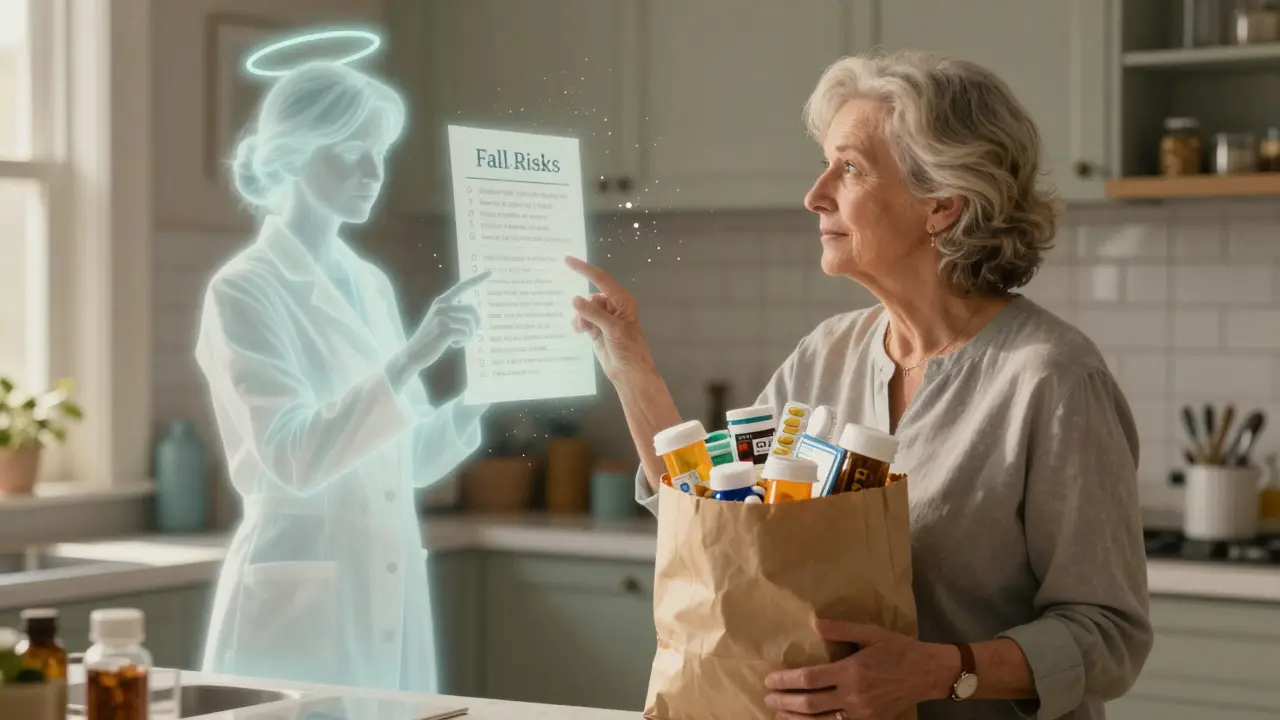
It’s not just prescriptions. Over-the-counter meds are a silent threat. Cold and flu pills, sleep aids, and even antihistamines for allergies contain diphenhydramine or doxylamine-both strong anticholinergics. Herbal supplements like valerian root or melatonin can interact with prescription drugs and make dizziness worse.
One patient on Reddit shared that her 78-year-old mother fell three times after starting Ambien. The third fall broke her hip. She didn’t know the sleep aid was a fall risk. Another user on GoodRx said he installed grab bars in his home after Xanax made him unsteady. These aren’t outliers. They’re common.
A 2023 study in the Journal of Geriatric Physical Therapy found that 63% of older adults taking multiple FRIDs had no idea their meds were dangerous. That’s a massive knowledge gap.
What Can Be Done?
The good news? Many of these risks can be reduced-or eliminated-without losing health benefits.
The CDC’s STEADI program has a simple three-step plan: STOP, SWITCH, REDUCE.
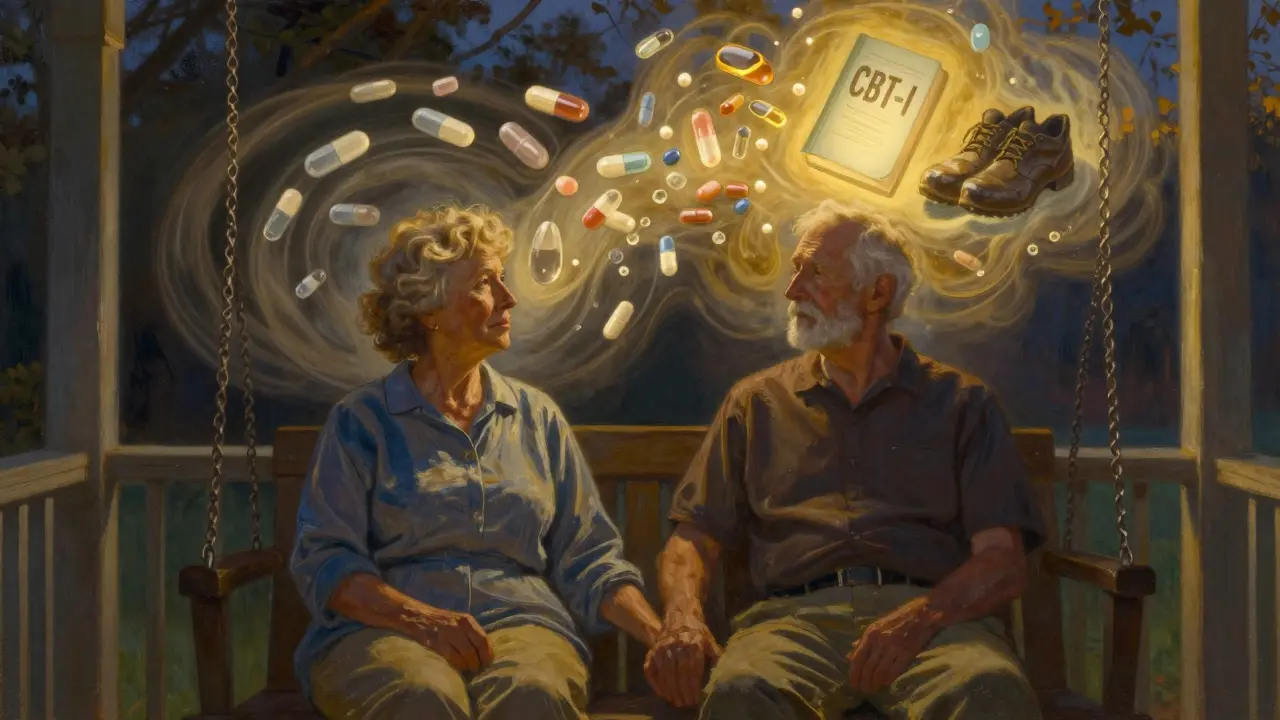
- STOP medications that aren’t needed. For example, long-term benzodiazepine use for insomnia should be stopped. Cognitive behavioral therapy for insomnia (CBT-I) works better than pills and has no fall risk.
- SWITCH to safer alternatives. Instead of diphenhydramine for allergies, use loratadine. Instead of a benzodiazepine for anxiety, try an SSRI with careful dosing. Newer anxiolytics without sedative effects are available, though they cost more-around $450 a month versus $30 for generics.
- REDUCE doses to the lowest effective level. For opioids, that means going from 20 mg of oxycodone to 10 mg if possible. For diuretics, it means checking blood pressure after standing.
Annual medication reviews are critical. The CDC recommends a “brown bag” approach: bring all your pills-prescription, OTC, supplements-to your doctor. Pharmacists can help too. Studies show pharmacist-led reviews cut fall risk by 22%.
Deprescribing-carefully removing drugs that are no longer helping-is becoming standard in geriatric care. The American Geriatrics Society’s 2024 Beers Criteria update will include new guidance on newer medications and their fall risks. AI tools are now being tested to flag dangerous combinations with 89% accuracy.
Who’s Responsible?
This isn’t just about patients being unaware. It’s about a system that often prescribes without reviewing. A 2023 JAMA analysis found that 45% of older adults in the U.S. were taking at least one “potentially inappropriate” medication. That’s not a small number. It’s a public health crisis.
Medicare Part D now tracks inappropriate prescribing. Providers can face penalties for high rates of FRID use. That’s pushing clinics to take action. Geriatrician visits for medication reviews have gone up 35% since 2018.
But real change happens at the kitchen table. When an older adult says, “I feel dizzy after my pill,” that’s not just a complaint. It’s a warning sign. If you’re caring for someone over 65, ask: “Have you talked to your doctor about whether any of your meds could be making you unsteady?”
It’s Not Just About Avoiding Falls
Falls aren’t just broken bones. They lead to loss of independence, nursing home stays, and death. In the U.S., 36,000 older adults die from falls each year. That’s more than car accidents. And medication-related falls account for $11 billion of the $50 billion in annual costs.
Reducing these risks isn’t just about saving money. It’s about letting people live safely in their homes, stay active, and keep their dignity. A simple review of medications can mean the difference between a fall and a walk around the block. Between a hospital bed and a favorite chair. Between fear and freedom.
Which medications are most likely to cause falls in older adults?
Antidepressants have the strongest link to falls, followed closely by benzodiazepines, sedative-hypnotics like Ambien, antipsychotics, and muscle relaxants like baclofen. Opioids and anticholinergics (found in many OTC allergy and bladder meds) are also high-risk. Even blood pressure pills and NSAIDs can contribute by causing dizziness or drops in blood pressure.
Can over-the-counter drugs really increase fall risk?
Yes. Many OTC cold, flu, allergy, and sleep aids contain diphenhydramine or doxylamine-anticholinergic drugs that cause drowsiness, confusion, and blurred vision. Benadryl, NyQuil, and Unisom are common examples. Studies show 65% of older adults don’t realize these meds raise their fall risk.
What should I do if my older loved one is on multiple medications?
Bring all their medications-prescription, OTC, and supplements-to a doctor or pharmacist for a full review. Ask specifically about fall risk. Request a “brown bag” review. Ask if any drugs can be stopped, switched, or reduced. Don’t assume they’re safe just because they were prescribed years ago.
Is there a safer alternative to sleeping pills like Ambien?
Yes. Cognitive Behavioral Therapy for Insomnia (CBT-I) is the first-line treatment recommended by the American Academy of Sleep Medicine. It’s as effective as or better than sleep meds-with zero fall risk. It usually takes 6-8 sessions and is covered by many insurance plans, including Medicare.
How often should older adults have their medications reviewed?
At least once a year. The CDC recommends annual medication reviews for everyone over 65, especially if they take three or more prescriptions. More frequent reviews are needed after a fall, hospital stay, or change in health status. Pharmacists can do these reviews too-they’re trained to spot dangerous interactions.
APRIL HARRINGTON
March 8, 2026 AT 18:20My mom says the same thing about Ambien but she still takes it cause she cant sleep without it
Its not the drugs its the old people being clumsy
Judith Manzano
March 10, 2026 AT 09:40Samantha Fierro
March 11, 2026 AT 07:56Philip Mattawashish
March 11, 2026 AT 18:53They dont care if you fall they care if you keep buying
Its a money scheme plain and simple
rafeq khlo
March 13, 2026 AT 17:34Erica Santos
March 15, 2026 AT 01:22Scott Easterling
March 15, 2026 AT 12:42Tom Sanders
March 16, 2026 AT 02:30Morgan Dodgen
March 17, 2026 AT 10:29George Vou
March 17, 2026 AT 14:03Jazminn Jones
March 17, 2026 AT 19:13Leon Hallal
March 19, 2026 AT 14:19Samantha Fierro
March 20, 2026 AT 10:47